PLEASE NOTE: THIS PAGE IS NOT BEING MAINTAINED ANYMORE, PLEASE SEE
https://railroadsignals.us/signals/pl/index.htm for the latest version MMedit 4/1/2019
PLEASE NOTE: THIS PAGE IS NOT BEING MAINTAINED ANYMORE, PLEASE SEE
https://railroadsignals.us/signals/pl/index.htm for the latest version
MMedit 4/1/2019
BACKGROUND
Quick History
Tombstone Signals - The Original PL signal
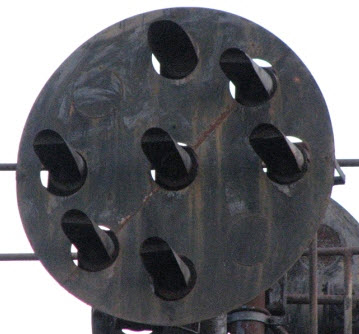
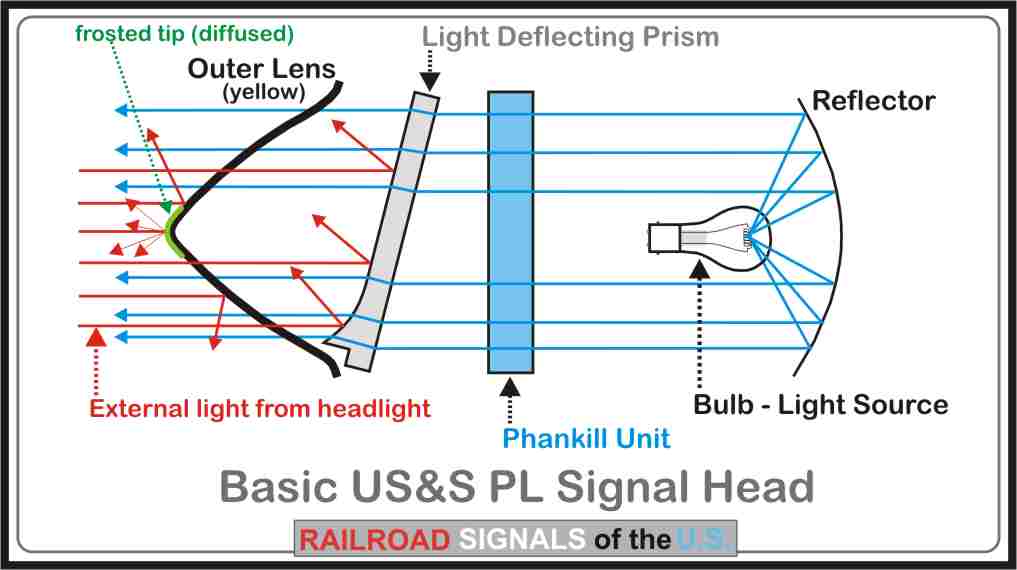
The PL Lamp Head
PL Signals
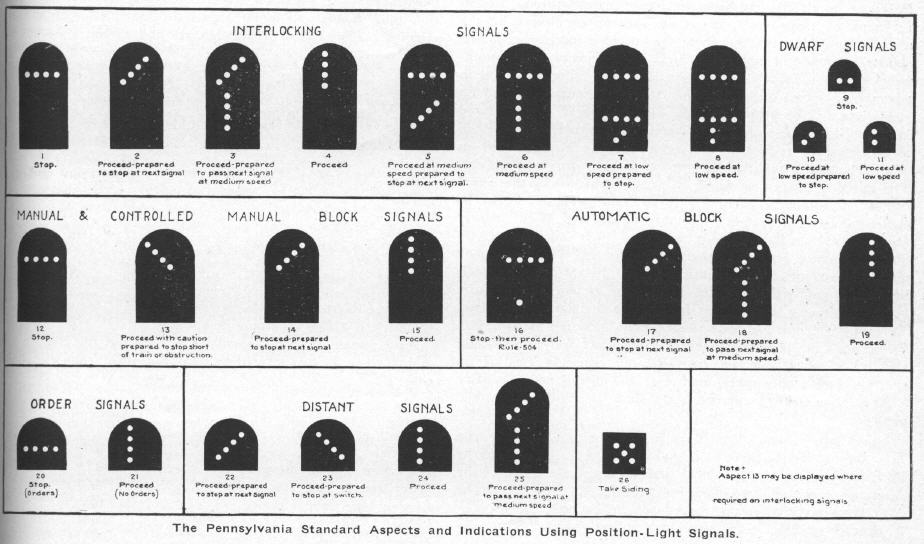
the Aspects
VARIATIONS in PL HEAD CONFIGURATIONS
Upper Head
Lower Head
Cab Signals
POSITION LIGHT SIGNAL VARIATIONS
The Domino Signal
A Northumberland PA Duo
Small PL's - Dwarfs
Small PL's - Pedestals
Red-Eye Signals
Phase Break Signals
SIGNAL PICTURES
Huntingdon PA
Lancaster PA
Mapleton PA
Norwood OH
Columbus OH
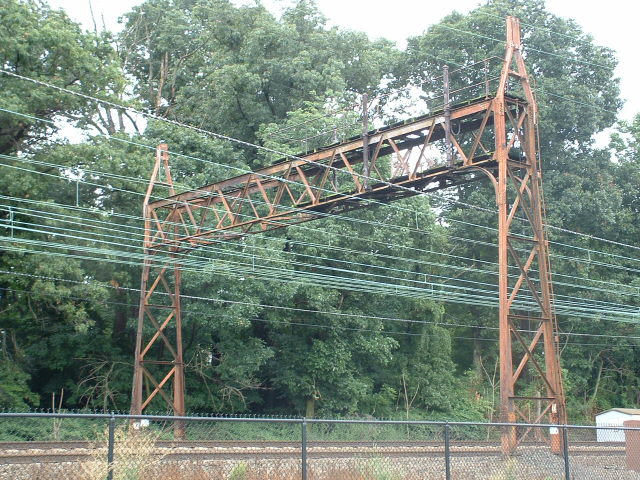
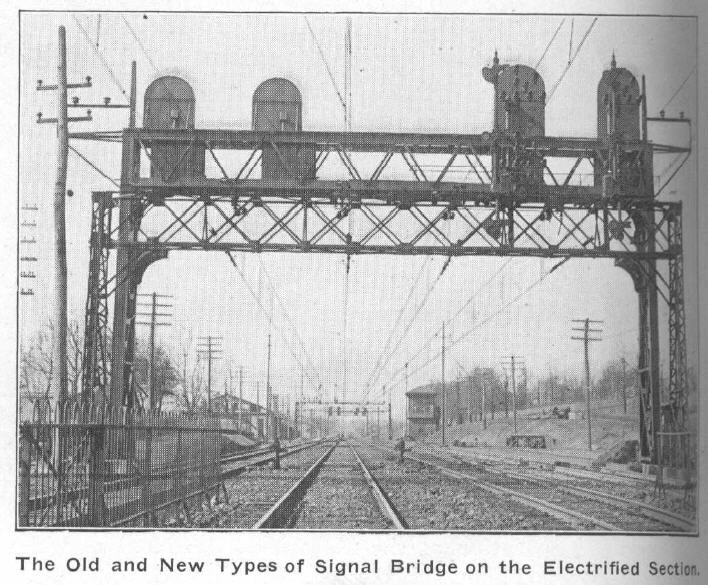
Signal Bridge in Halethorpe MD
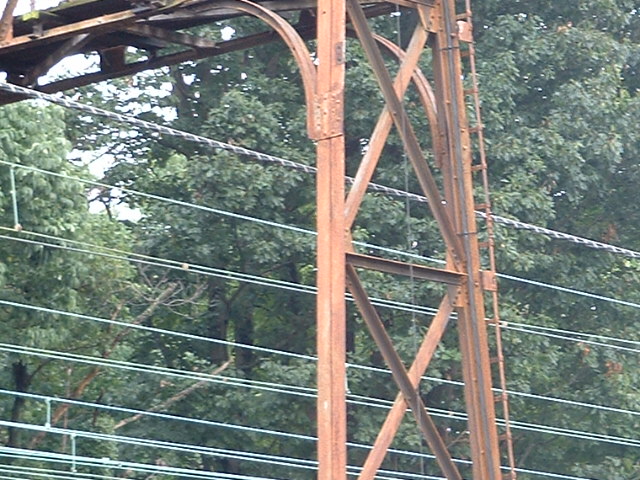
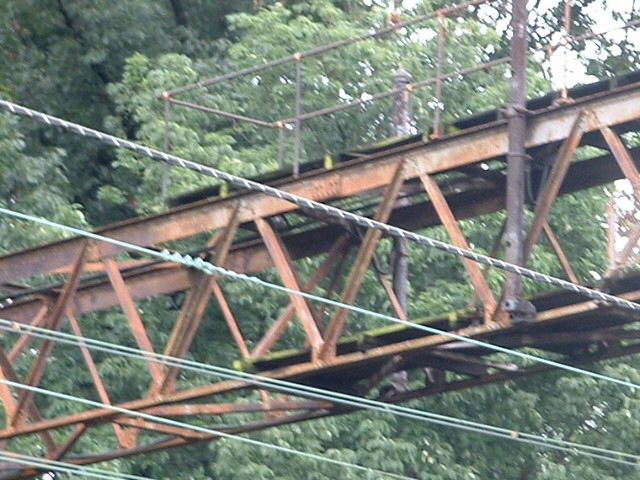
Former Signal Bridge in Halethorpe MD
OTHER PICTURES
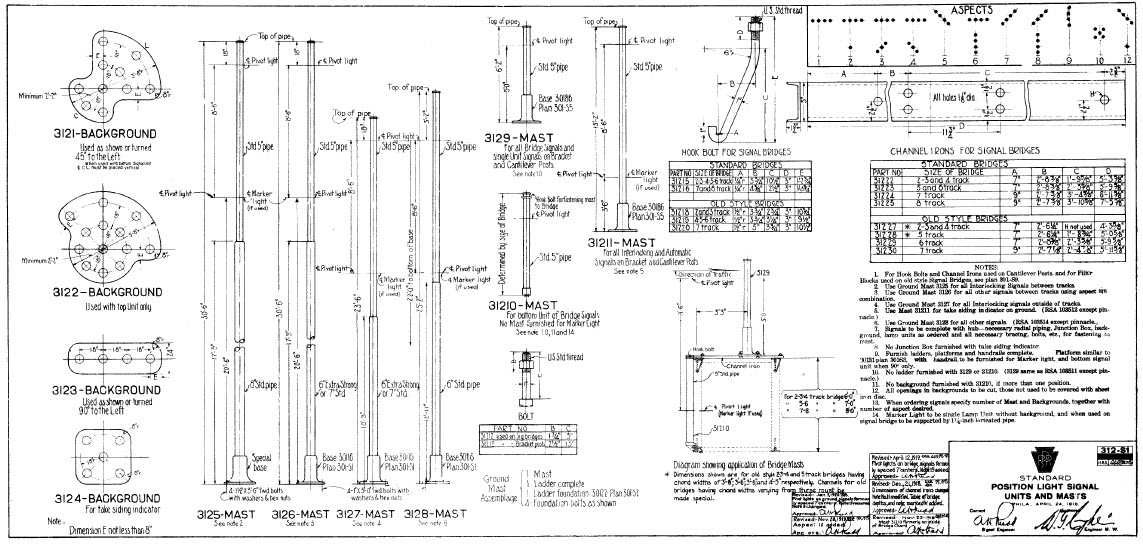
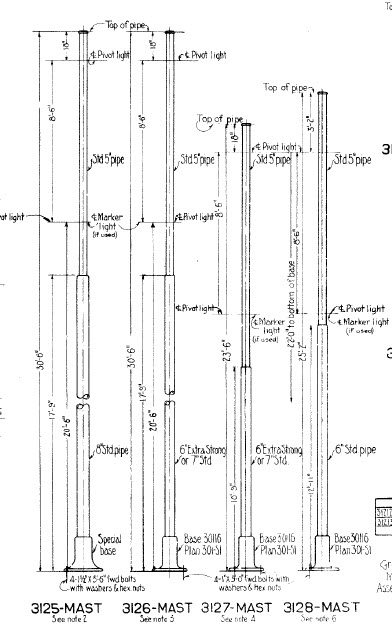
Drawings / Technical
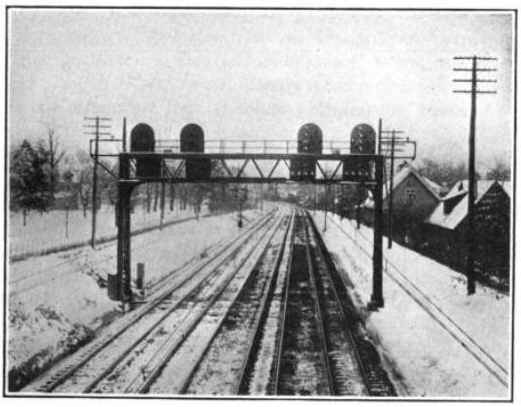
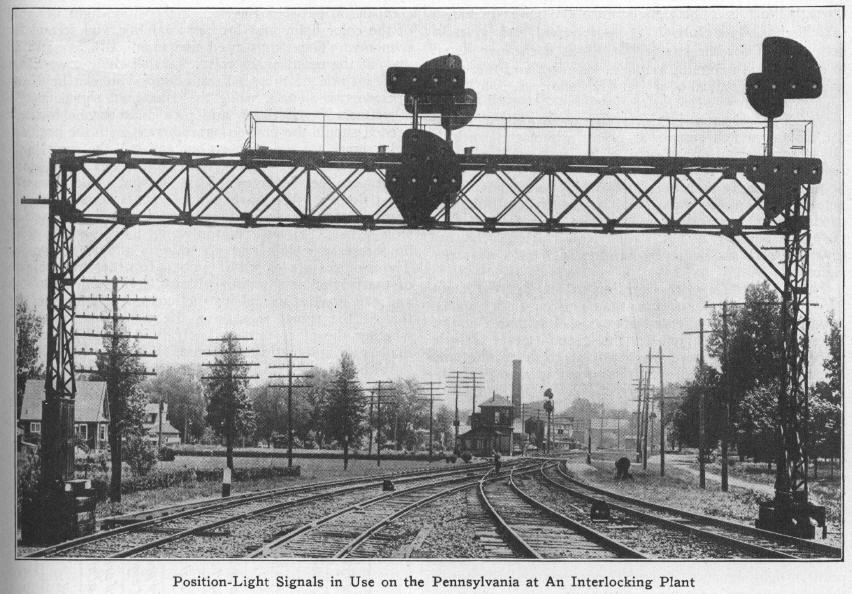
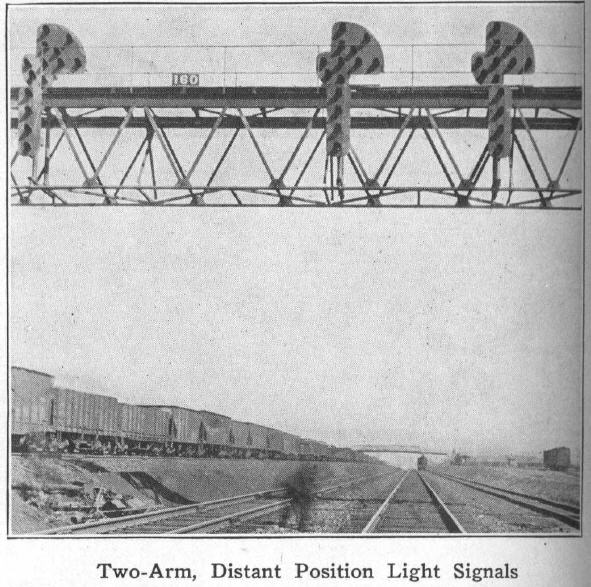
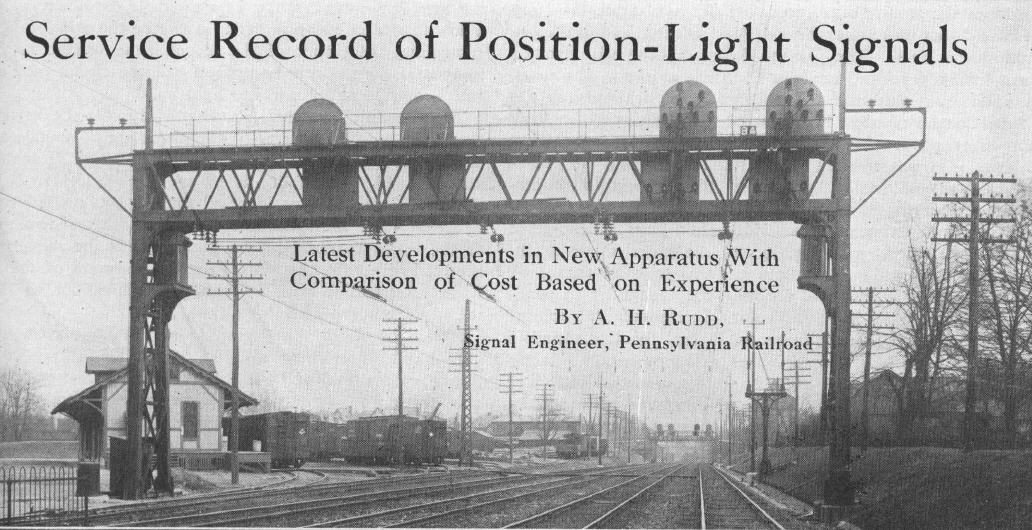
The Pennsylvania Railroad started experimenting with a radically new signal design in 1915 (see my timeline). This signal consisted of rows of yellow lights, in an attempt to simulate the position nature of semaphore signals.
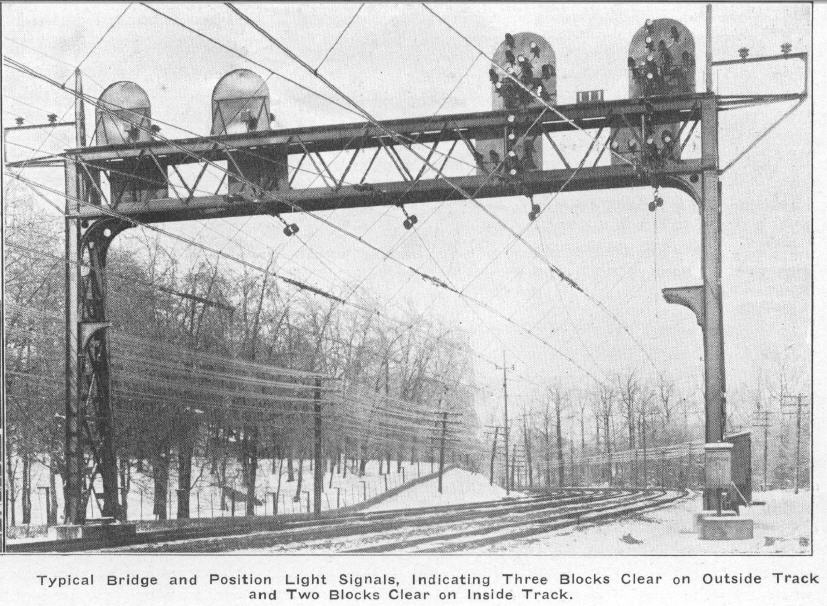
The decision to find a new signal followed the start of electrification in 1913, once they found it was difficult to see semaphores thru the catenary wires (despite this problem, the New Haven stayed with semaphores).
The design of these new signals also coincides with the development of a pale yellow "fog penetrating" lens by Corning.
Both the Norfolk and Western Rwy and the Lehigh Valley RR used PL signals because of their affiliation with the Pennsy. The N&W however, started a colorization program in the mid 60's, deleting the center lamp altogether unlike the "red eye" signals found west of Harrisburg PA on Conrail.
Here are Pennsy related
dates from my signal timeline:
1870's
- The Pennsylvania RR, well known for a long list of "firsts", was among the
first to use semaphore signals for interlocking.
1871
- Pennsylvania RR absorbs the Camden & Amboy, and block signal installation was
completed between Jersey City and Philadelphia.
1882
- The Pennsy installs its first electro-pneumatic lower quadrant semaphores.
1884
- The Pennsy is the first to install an automatic block network utilizing electro-pneumatic lower quadrant semaphores between East Liberty and Wilkensburg PA - by the end of 1884, 65 were in service.
1906
- The first of the three aspect upper quadrant semaphores was installed on the
Pennsylvania RR between W Philadelphia and Elwyn PA.
1906-1908
- Research by corning into lenses and colors, and they came up with the current
green-yellow-red, replacing white-green-red.
1913
- The Pennsylvania RR starts electrification.
1914
- Perfection of a concentrated-filament lamp to provide color light signals a
satisfactory sighting distance.
1915
- Dr. William Churchill of Corning Glass developed a pale yellow
"fog-penetrating" glass, which the PRR then used in their PL signals.
1915
- The Pennsy
introduces (experiments) with the
first version of the PL (position light) signal and it is nick-named a
"tombstone" signal because the top of the signal was round and the signal
resembled an old tombstone…… also, later adopted on
it's affiliates the N&W
and LV.
1916
- The PRR and NYC finally change their rulebooks to reflect green being used for
proceed instead of white.
1917 - They changes the shape of the
"tombstone" signals slightly so they do not present as much wind loading as the
older style… they also used "stepped" voltages of 11, 6, and 4 volts to adjust
for day, twilight, and night (and these were manual adjustments made by the
signal guys).
1918 - The PRR simplifies the design of
their PL signals, eliminating one of the four "heads" for each aspect.
1921 - Pennsy's PL's started taking the
shape and configuration were are accustomed to today.
1954 - Pennsy's started experimenting with
"red eye" signals at Overbrook PA (Philadelphia).
1956 - First time the "red eye" signals are
shown in the rulebook.
If you are interested in a most complete history of the Pennsylvania Railroad and their signaling, check out J. B. Calvert's page.
Early Position Light Signals
Tombstones


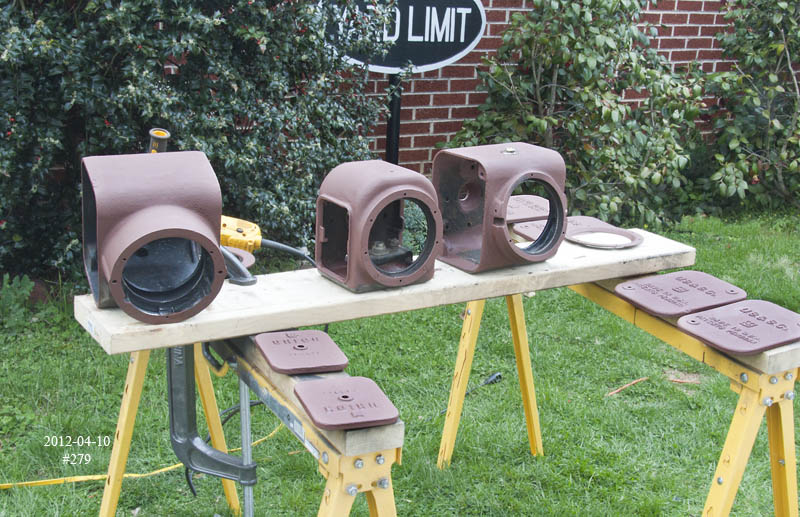
PL heads being cleaned up, (L to R): PL-3, PL-1, PL-2
Photo courtesy A. Burnett
The Pennsy, in 1918, simplified the Tombstone signal to pretty much the design that exists today on Amtrak and the Norfolk Southern, although Amtrak started the transition to colorized versions in 1988, eliminating the center lamp. Conrail in some locations substituted red lenses for the stop aspect (sans the middle lamp, also called the "pivot" lamp), keeping the center lamps for the other indications which are still all yellow.
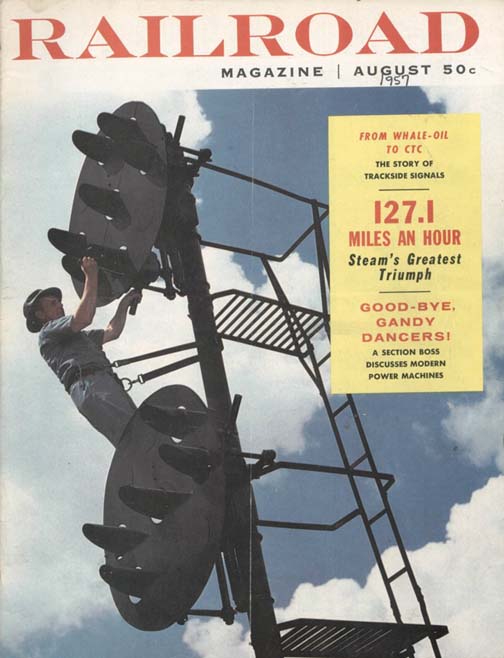
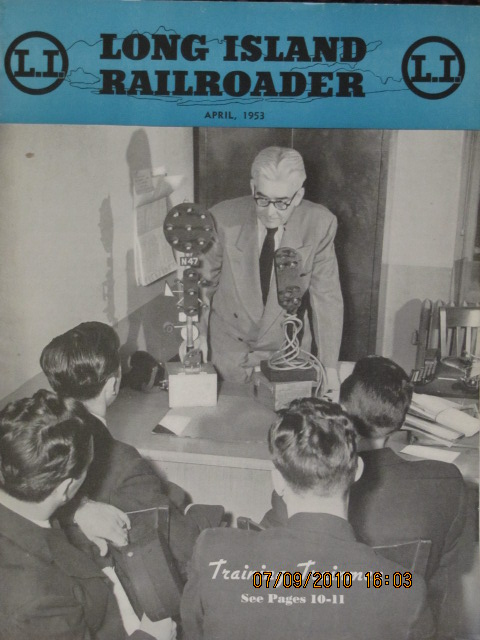
Cover of the Long Island RR's monthly
magazine, the Railroader, showing a training class on signals for the engineers
Notice on the left you have a high and dwarf PL, and on the right, a pedestal signal
Wouldn't you love to have those two classroom aides now?
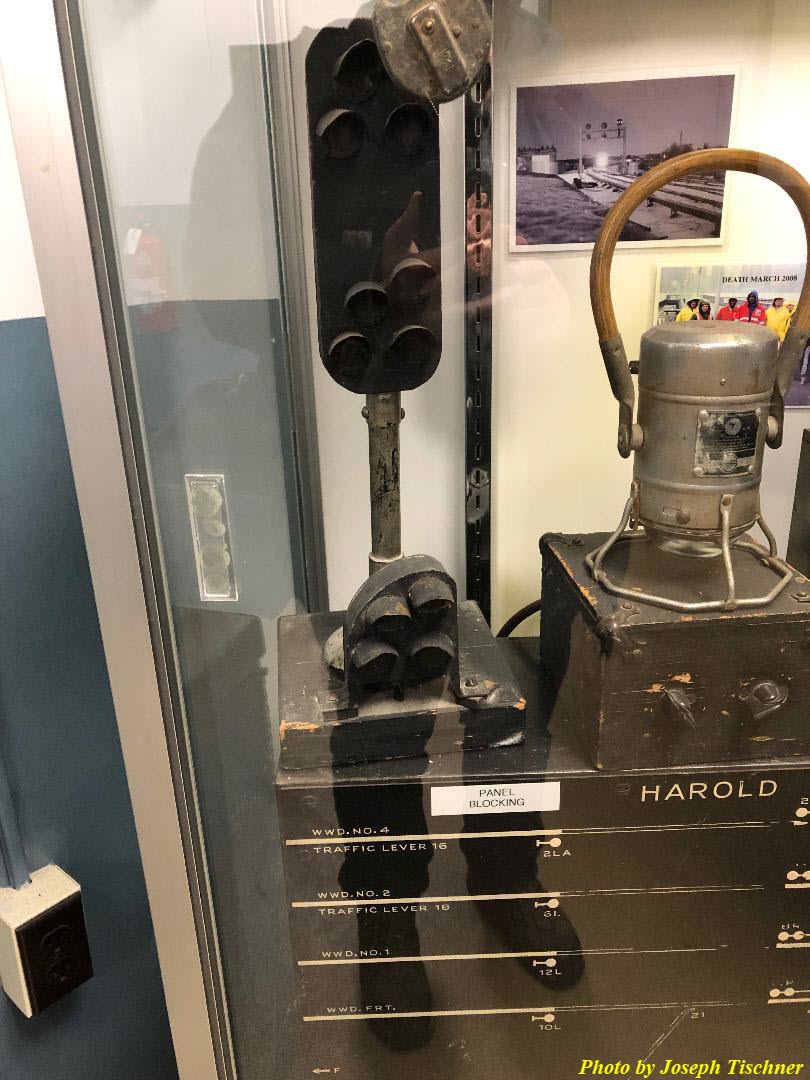
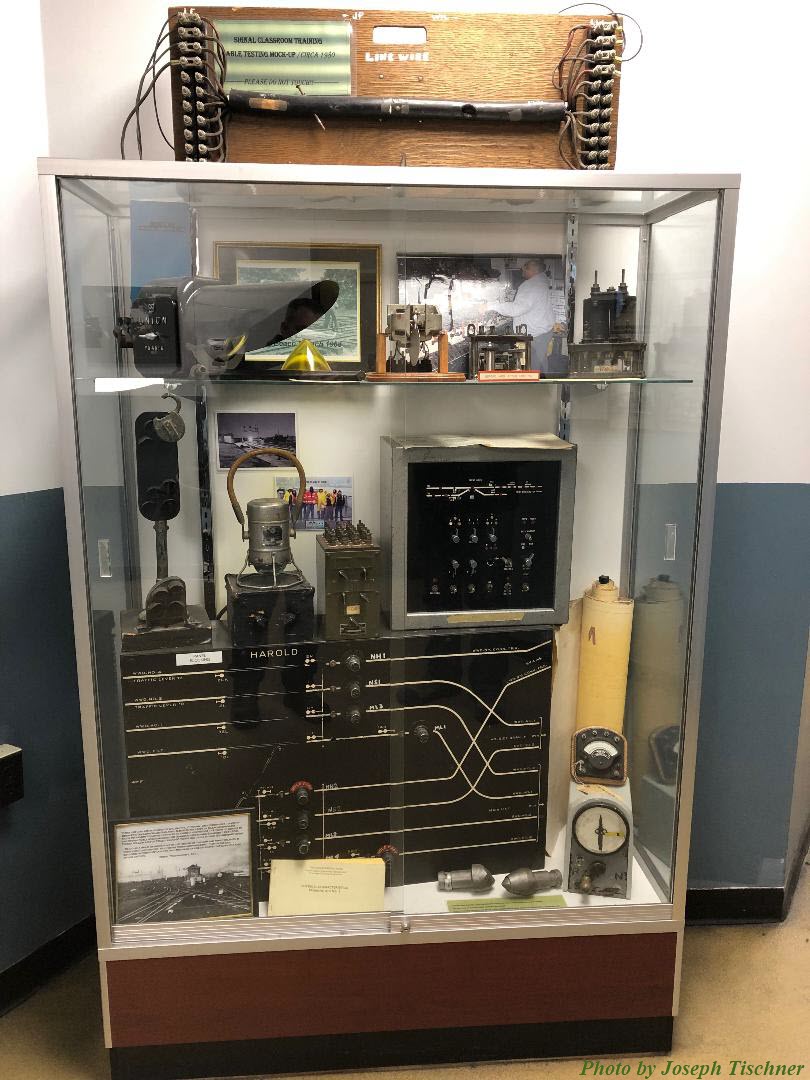
Here are a couple of pictures of vintage equipment on display used by the LIRR
in their training center.
In the left picture, you can see the pedestal signal featured on the LIRR
magazine cover above with the dwarf signal added.
Pictures courtesy Joseph Tischner.
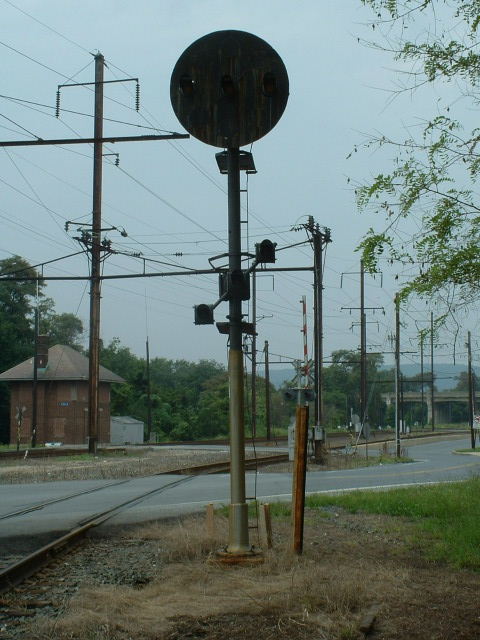
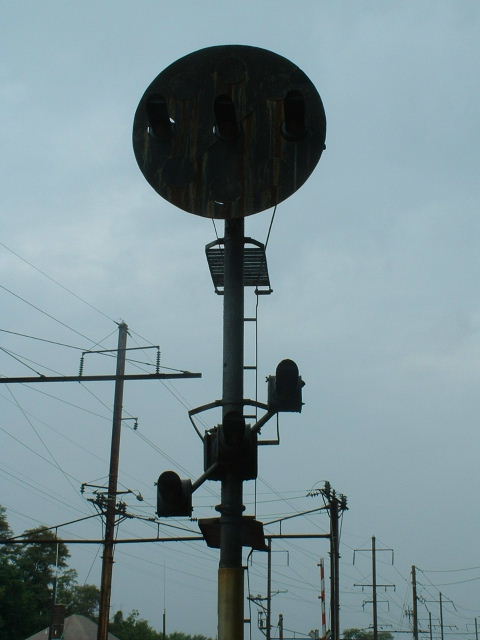
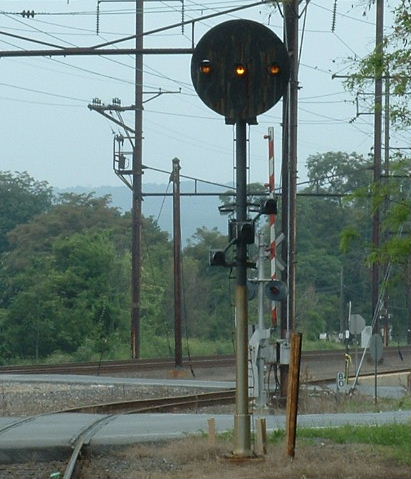

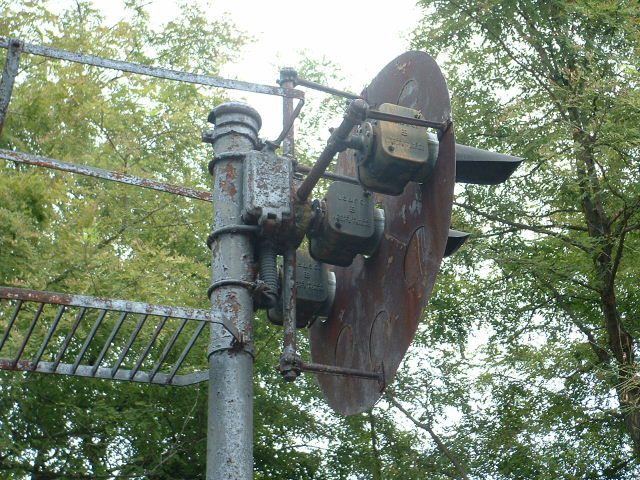
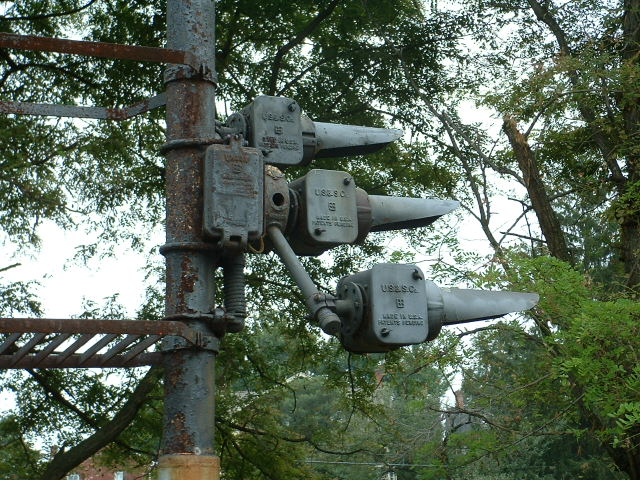
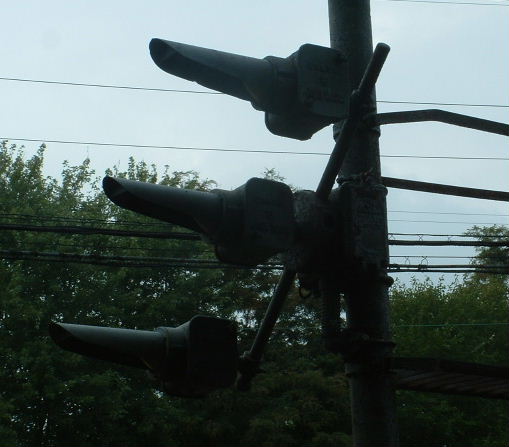
A signal in Columbia PA, just south of Rt 30 along the Susquehanna River. This signal controls a siding (used to
be the line to Lancaster PA) where is runs into the mainline. Pictures taken SEP2003. Note that signal has
not been colorized. The photo at the top of the page is also from this set.
The PL signals were replaced by color light signals sometime around 2012 or 2013.
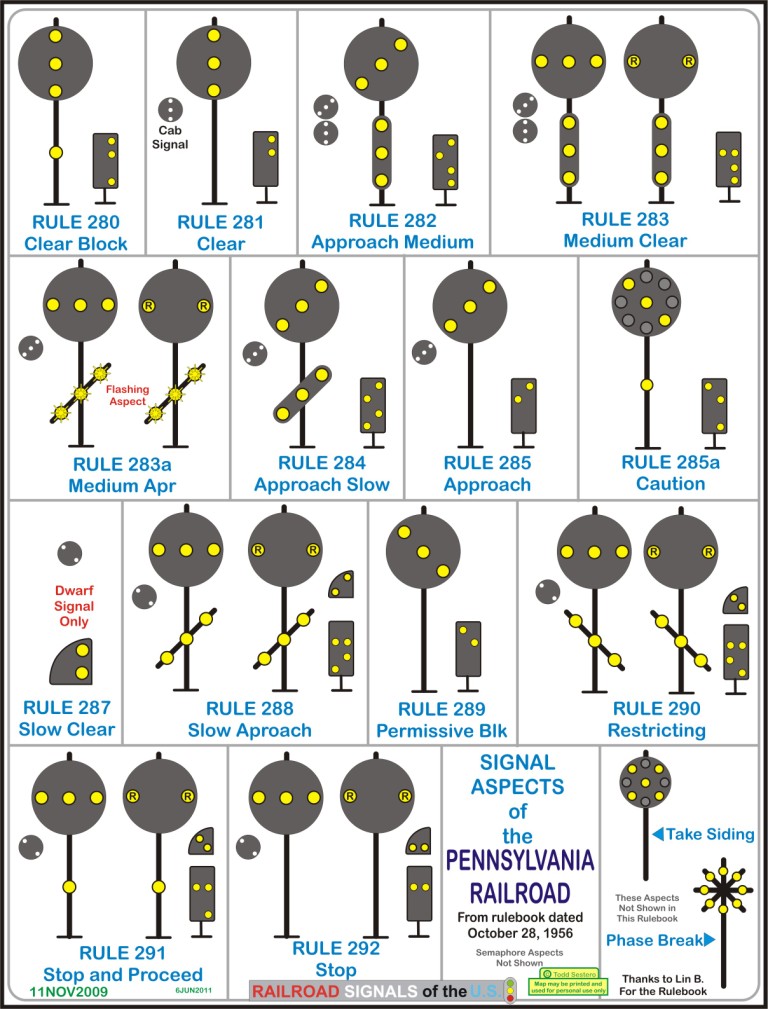
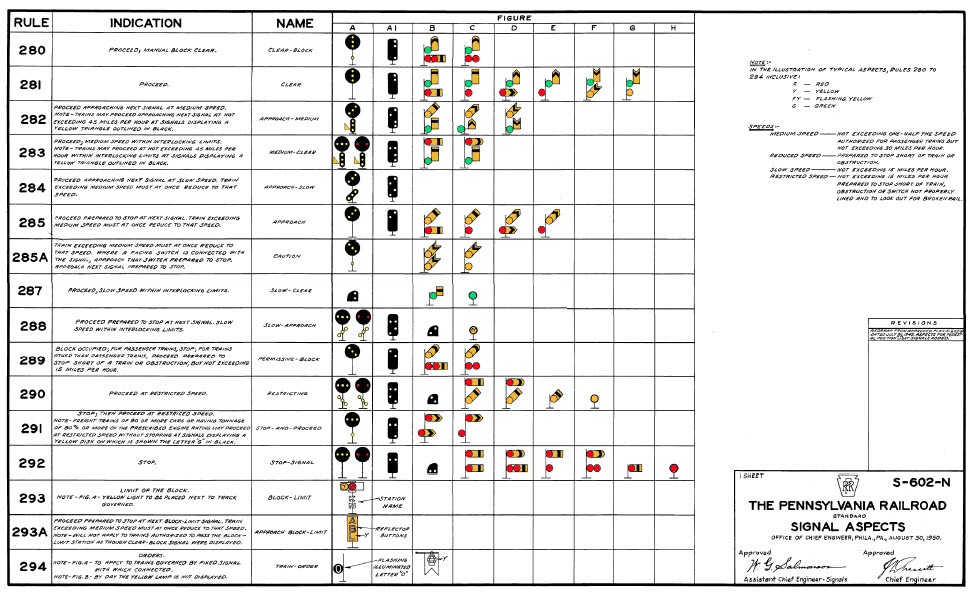
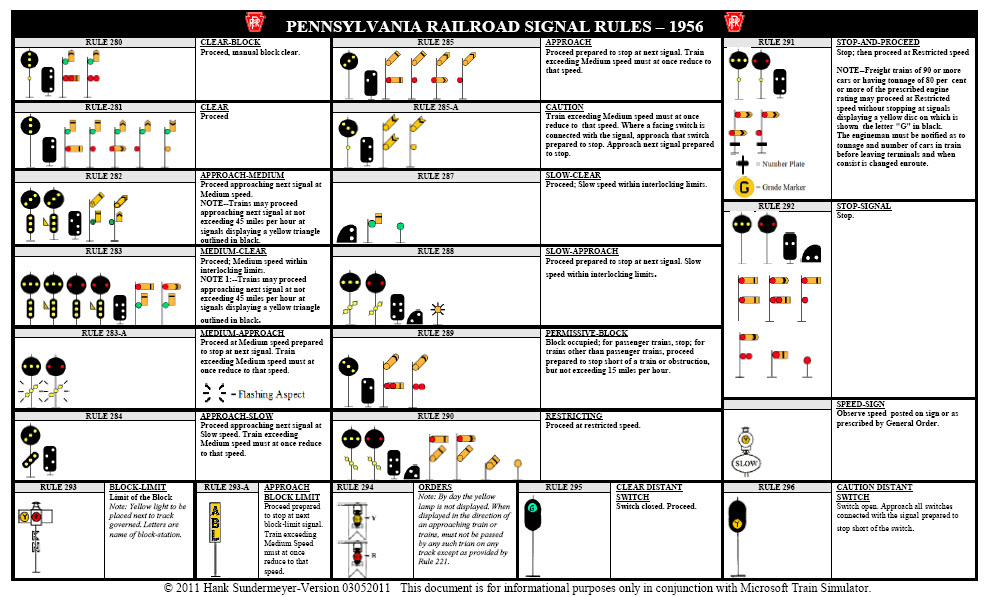
Click Here for this in PDF format
click here for a PDF copy of the 1956
Pennsy rulebook (about 500K)
Thanks to Lin B. for setting me up with the rulebook!
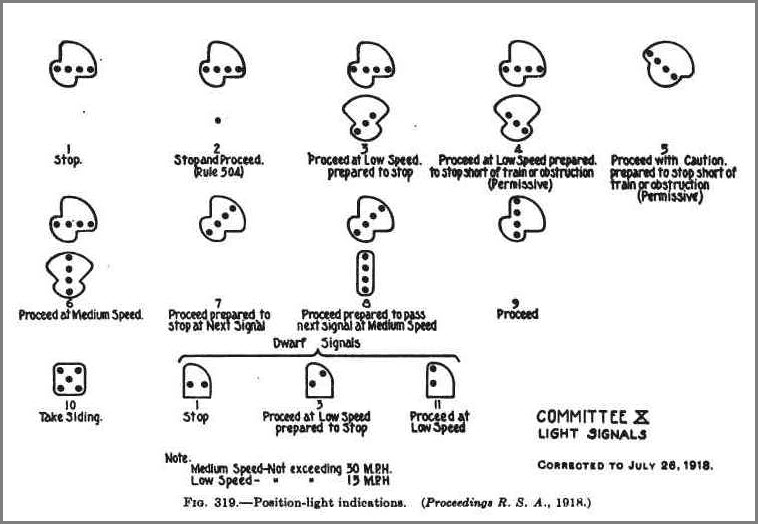
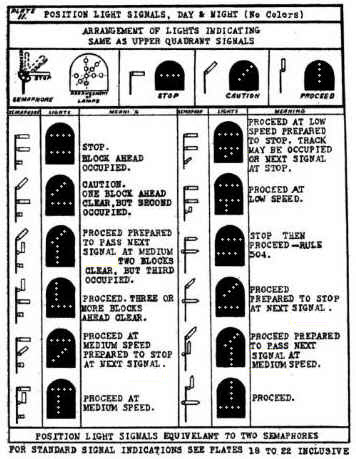
Both of the below signal charts are courtesy Hank Sundermeyer.
PL Signal Upper Head Variations
Single aspect Upper Head
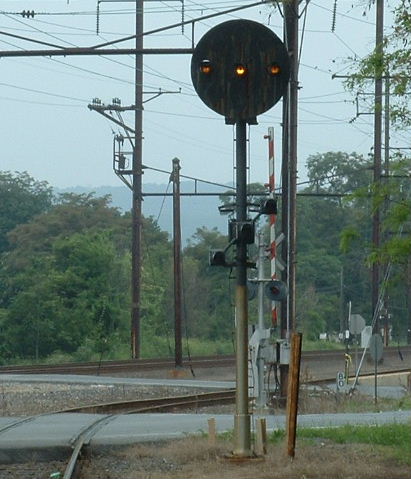
You can find this signal controlling a branch line entering the main line in Columbia PA.
2 aspect Upper Head
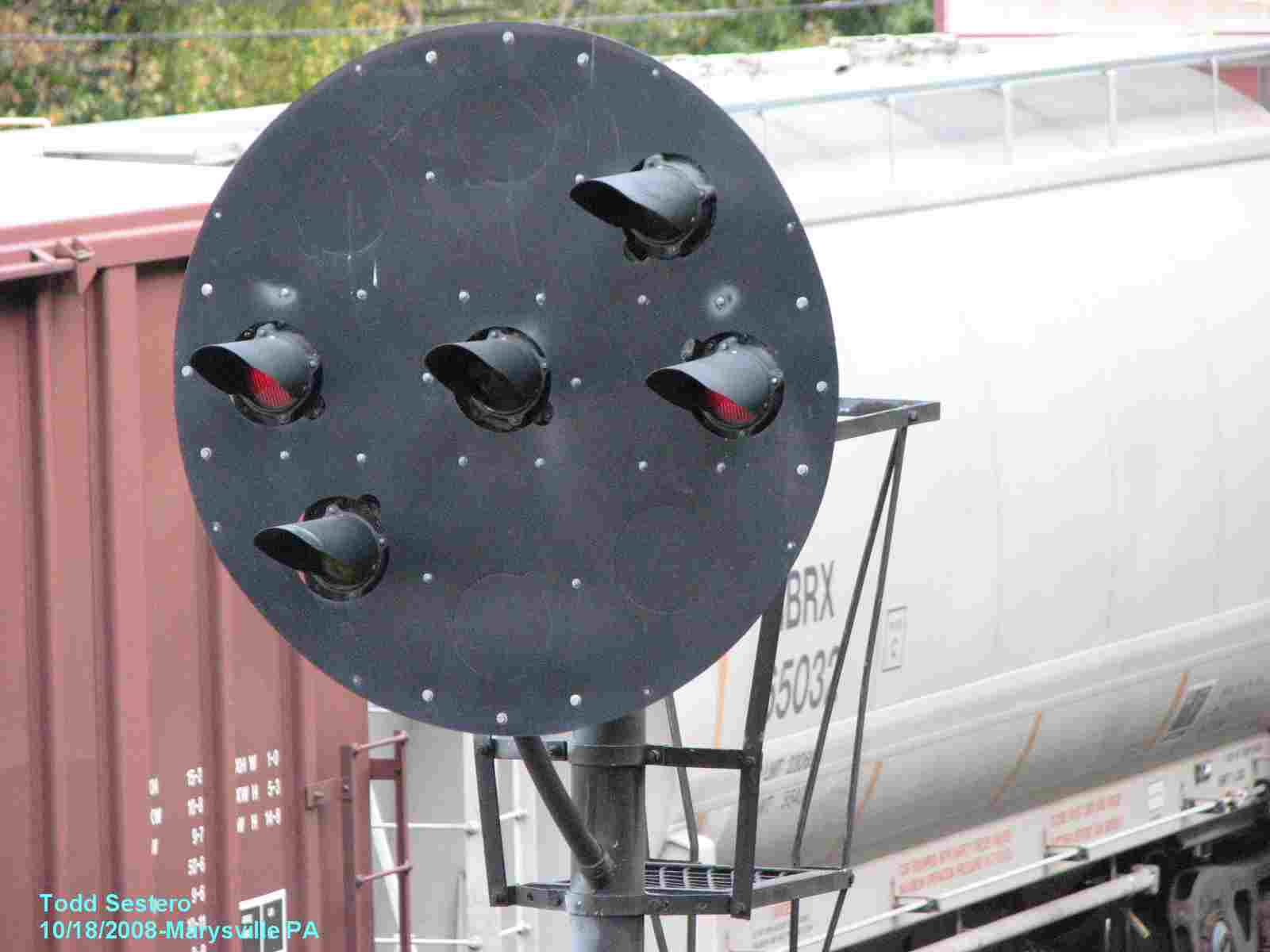
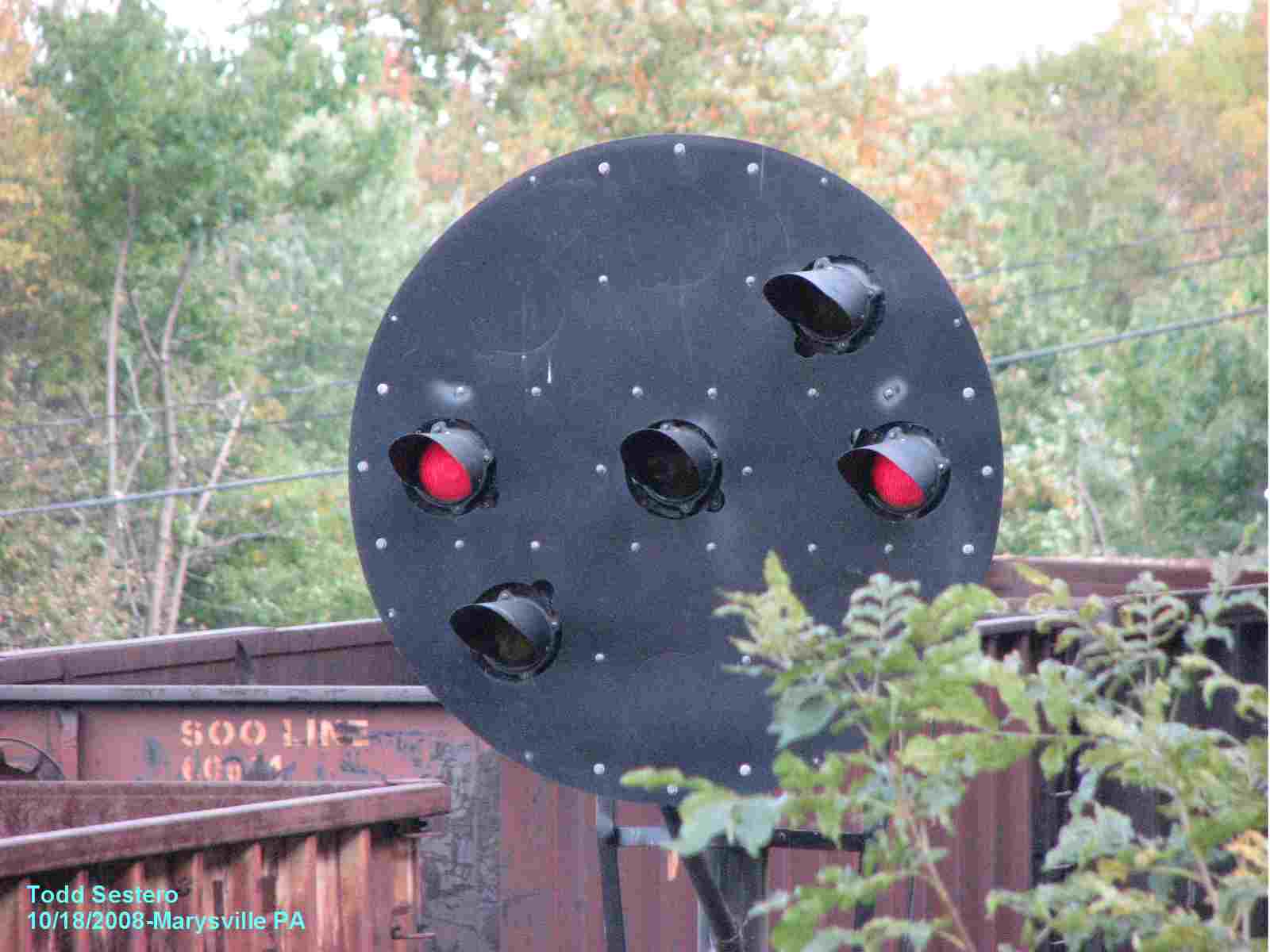
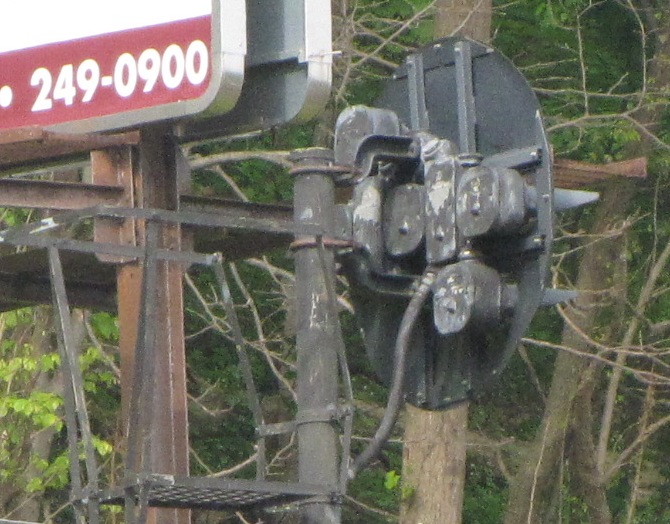
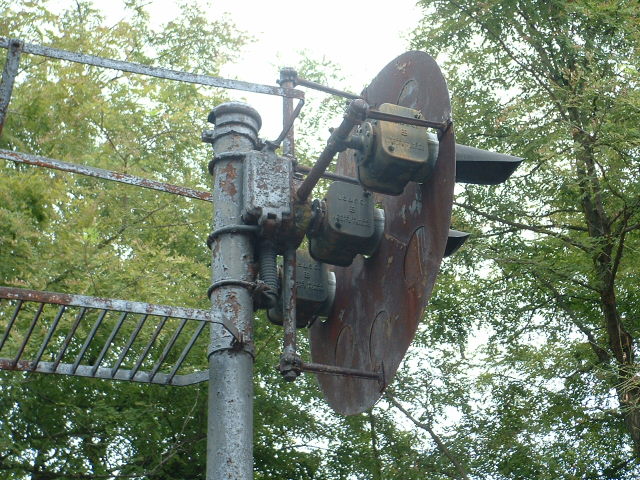
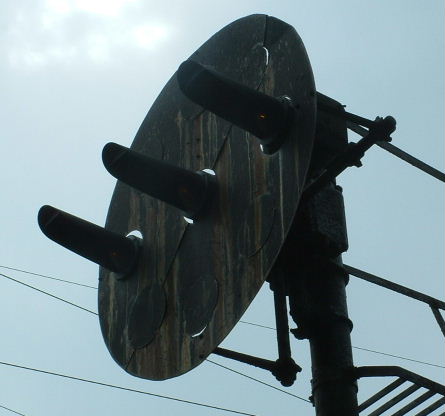
Top head of a two head signal in
Marysville PA. The signal is not an original PL, as it is a Safetran
replacement. The stop indication has had the yellow lenses replaced with
red lenses, in what has been nick-named a "red-eye" signal. Picture on the
right is the rear of the signal.
3 aspect Upper Head
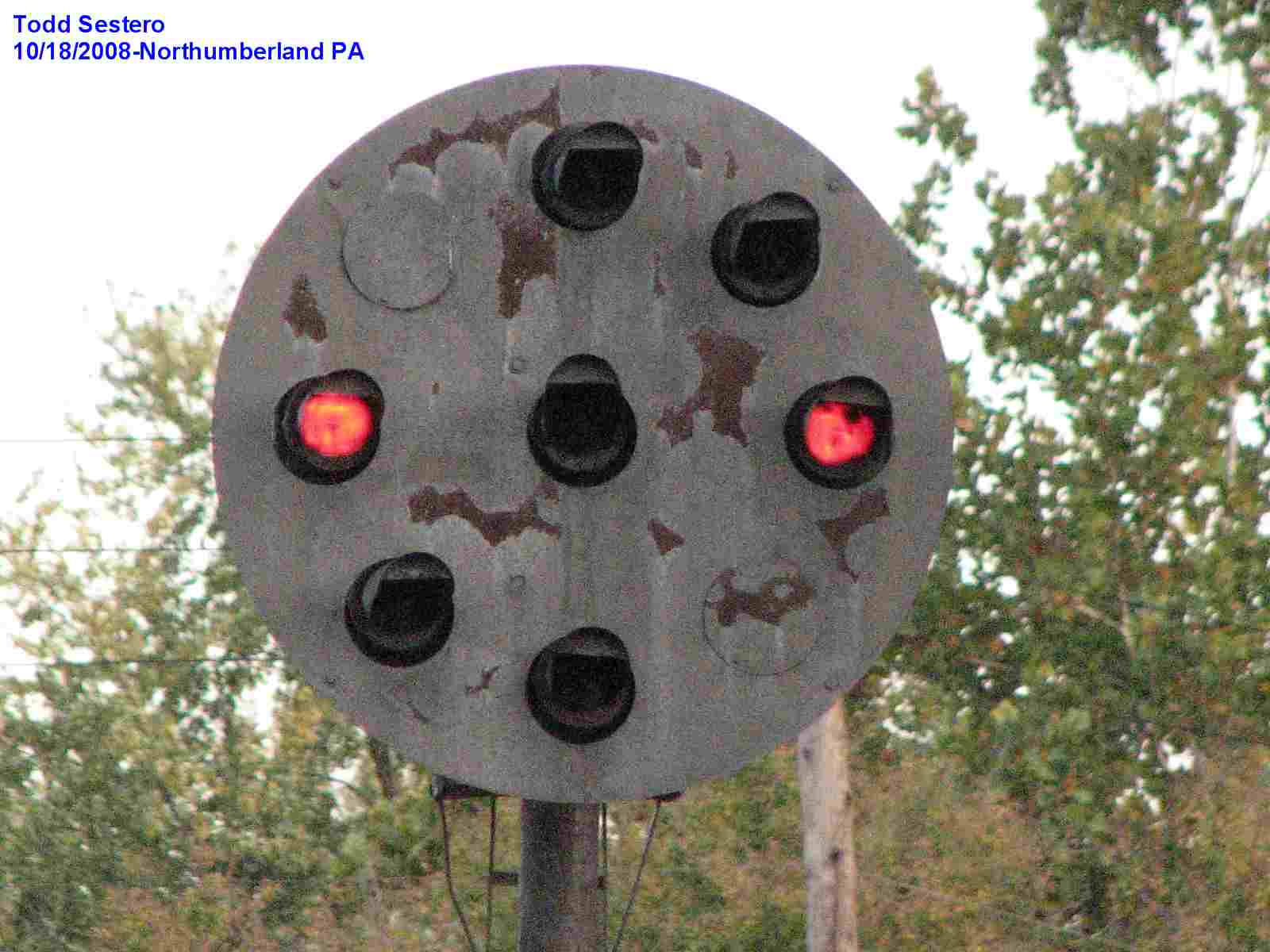

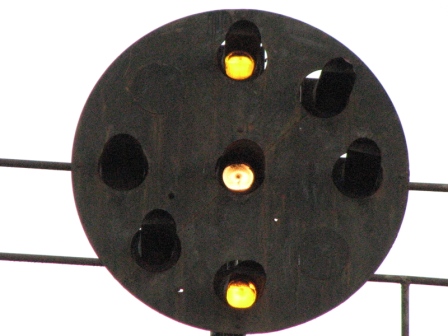
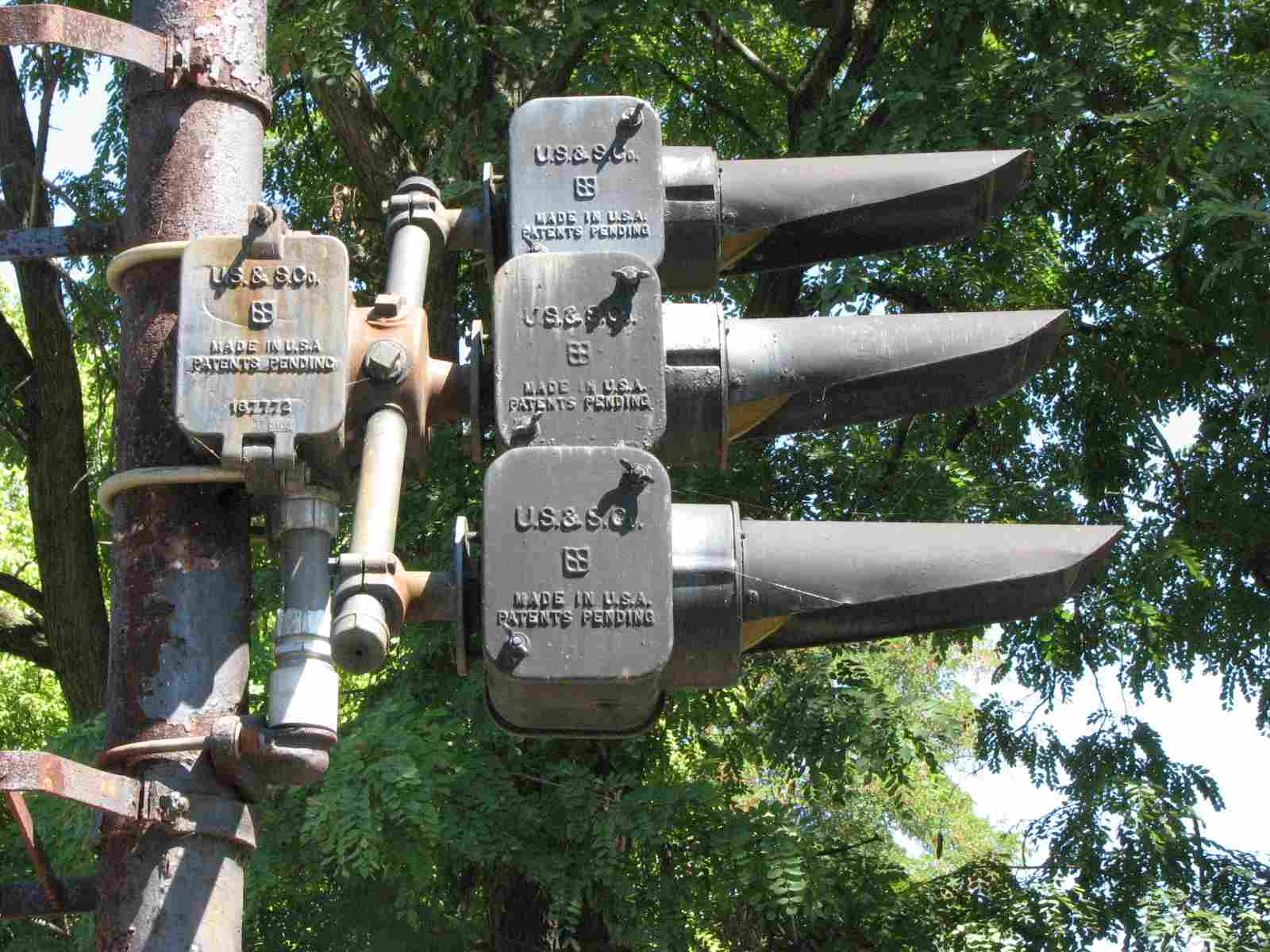
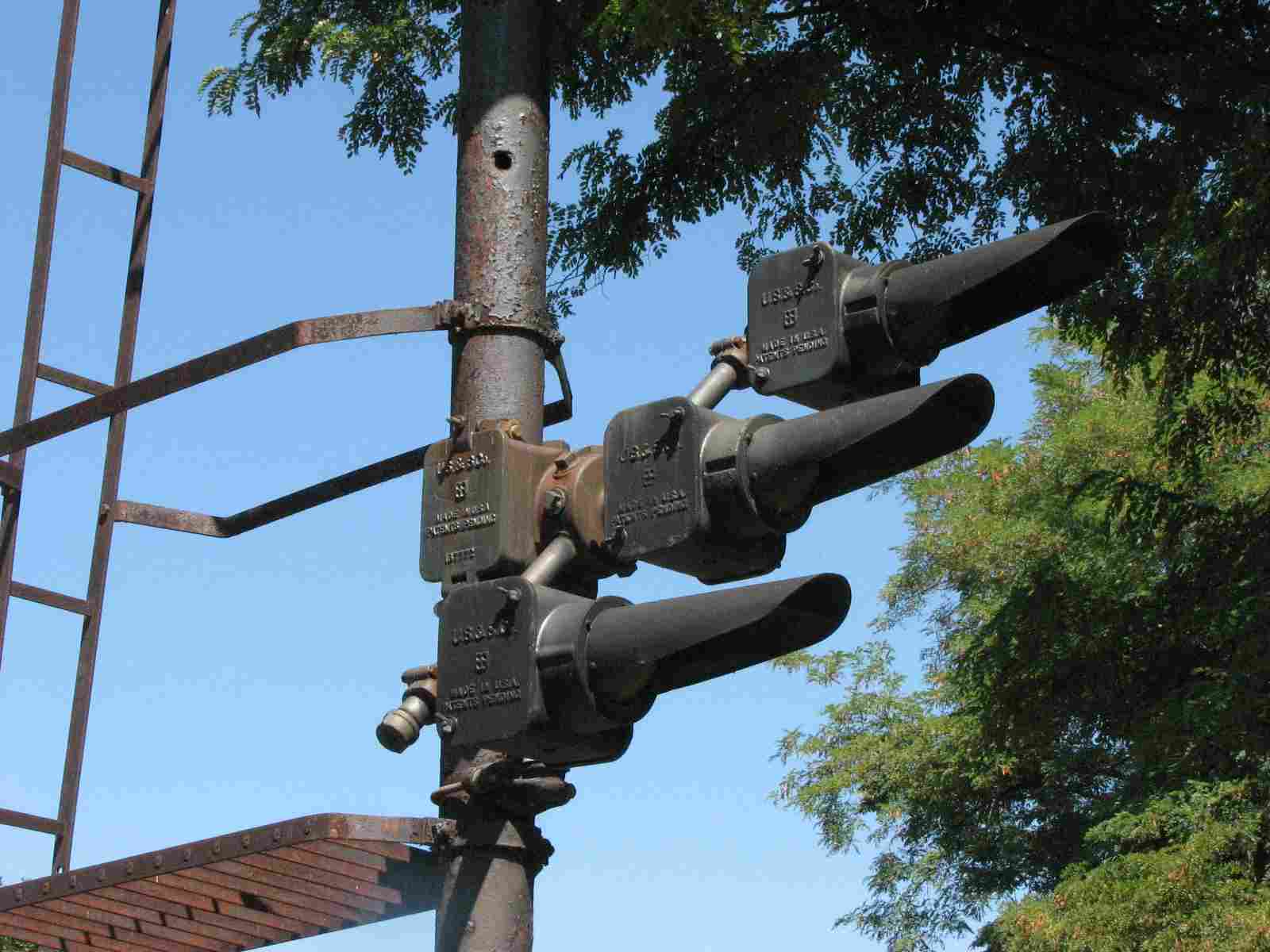
(L) Top head of a signal in Northumberland
PA (the lower head is below). (M/R) Signal heads in Maple PA, just west of
Mt Union and the EBT. Notice the visor you will find on the hood
of older original PL signals.
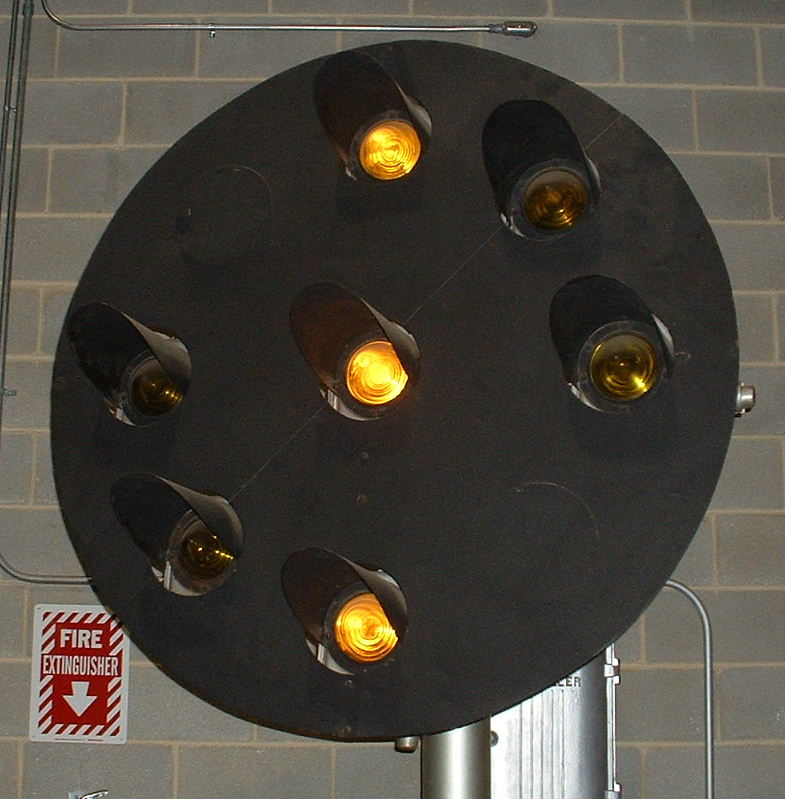
A nicely restored Pennsy PL signal at the Railroad Museum of Pennsylvania in Strasburg, until you notice that they do not have the proper lenses in the lamps. The hoods also look to be a little on the short side.
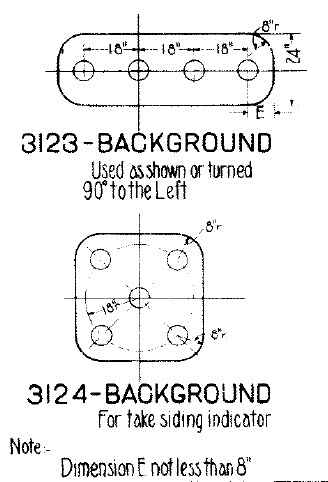
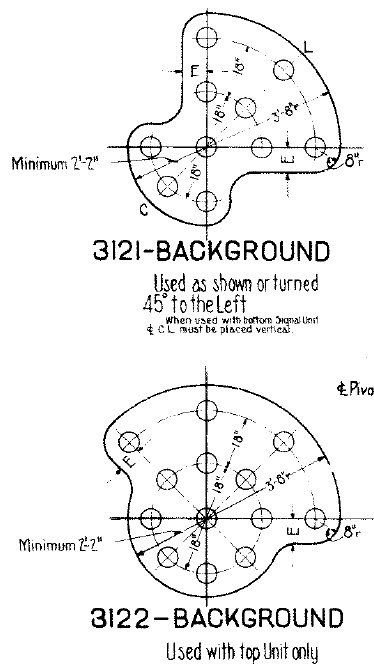
Lower heads seem to have much less consistency in there appearance than the upper head, when present. The drawing below shows you the possible variations in lower head backgrounds (or lack thereof).
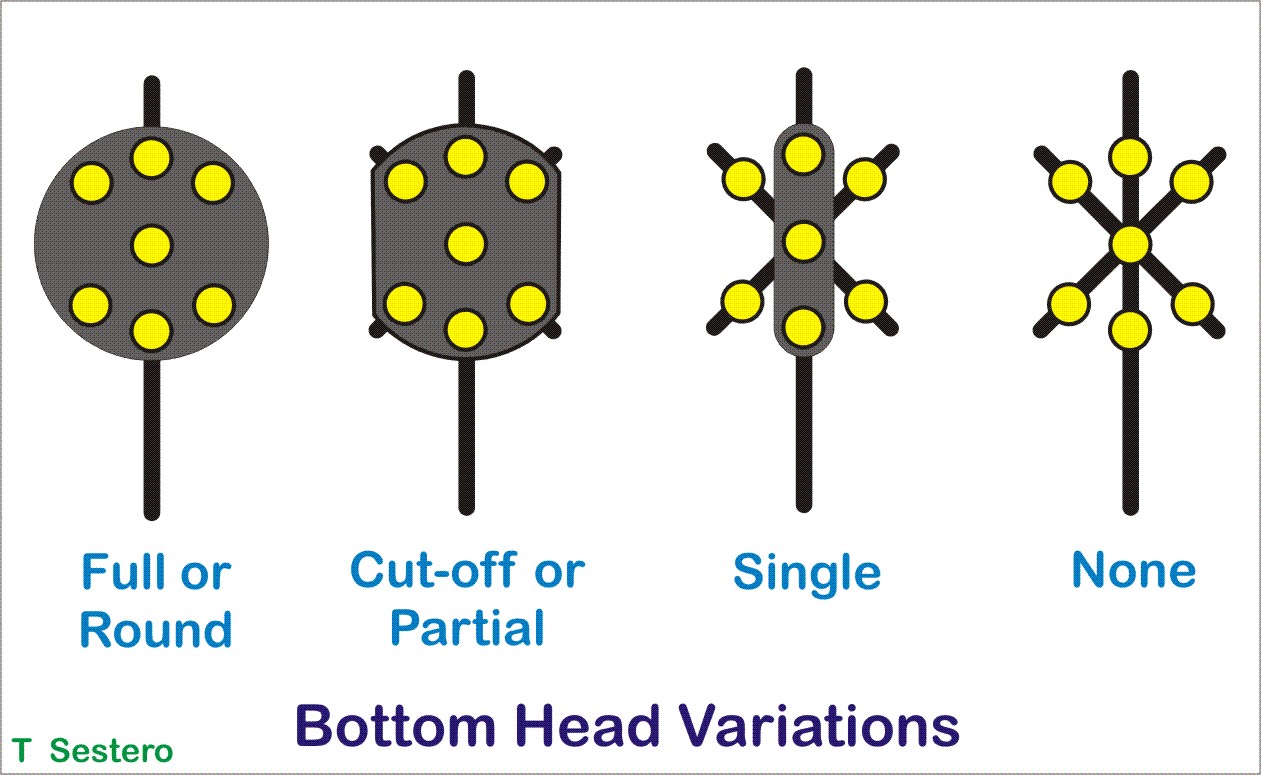
If more than one aspect was displayed, there was usually a round face with flat sides - a partial or cut-off background, as shown on the left directly below. On the picture to the right, the "round" face was used/retained, even though two of the three aspects are not present (not sure if they were ever there or not).
Much less common, is a full round background, as can be found north of Marysville PA in the second set of pictures. This set of pictures also illustrates a variance in standard PRR practice, where both signal heads are above the bridge structure. Usually, the bottom head would be in front of the bridge in between the two decks.
From a comment from Dave M. in the red-eye section, he has this to say about the lower backgrounds:
Information on the backgrounds may come from an A.H. Rudd article in the
July 1921 issue of Railway Signal Engineer. There he indicates that a background
was only applied to the vertical row of lights in the lower arm since those
aspects are approached at speed (Approach Medium and Medium Clear, using their
current names). The diagonal and single marker slow speed aspects (Slow
Approach, Restricting, and Stop and Proceed, using their current names) did not
need a background since long range sighting was unnecessary. The reduced size of
the background and wind pressure area allowed the use of standard sized signal
masts (weight and wind were issues with the early four-light position signals on
masts).
With the introduction of Approach Slow in the late 1940's and Medium Approach in
1955 and 1956, there were lower arm aspects that would be approached at higher
speeds. I suspect this was the driving force behind full backgrounds for the
lower arm. I have no specific references, but it does seem that those full
backgrounds seemed to become much more common starting in the later 1950's.
The diagonal lower head in the third set of pictures was the most commonly used variation when only one diagonal aspect was used. Sometimes an oblong background was used, but they were used mostly when a vertical aspect was used by itself.
On intermediate signals where a single lamp was used for the "stop and proceed" indication, no background is used, the lamp is naked.
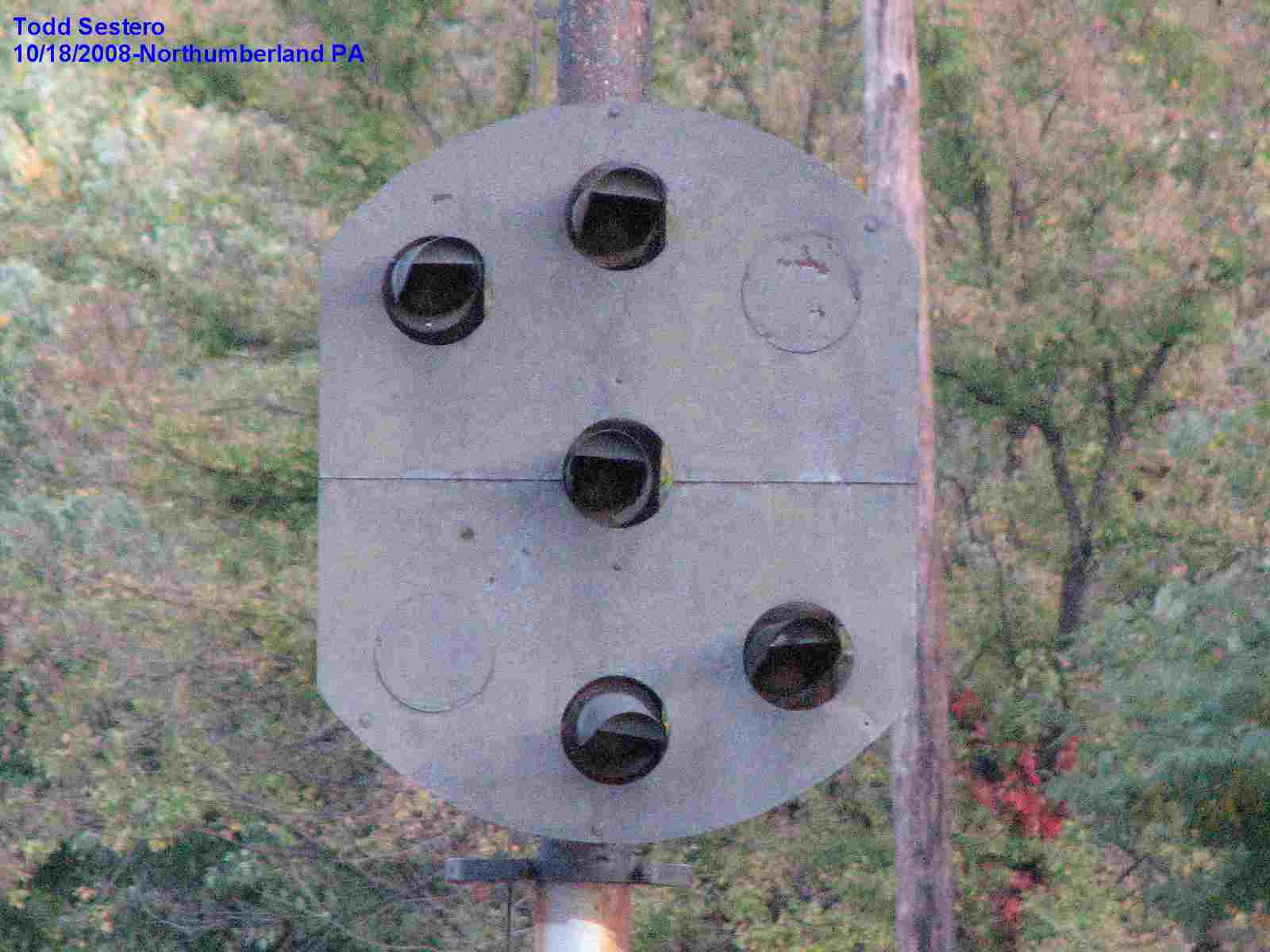
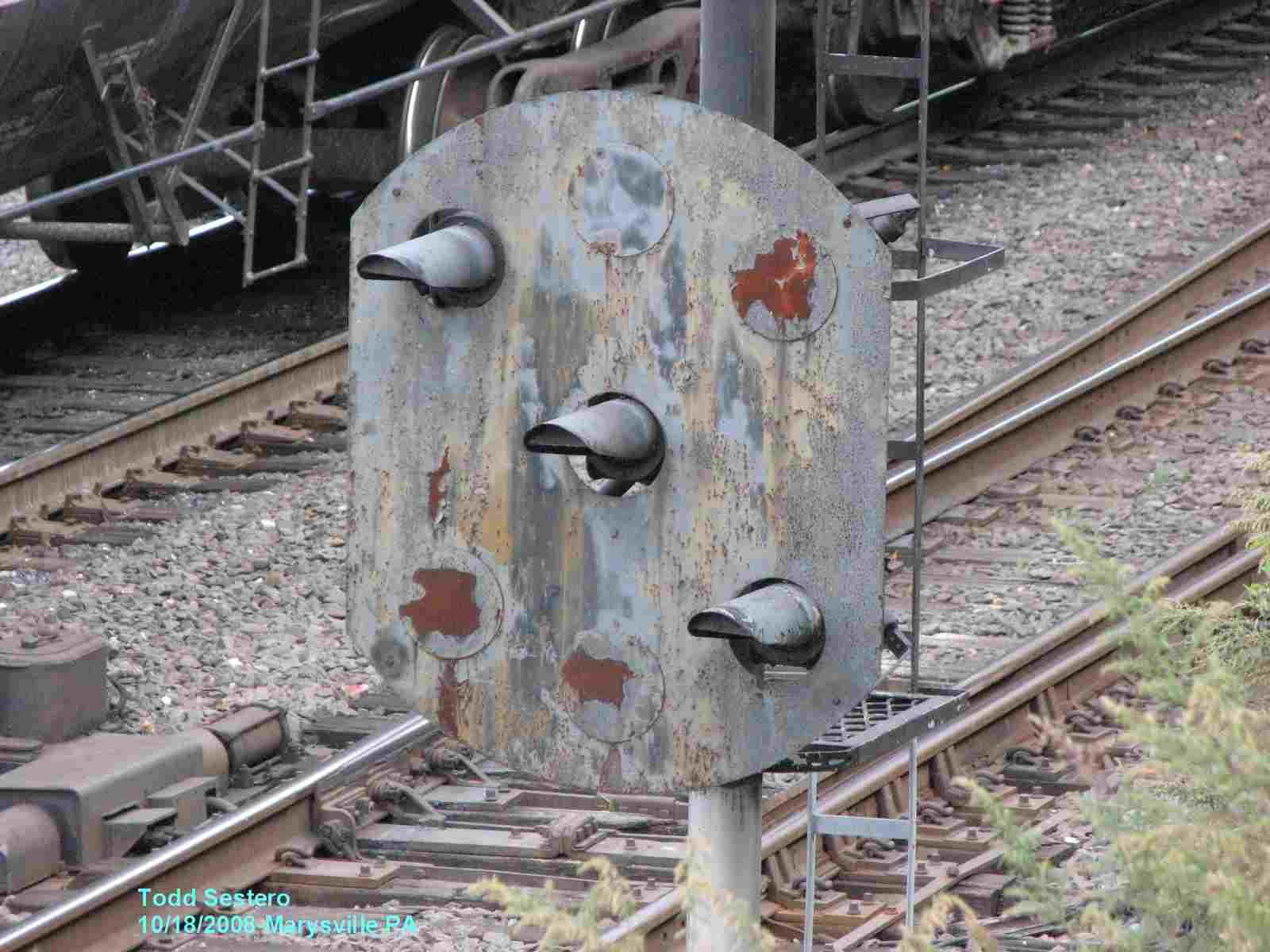
A couple of standard lower heads, with
the background sides cut off . The head on the right is the lower head of
the Marysville signal above, the other one is in Northumberland PA.
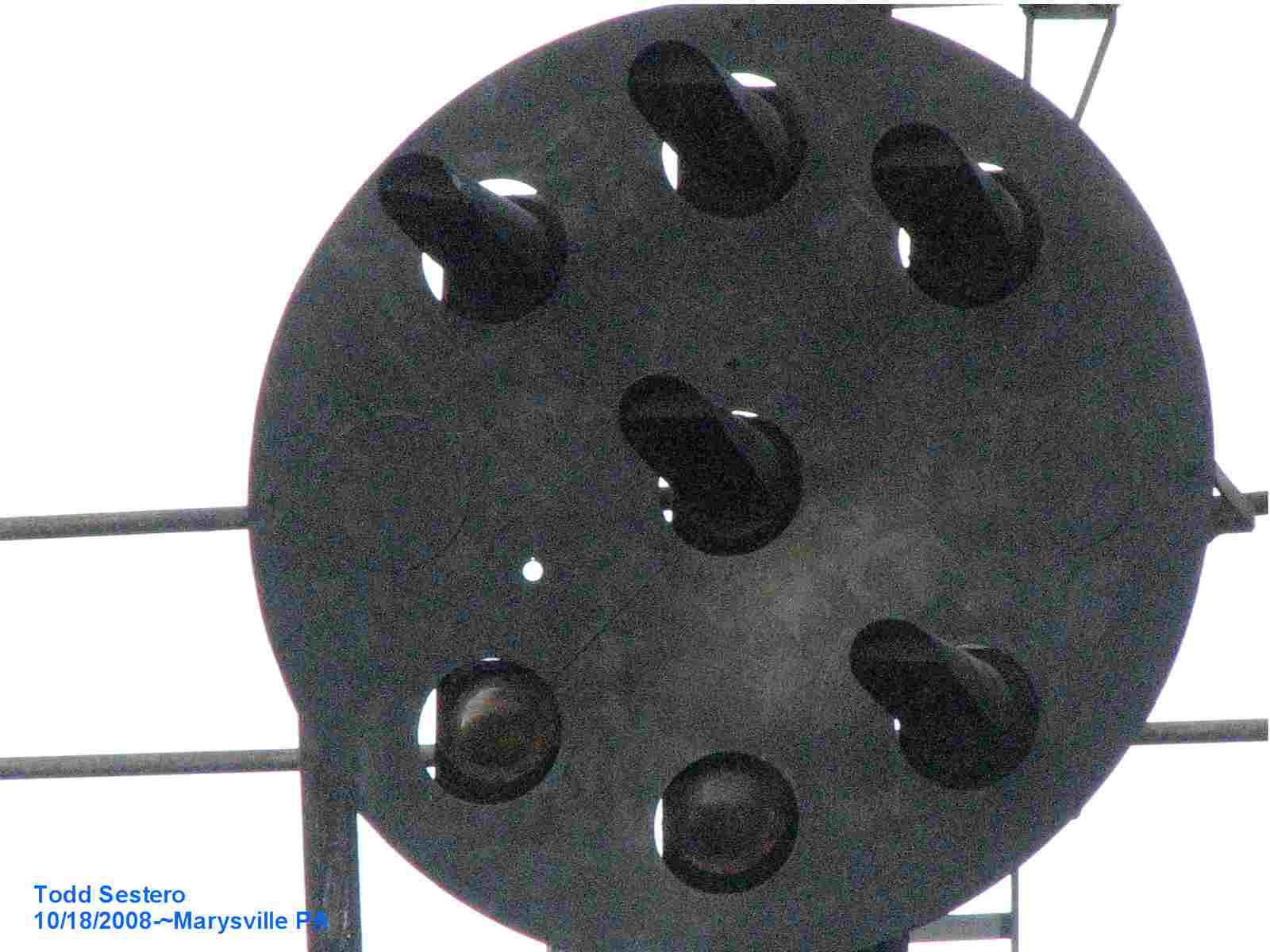
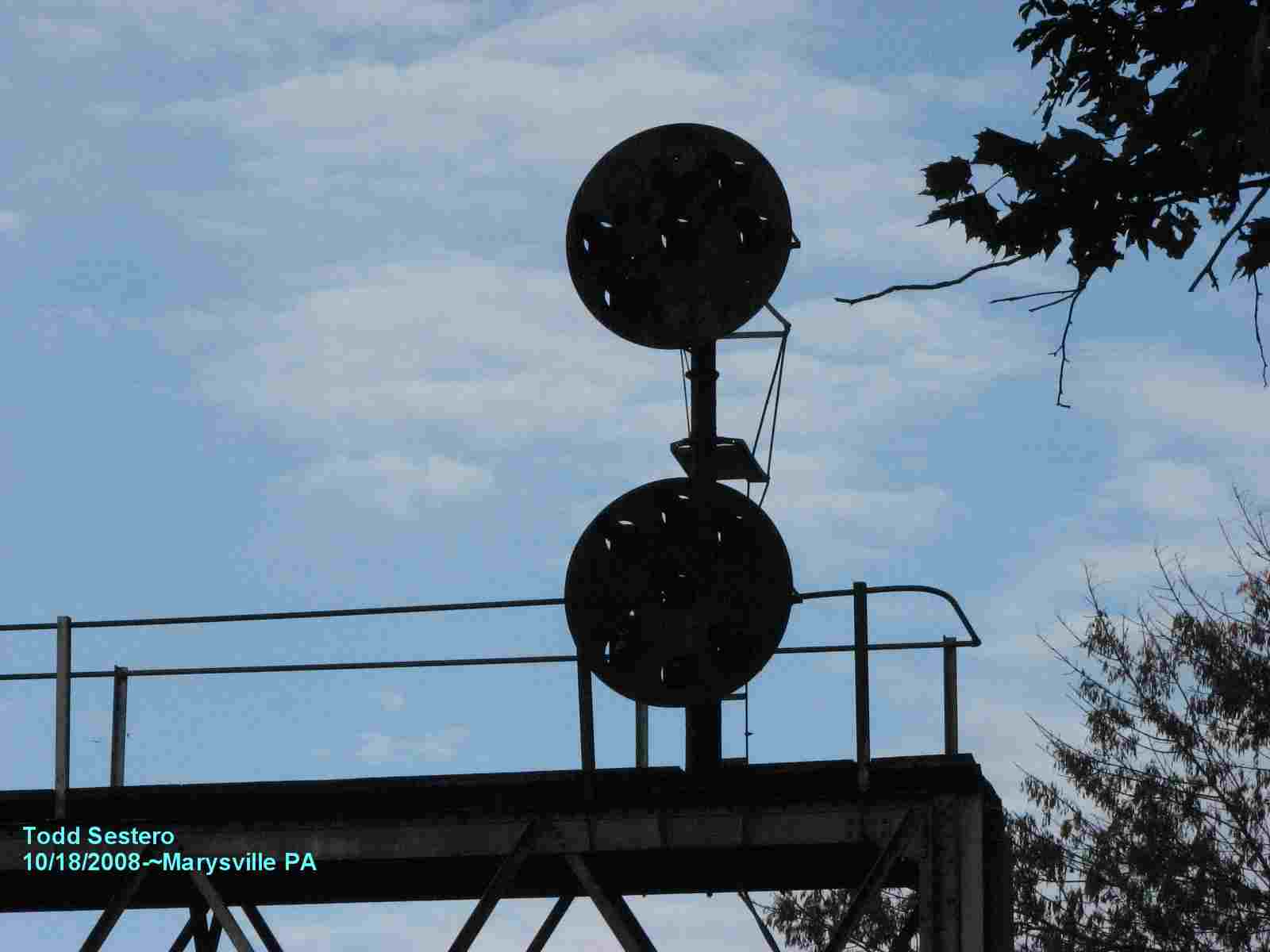
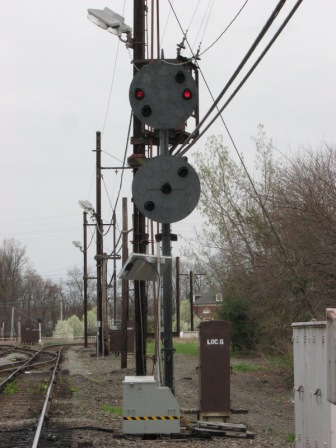
Just north of Marysville PA is a signal
bridge with three SB signals. This is one of the three, in which the lower
head has a full round background. Not many of them around. On the
right, another example of a full background on the bottom head is from
Perryville MD - a freight coming down the Port Road from Harrisburg would see
this signal.... Baltimore is to the right and Philly is to the left at this wye,
with a hint of Perryville commuter station in the background.
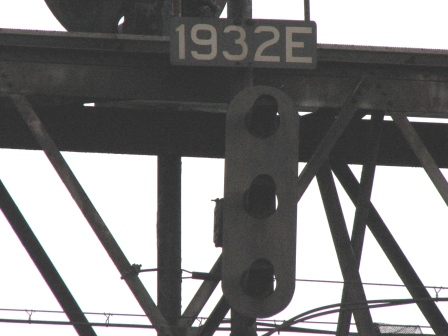
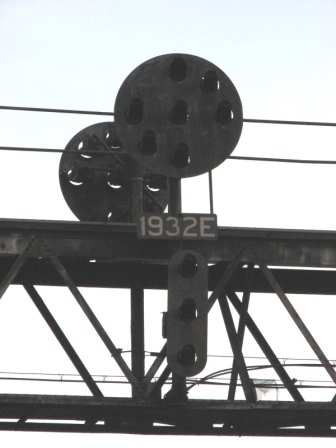
Typical single aspect diagonal lower
head without a background, in Columbia PA
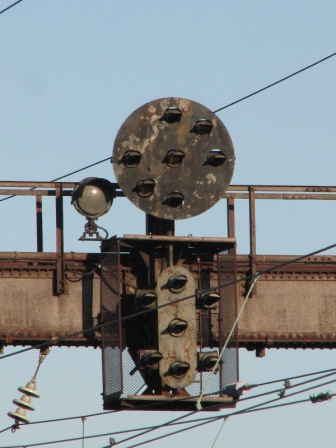
Typical single aspect lower head with background in Mapleton
PA.
A full PL signal, showing how half of the lower heads were
installed, with a vertical background on only the one aspect. Why is this
a full PL signal? The restrict aspect is only displayed on the lower head,
hence, those positions are blanked out on the upper head, and the stop aspect is
only displayed on the top head, that's why there are no horizontal signal lamps
on the bottom head (the center lamp on the bottom head is used in conjunction
with the horizontal lamps on the upper head for stop).
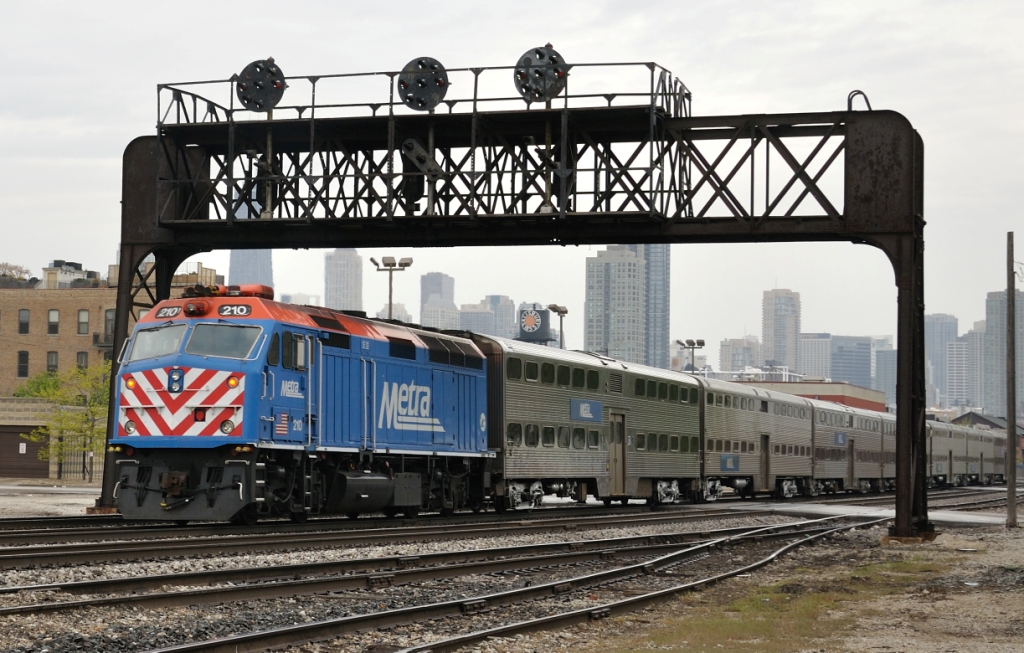
A former PRR signal bridge in Chicago, with a METRA commuter
returning to Chicago Union Station on 4/23/2010, picture by VXLA. Notice
the lower heads - one has a background, the other two do not. Notice the
signal has been "colorized" with a red stop aspects. I'd like to see the
other side of the bridge, cause they look like color light signals. The
original can be seen on Flickr at:
http://www.flickr.com/photos/vxla/4547917847/ .....if VXLA wants better
credit, please email me...
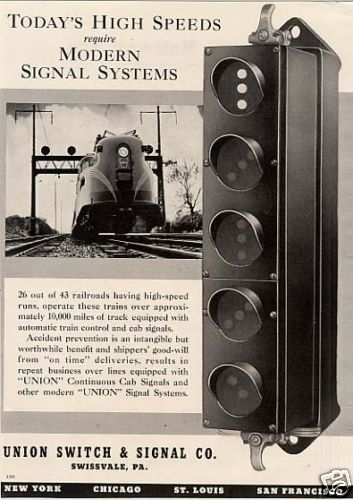
The Pennsylvania Railroad made extensive use of cab signals. Cab signals did not always show exactly what the wayside signals displayed. The chart above shows what wayside signal aspects showed up as cab signal aspects. These show up on EBay every once and a while anywhere from $200 on up, depending on condition.
PL Signal Variations
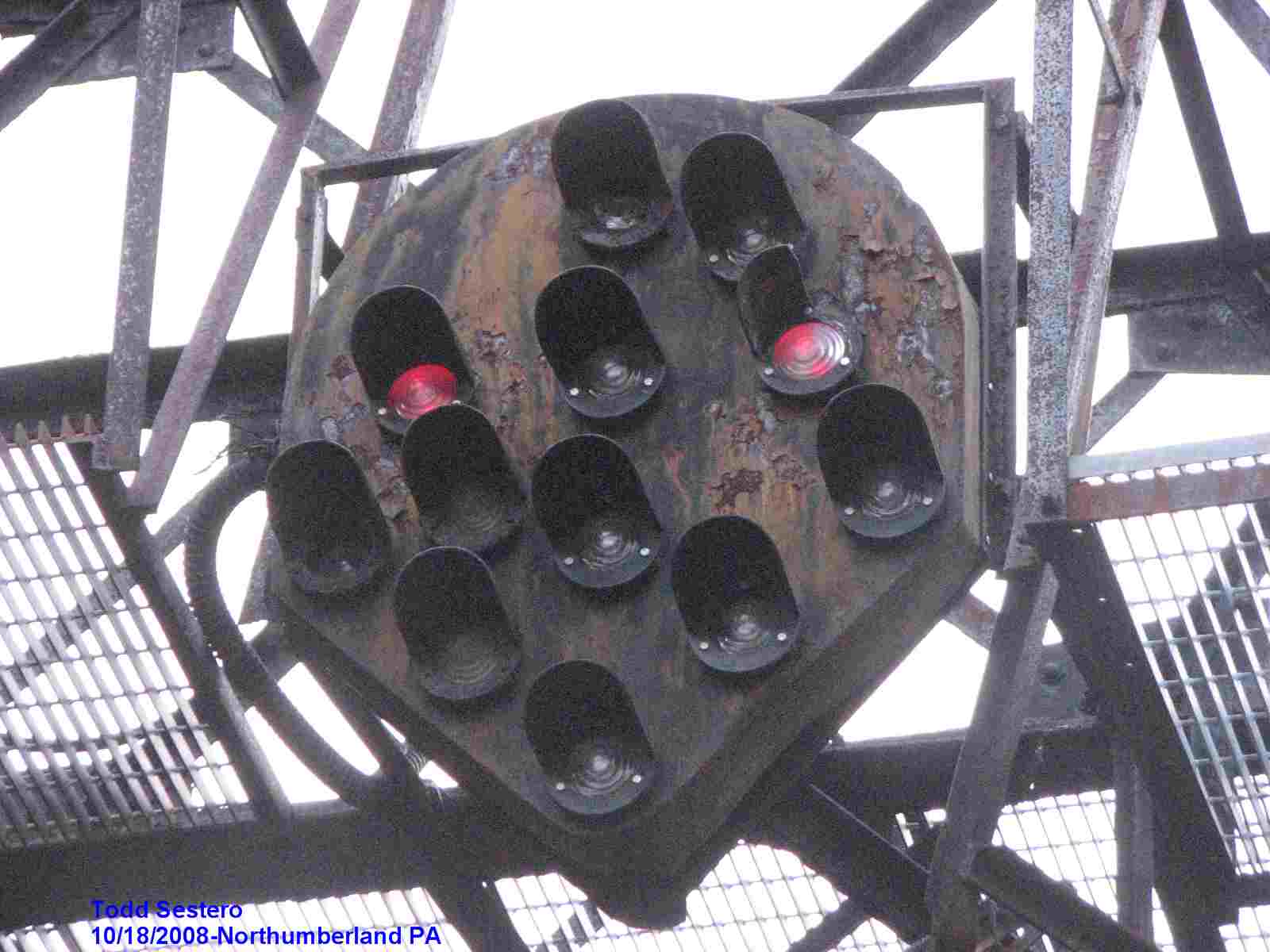
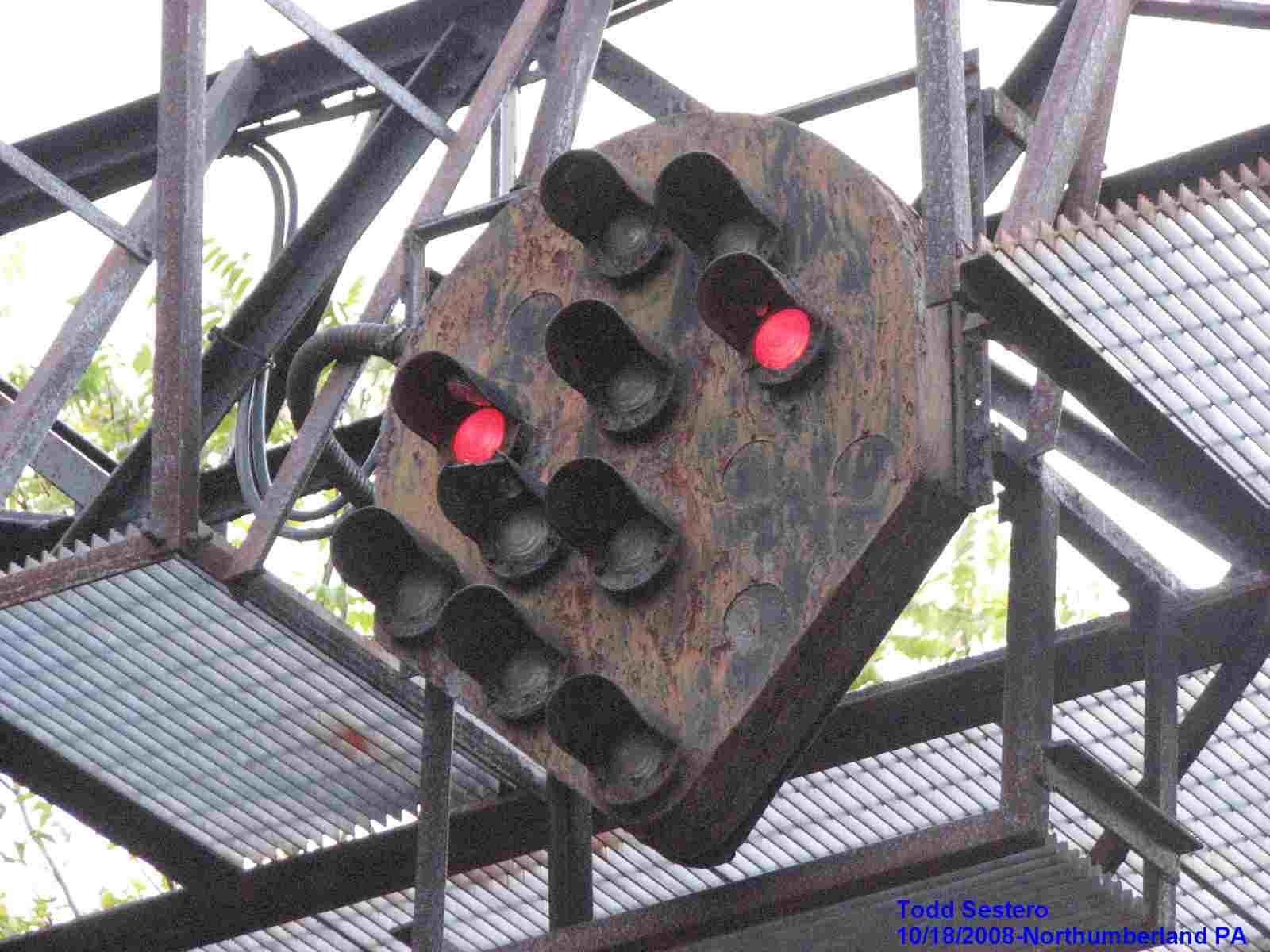

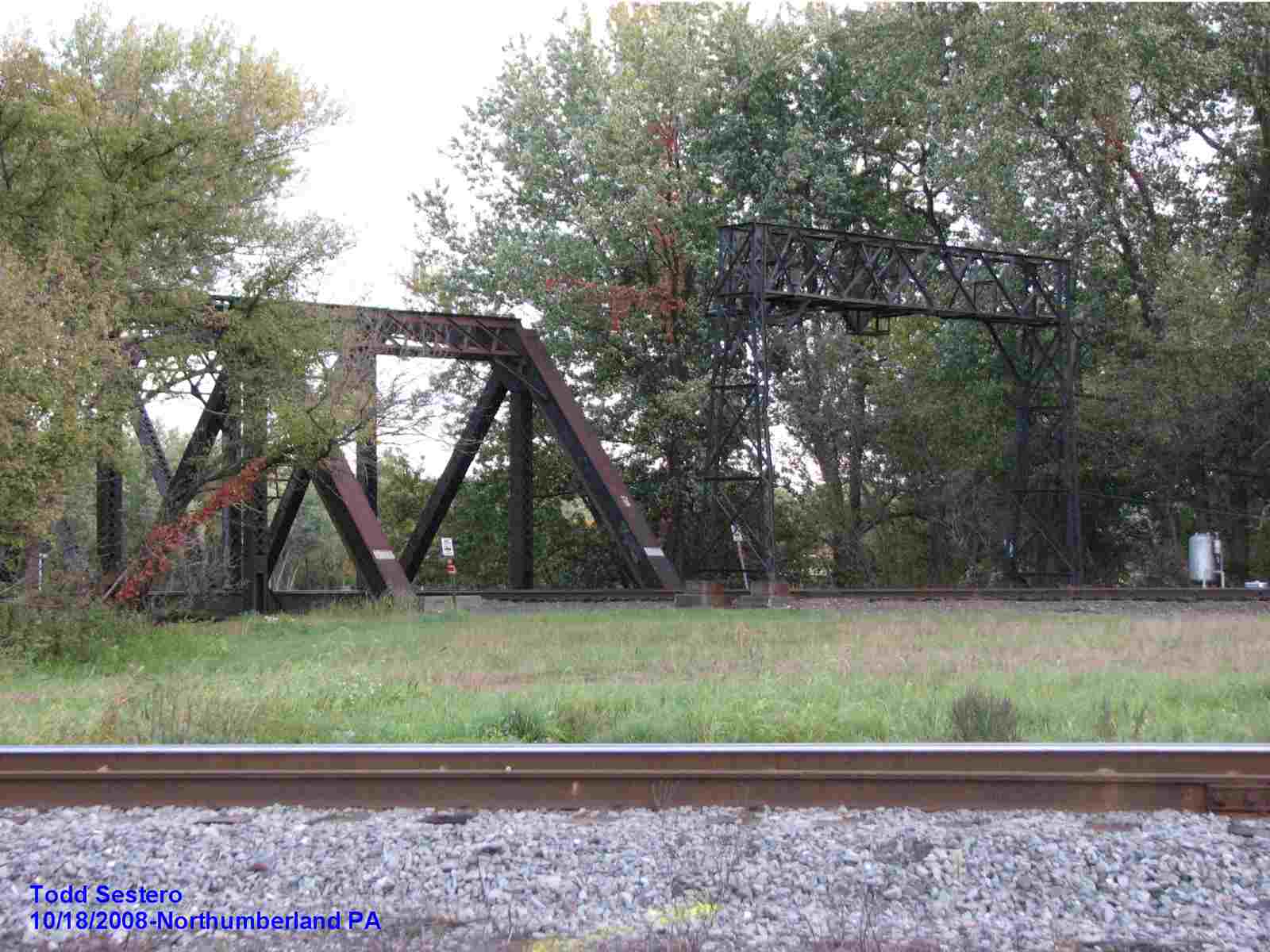
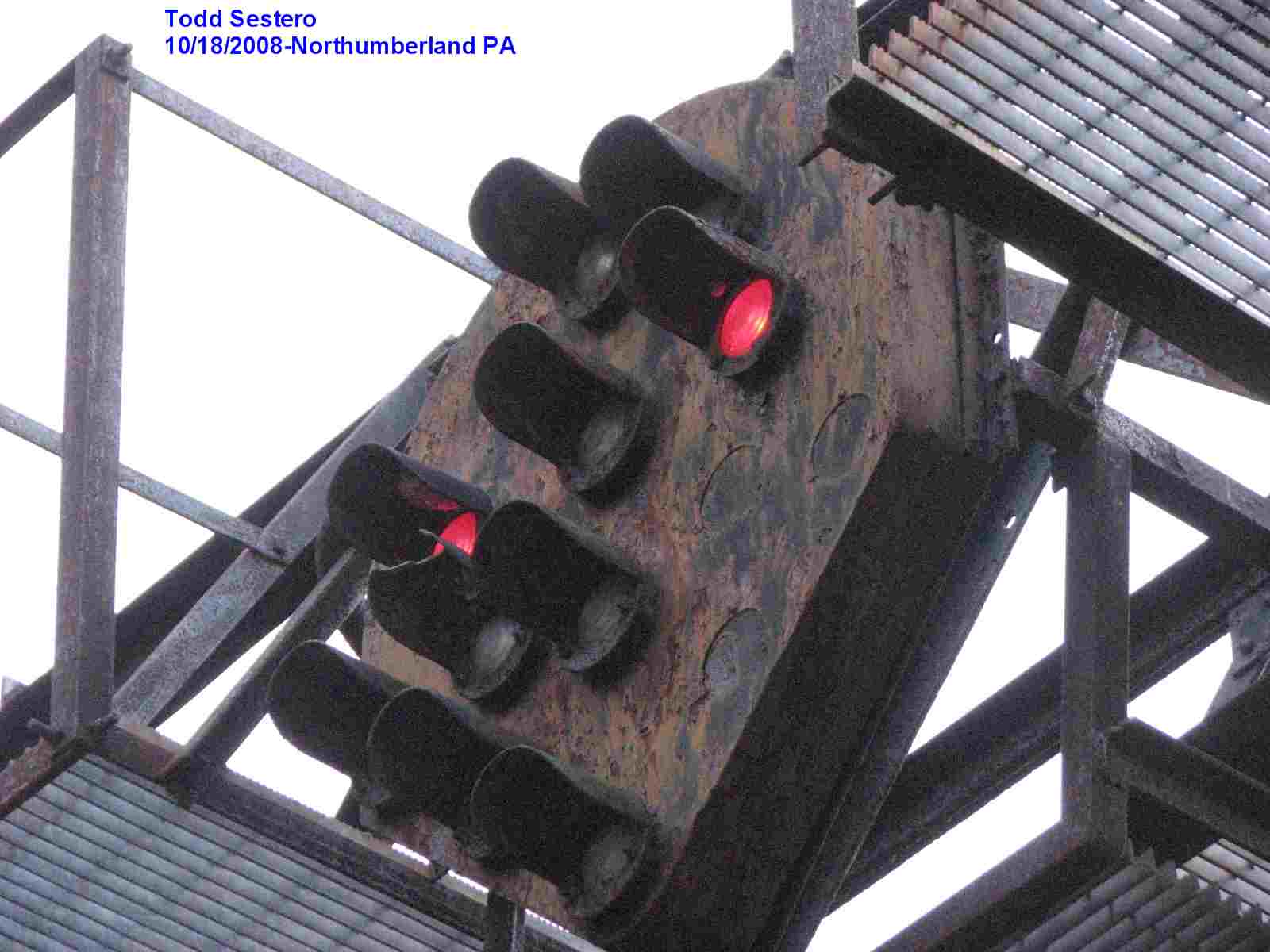
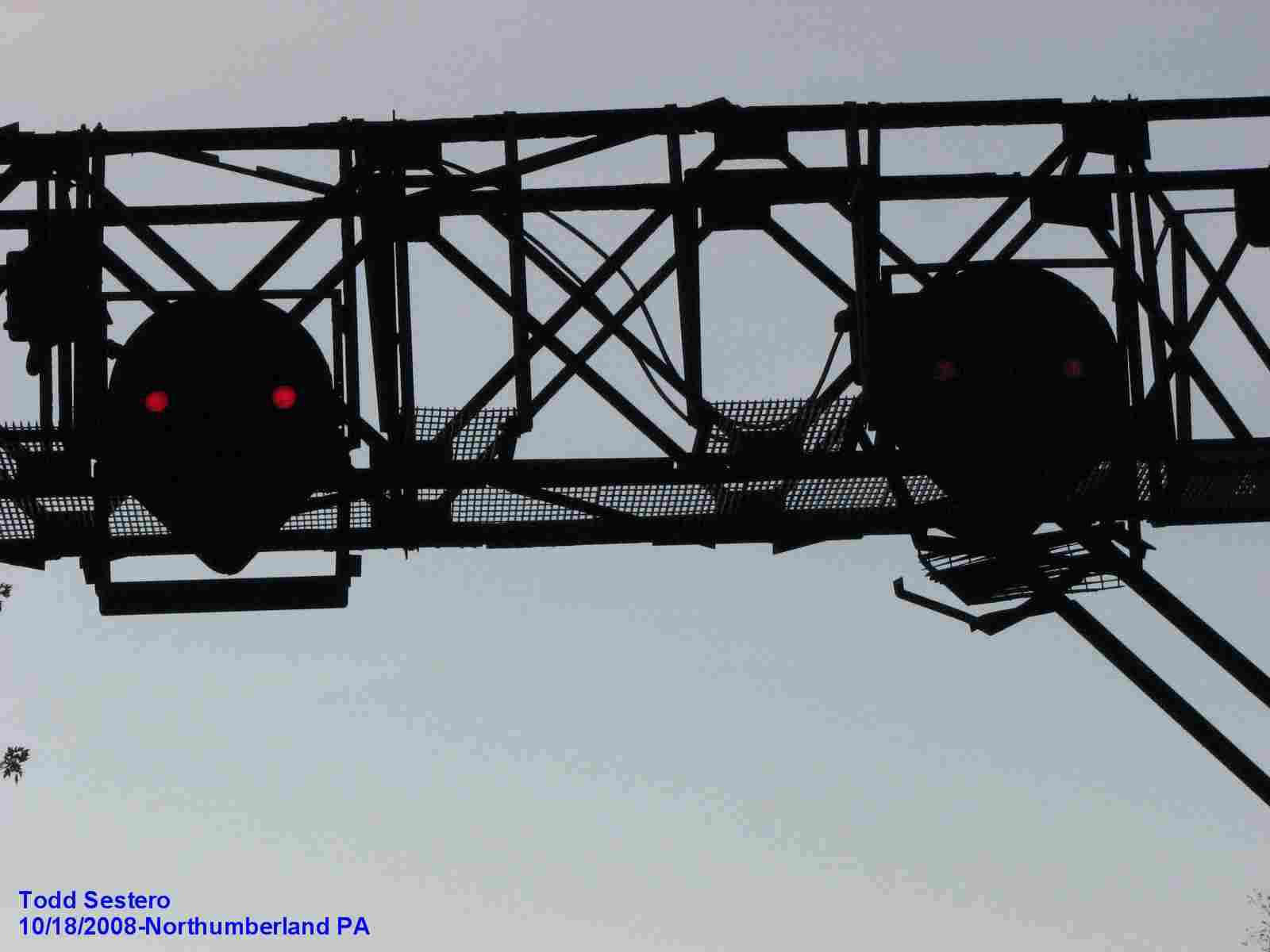
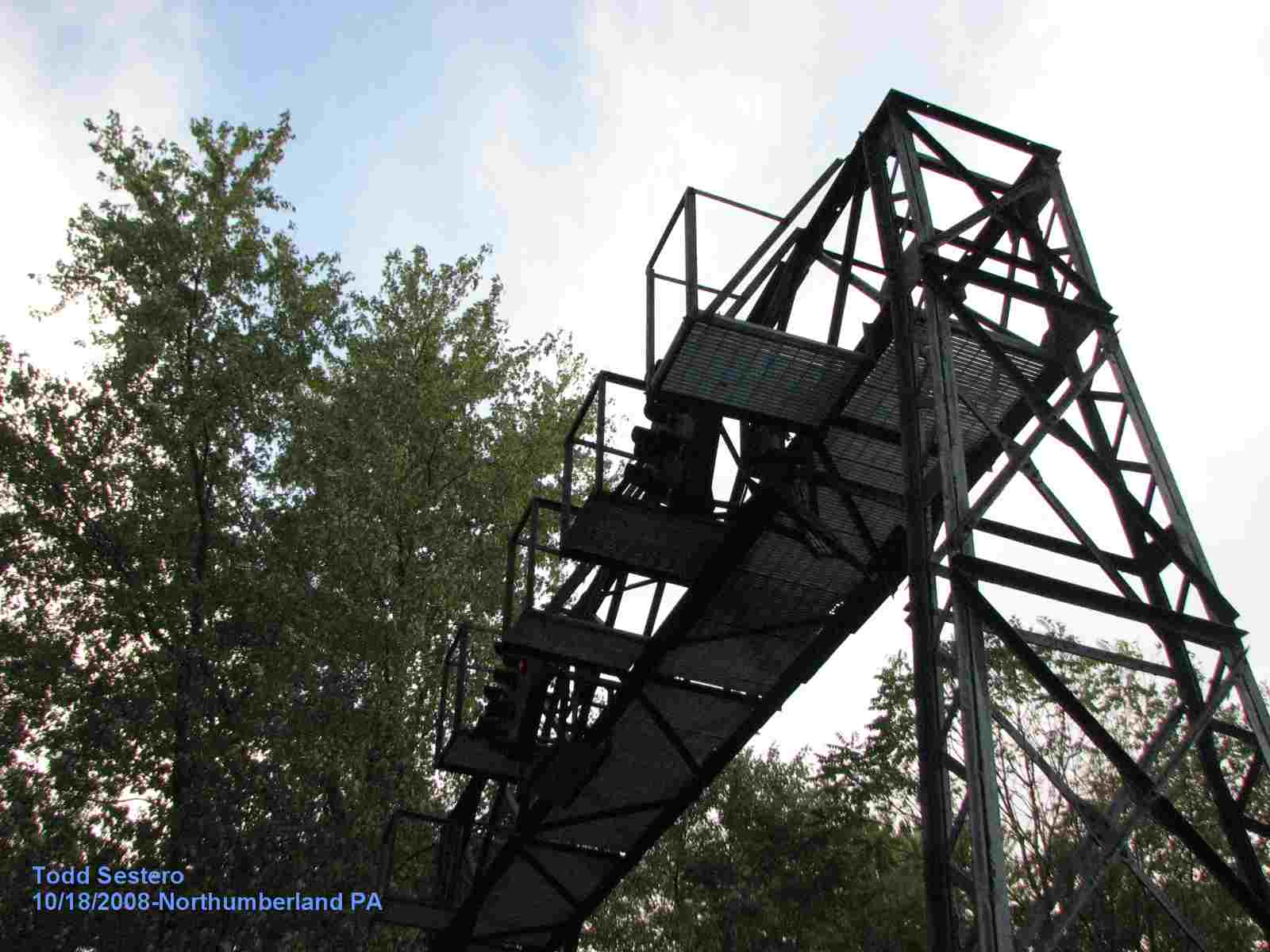

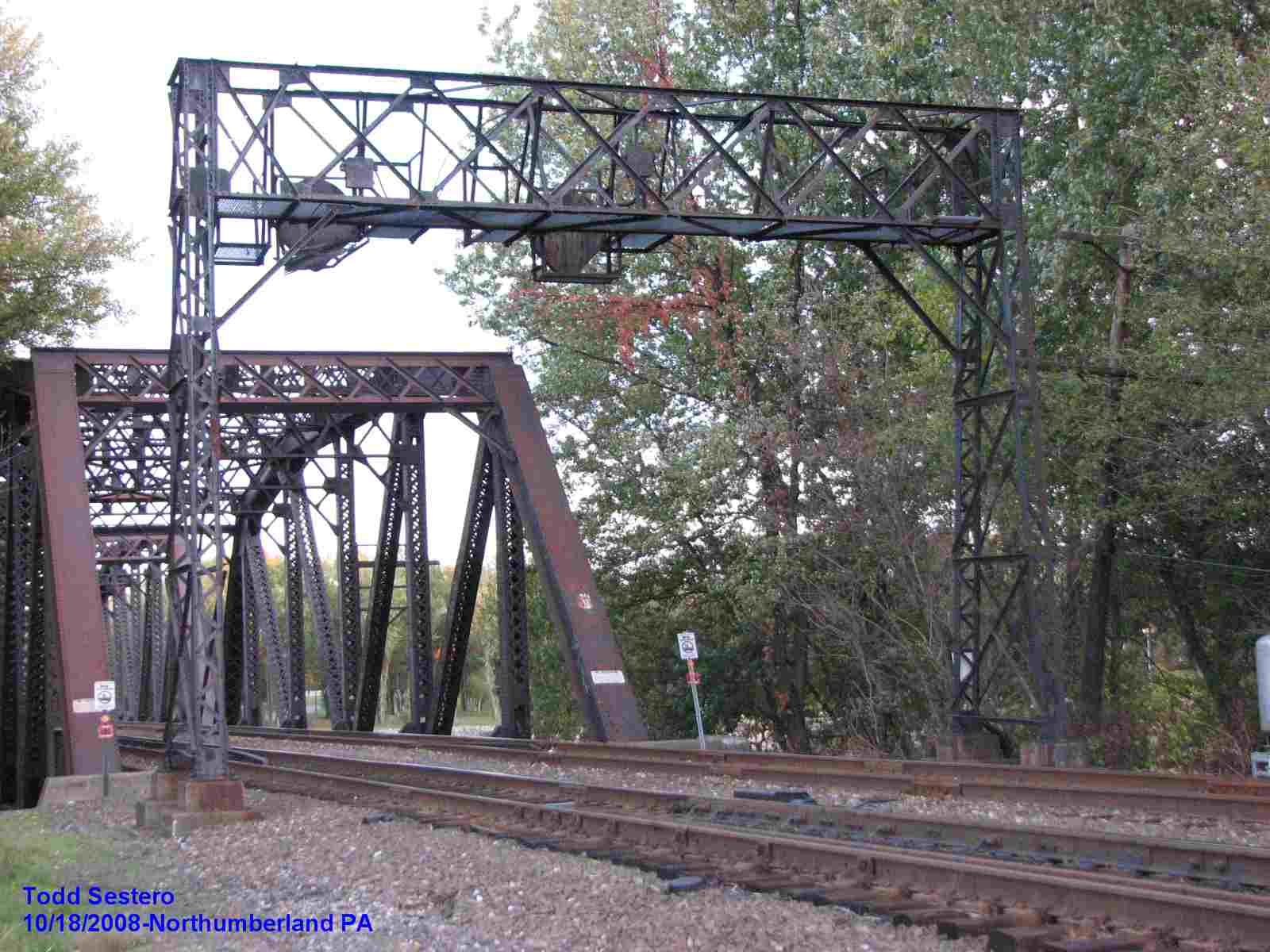
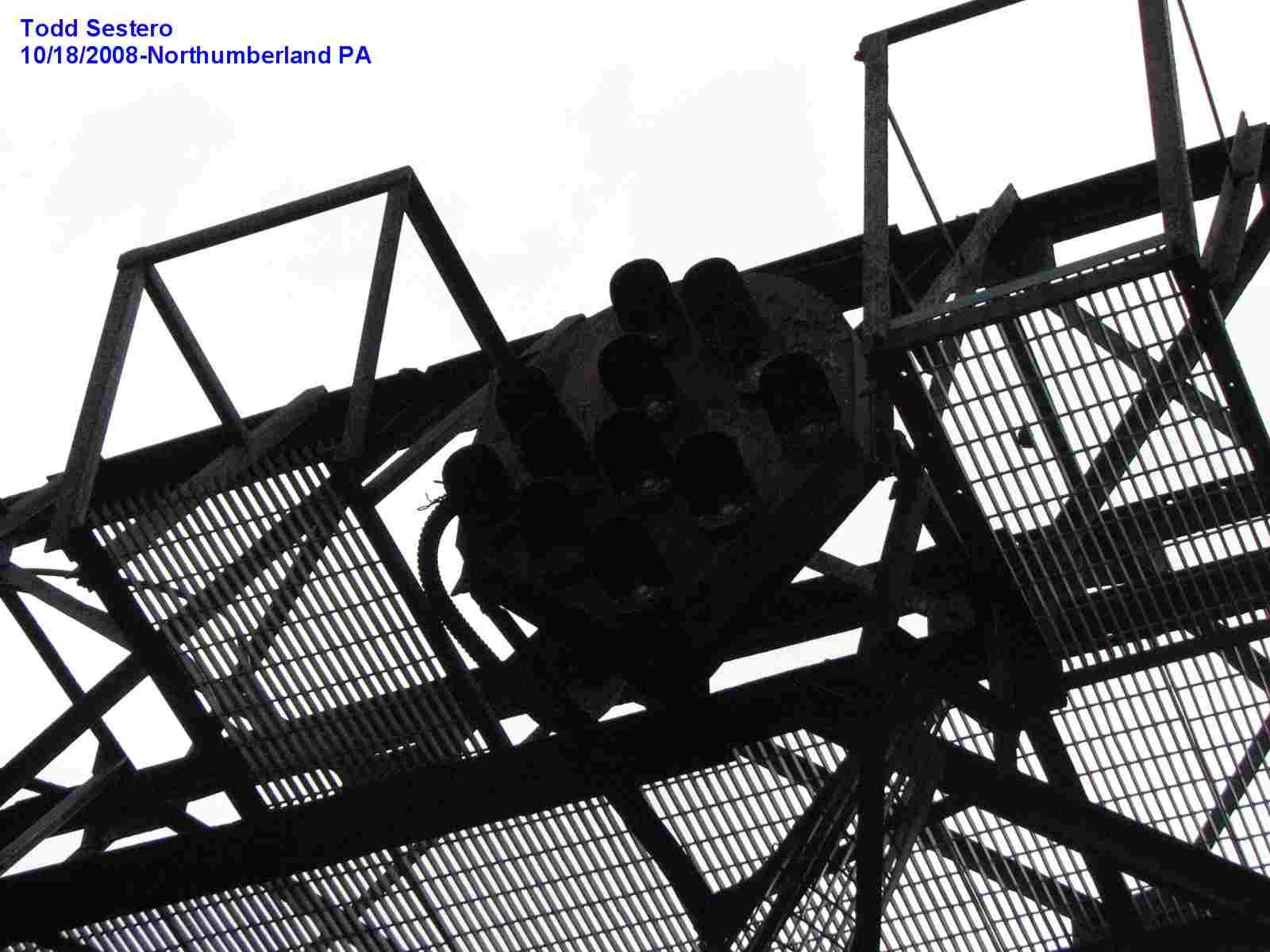
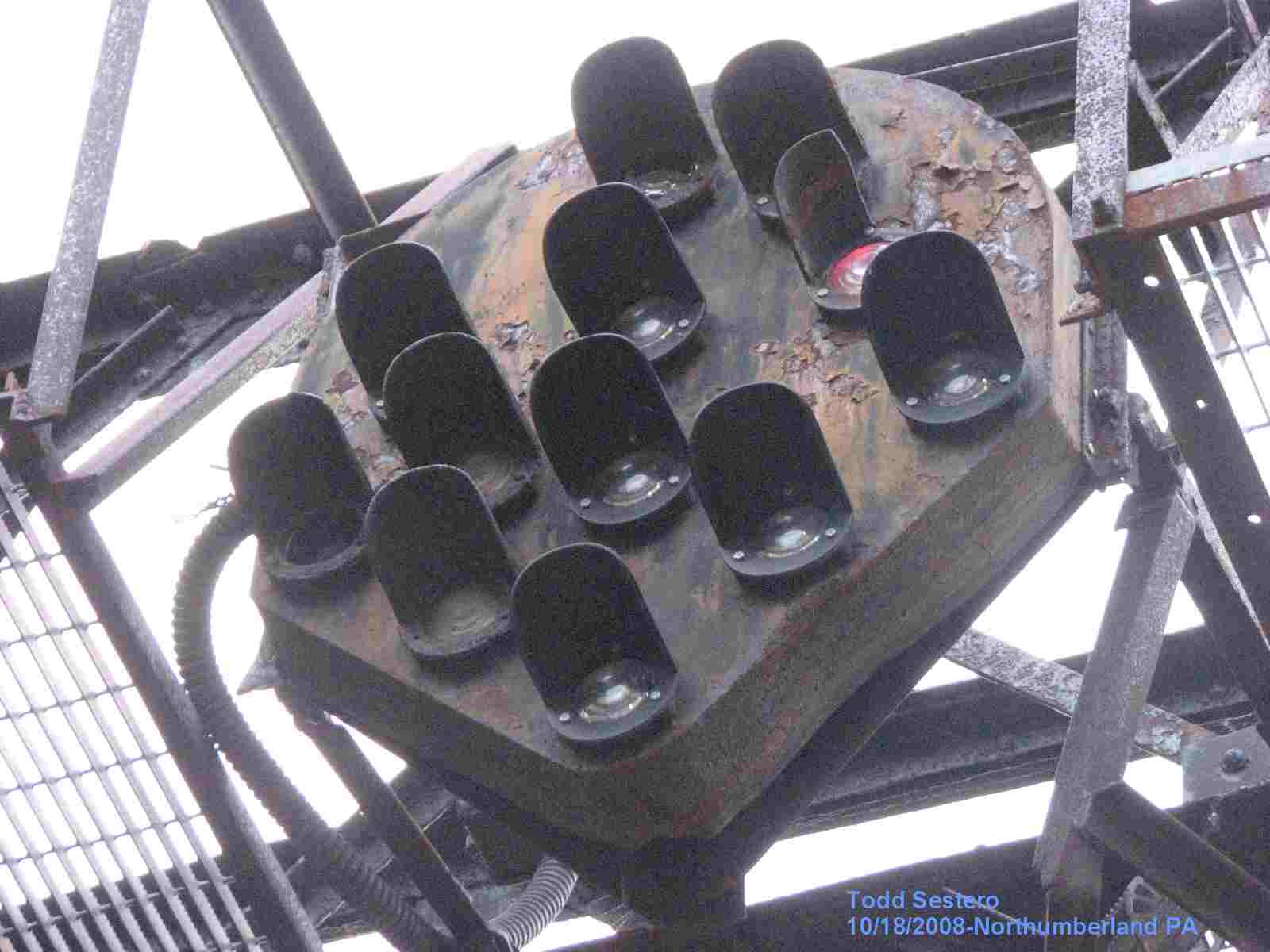
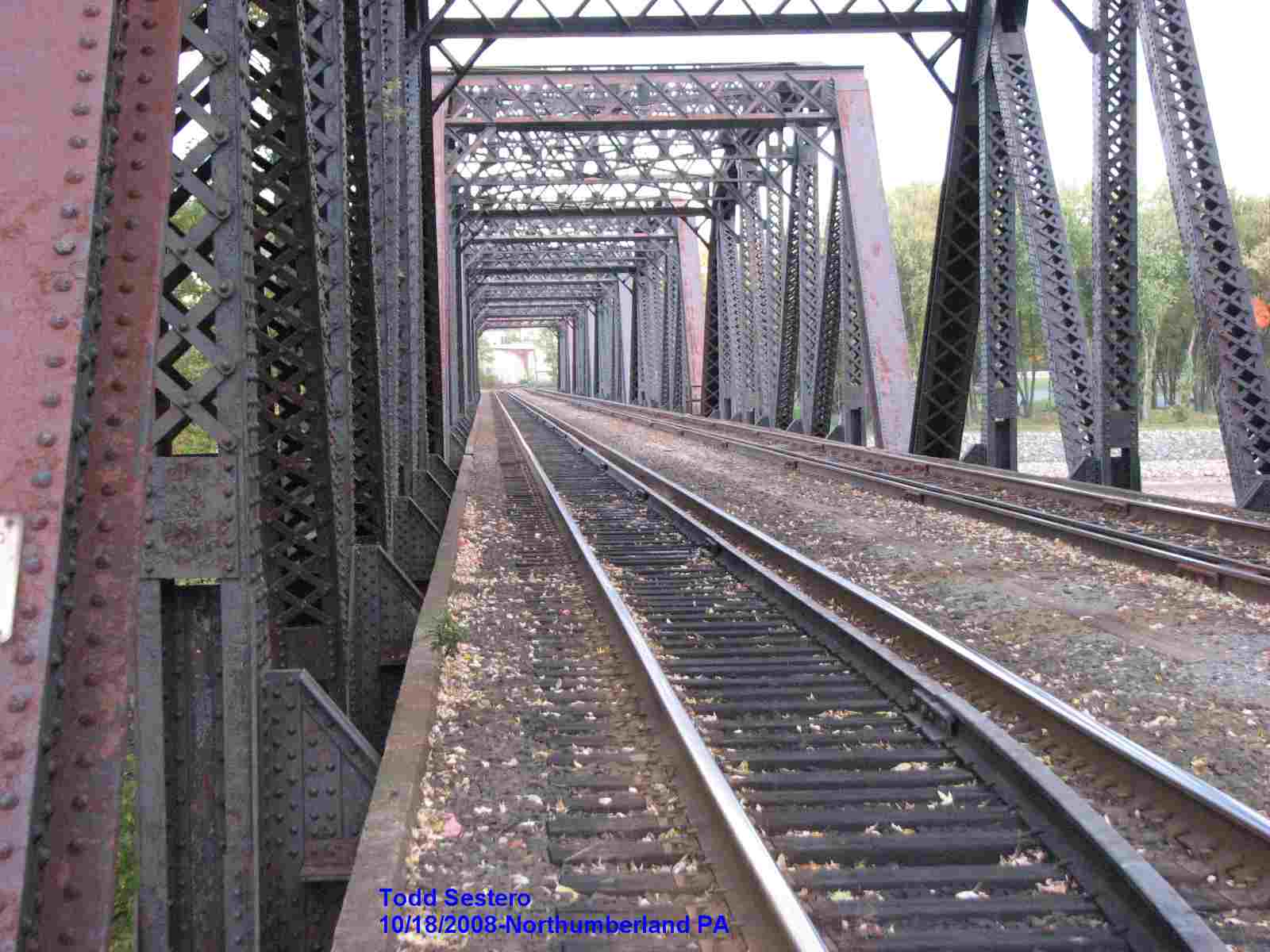
These two signals are located in Northumberland PA, about 50 miles north of Harrisburg PA. They are at the entrance to the Northumberland yard, after you cross the Susquehanna River from Sunbury. These are the only signals like this in operation that I am aware of.
Here is yet another view of the signals
from the engineers viewpoint,
Thanks to Rob Blackford, who was riding up the Buffalo Line in a Sperry Car.

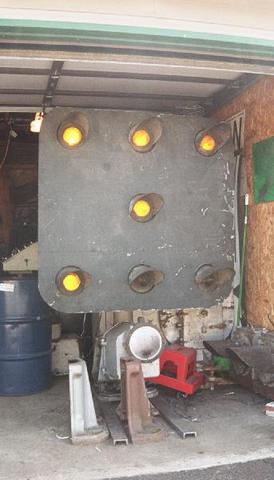 For more pictures, click here.
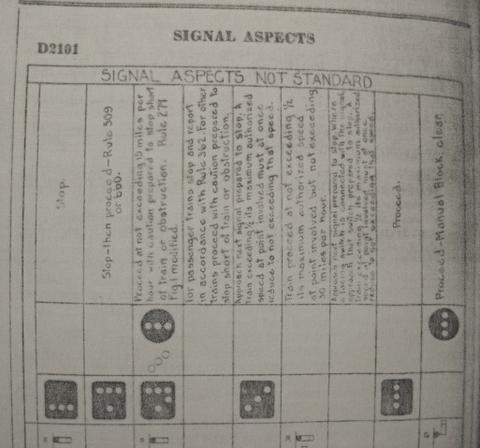 Aspect chart for the Domino signals.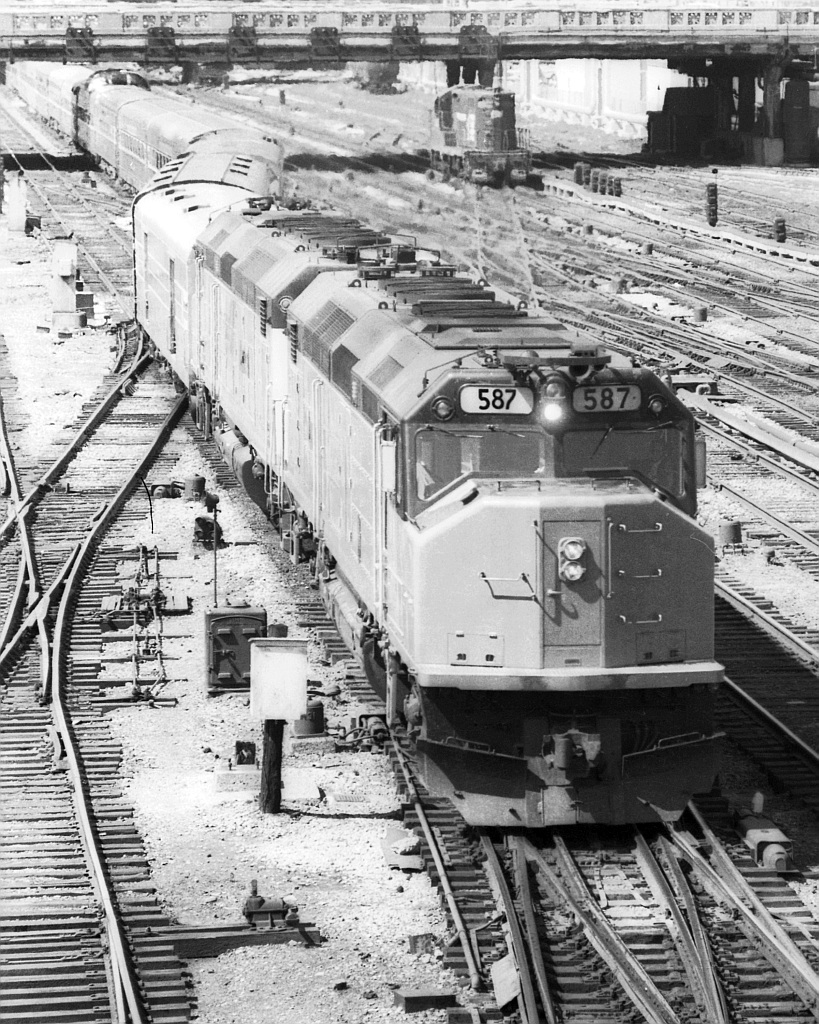
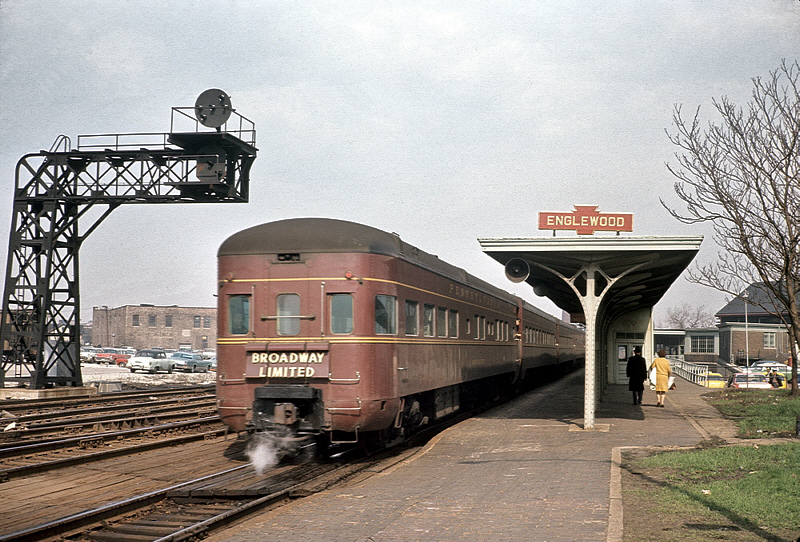 Photo by Marty Bernard, 1965.
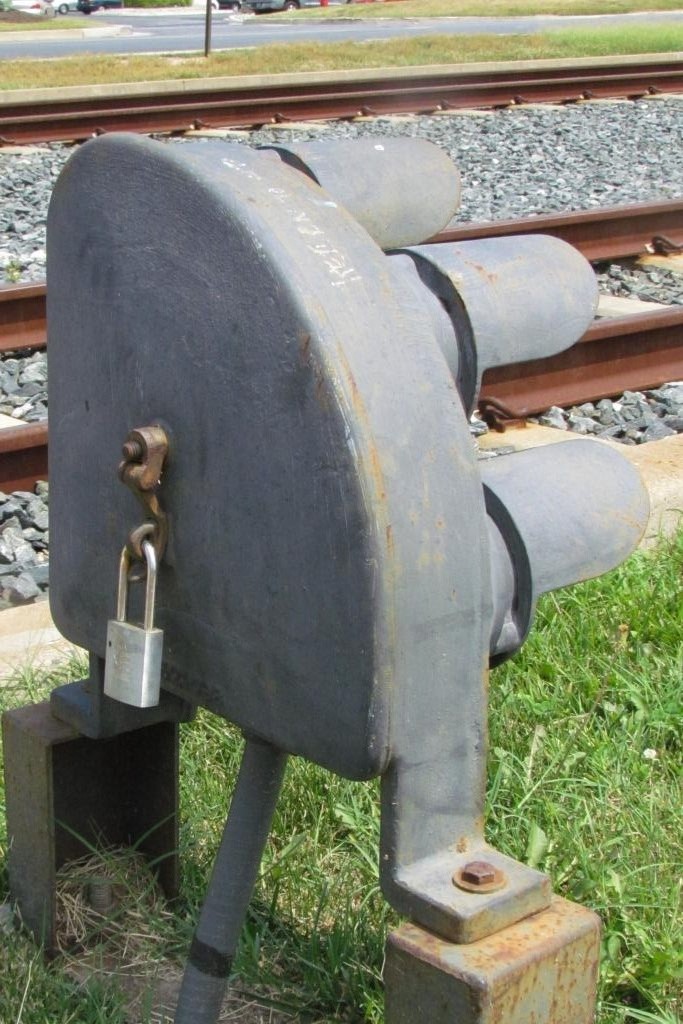
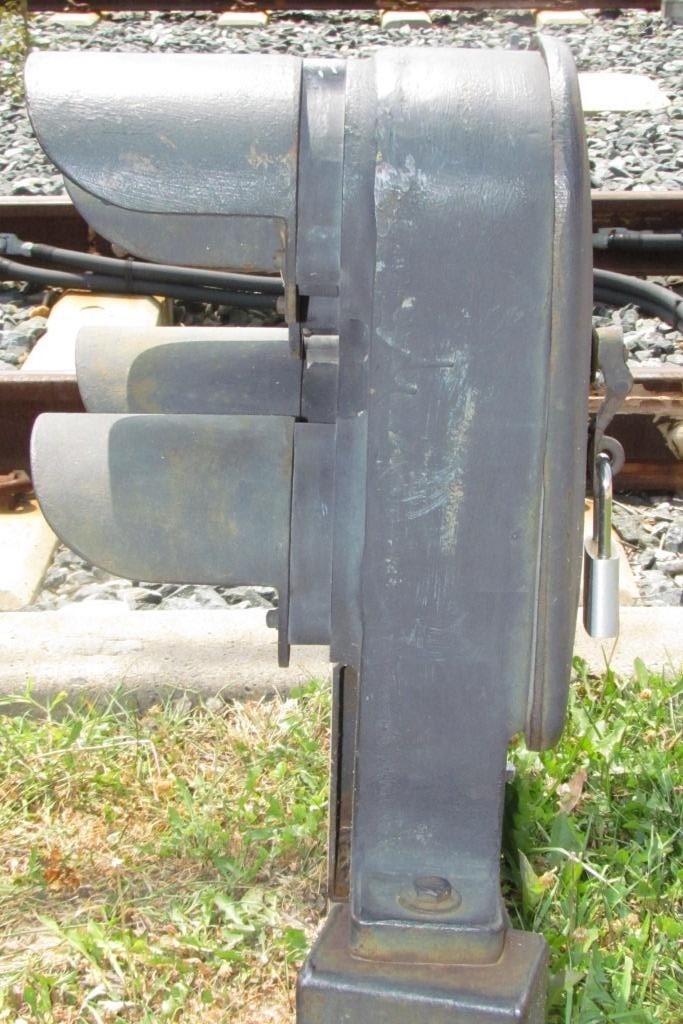
Dwarf PL signals, aka PL-4's, use 4" lenses, and are frosted white to reduce their effective range so they won't be confused with high signals. Lunar white was used some time later.
These signals come in both "right-hand"
and "left-hand" versions, where the rounded side can be on either the left or
right side. Although I guess the Pennsy could have placed these signals in
a square housing, they placed them in "rounded corner" housings. The
vertical aspect was originally on the left, and later, as the railroad wanted to
use them on tracks with smaller spacing's, they changed the housing around 1930.
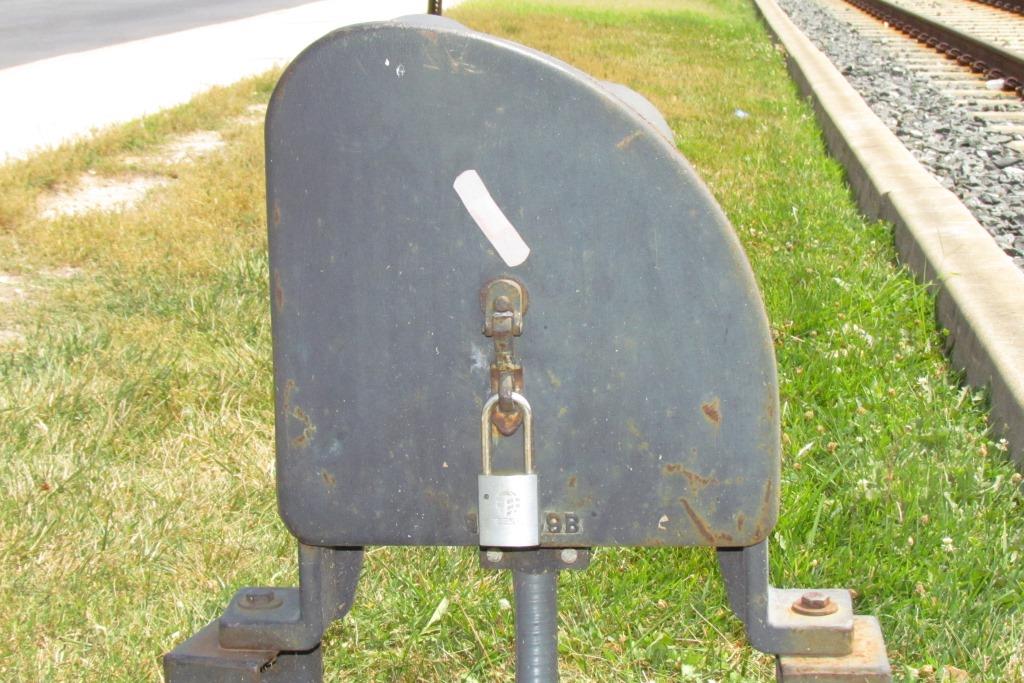
Older versions of the signals have shorter mounting legs, and have access covers
on the sides. Newer versions, like the ones on the short masts at
Perryville, and on the Baltimore Light Rail system, have longer legs, and access
to the bulbs is via a single cover on the back covering the entire rear of the
signal - this requires only one lock vs two for the older version.
Interestingly, the
Pennsy PL dwarf has seen widespread use all over the world. For example,
the Baltimore Light Rail System uses them for route indicators. The
Canadian Pacific uses them in at least one yard as shove signals.
Dwarf PL signals can be found in many other countries besides the United States,
as evidenced on many of the sites covering railroads of other countries.

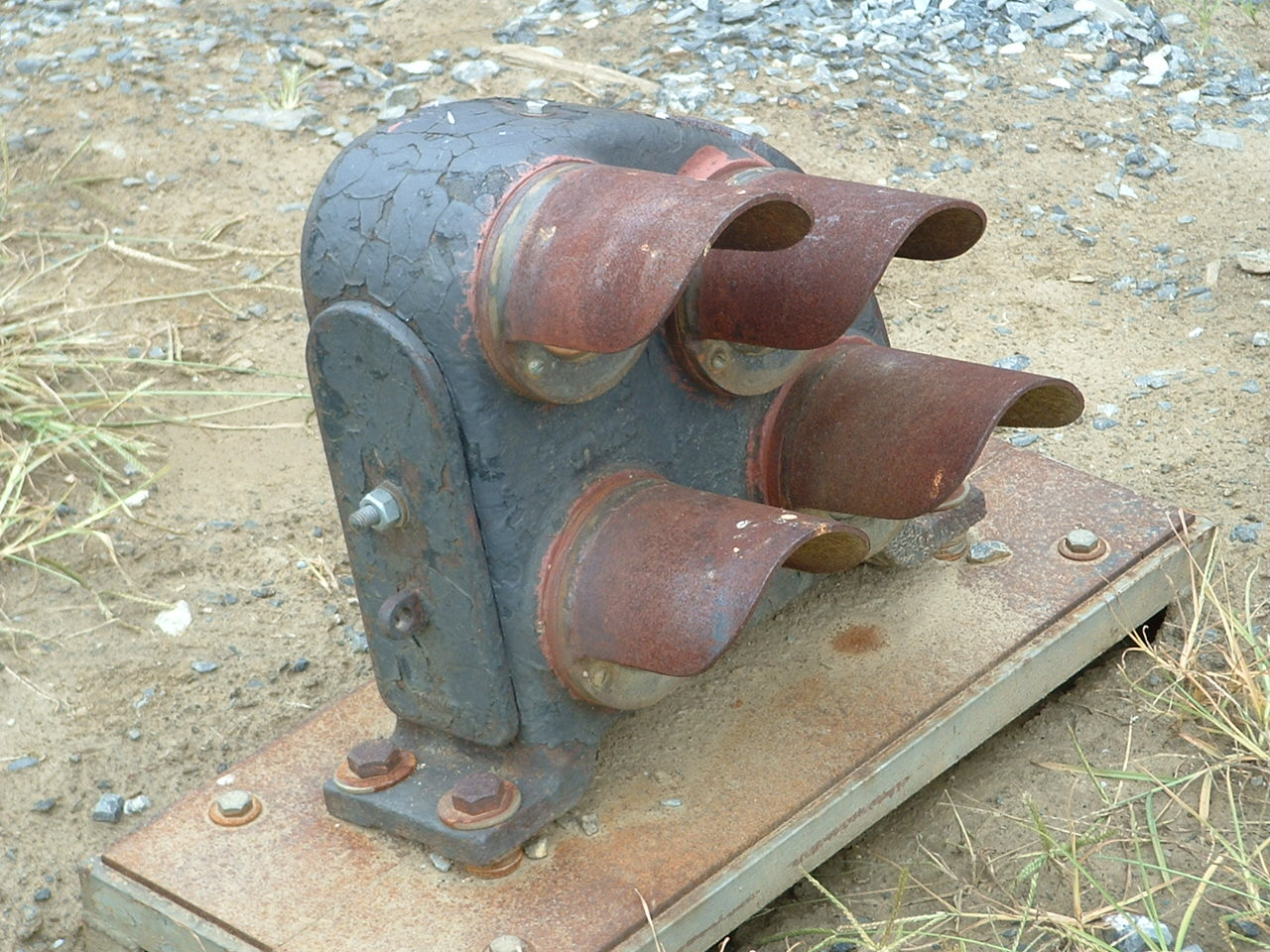
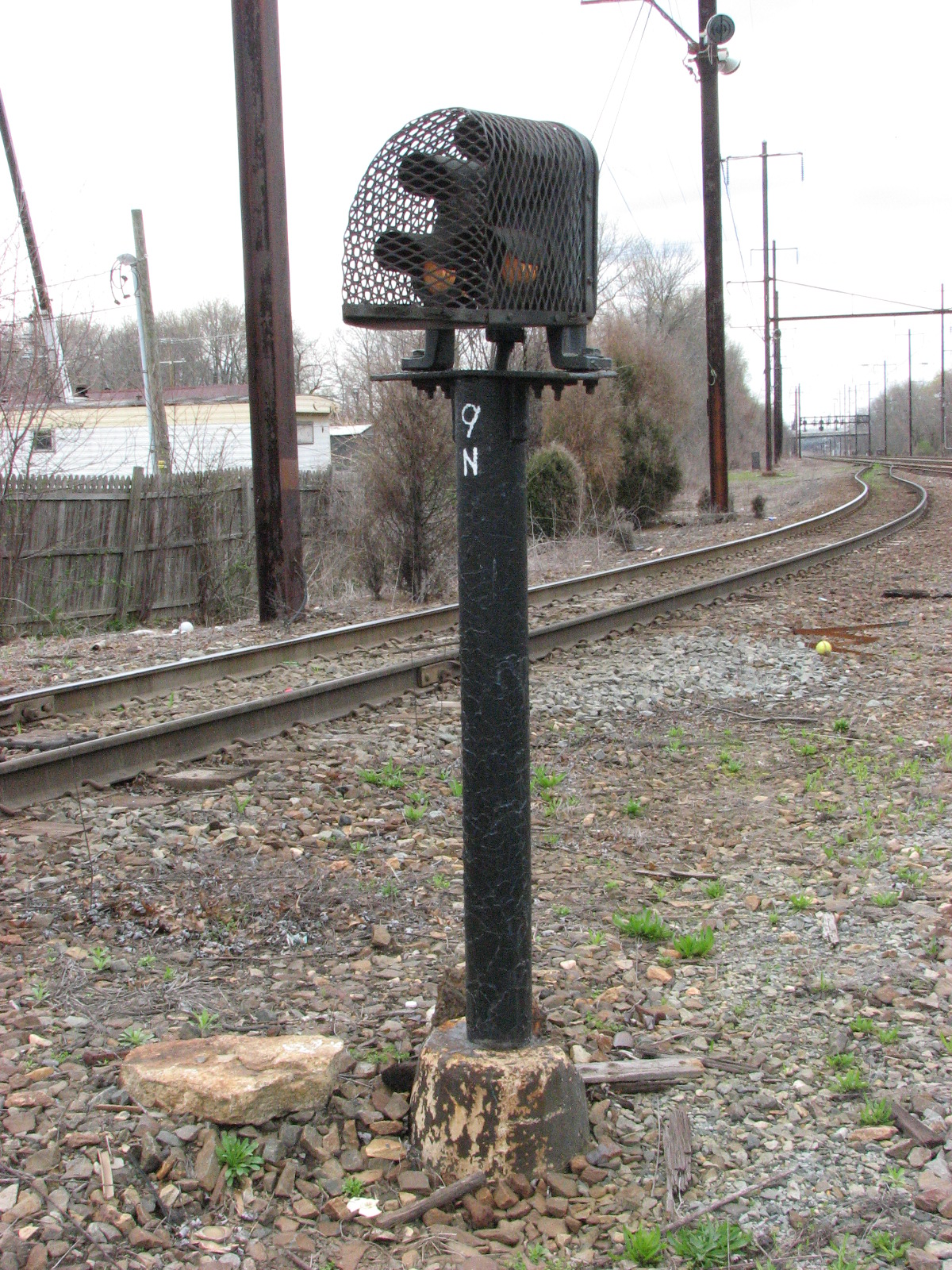
Typical dwarf PL, this one is at the
Strasburg RR.
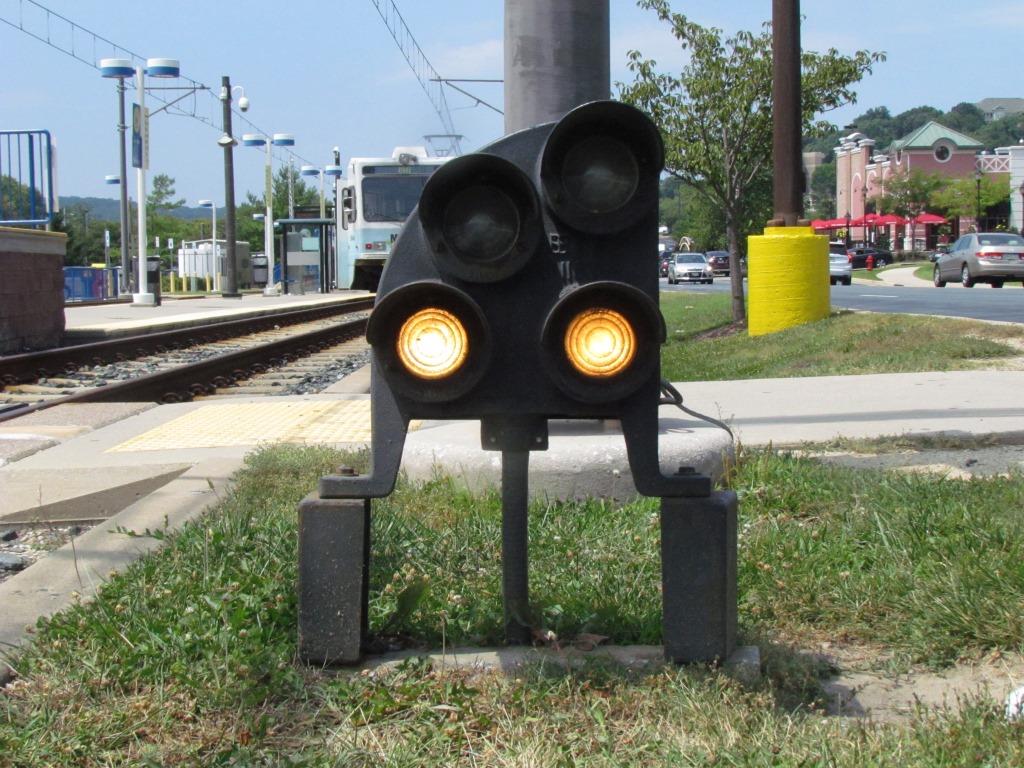
Dwarf signals can be
mounted on the ground (above), on poles, and on signal bridges (below).
Some transit systems, like the Baltimore Light Rail system, use them as route
indicators. This dwarf is mounted on a pole about 6ft high, and is used at
the wye in Perryville MD. The Pennsy commonly used dwarf signals in this
application, where trains were coming on or off a main line and operated at slow
speeds.
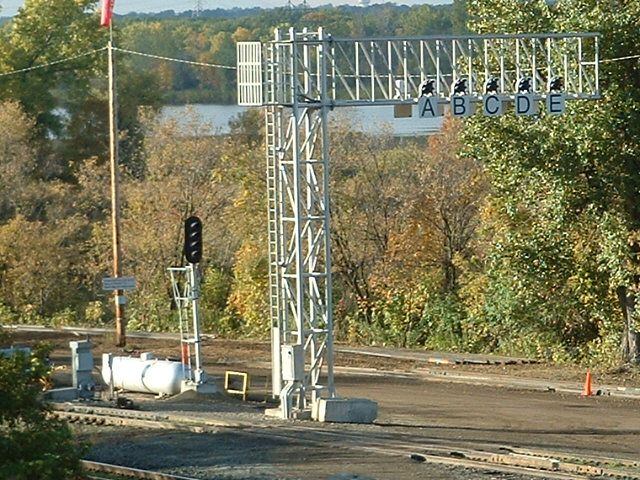
In a different
application, CP Rail uses dwarf PL's at Pigs Eye yard St Paul MN as a shove
signal, indicating to the engineer when the rear of a train is at a certain
point at the tail (south) end of the yard.
Here is a set of newer style PL-4's in use on the Baltimore Light Rail system.
These two are on the tail track at the end of the line at Hunt Valley MD.
You'll notice that the legs of the signal are considerably longer than that of
older units.
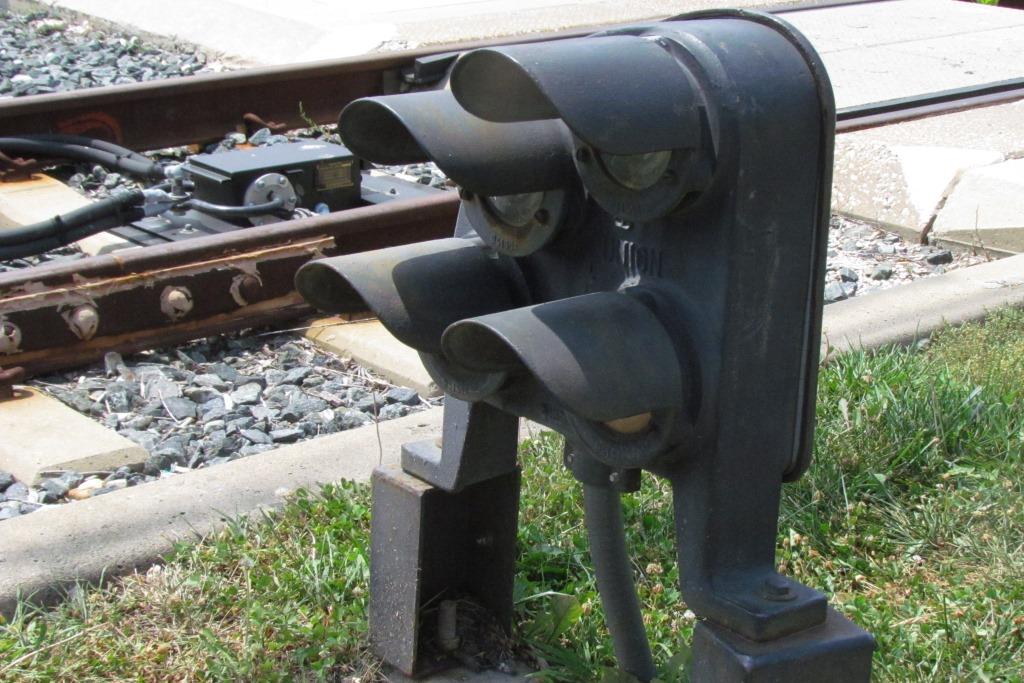
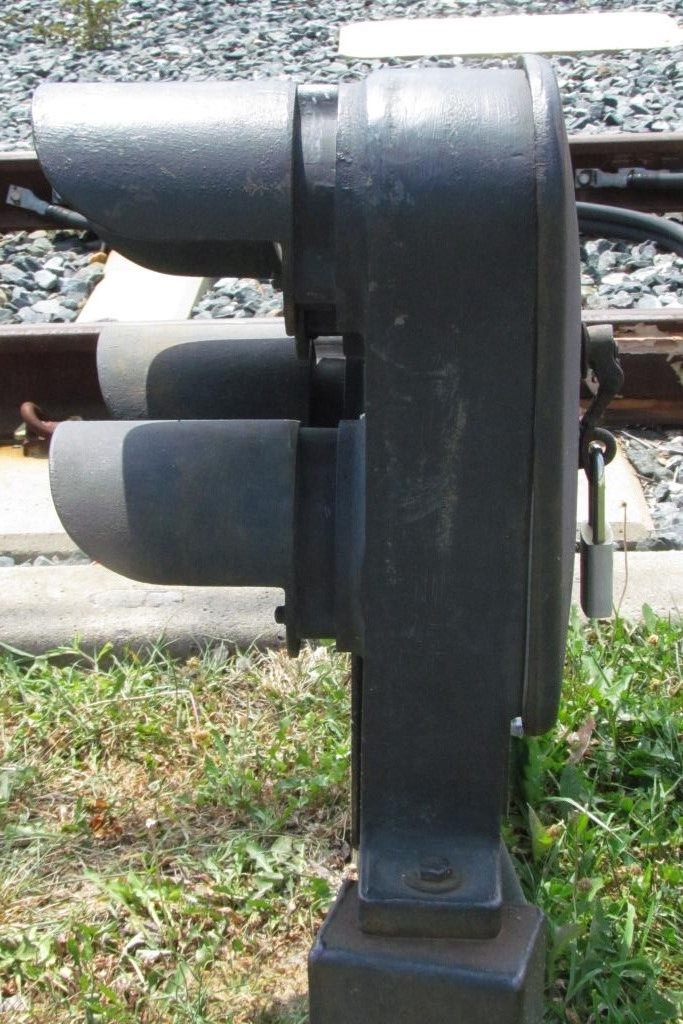
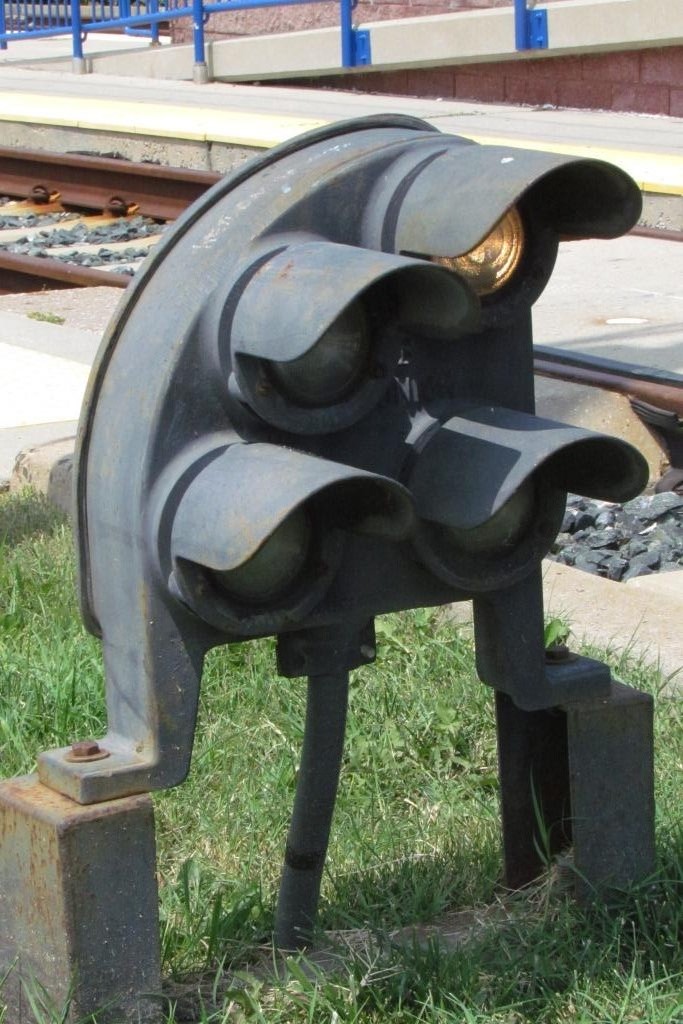
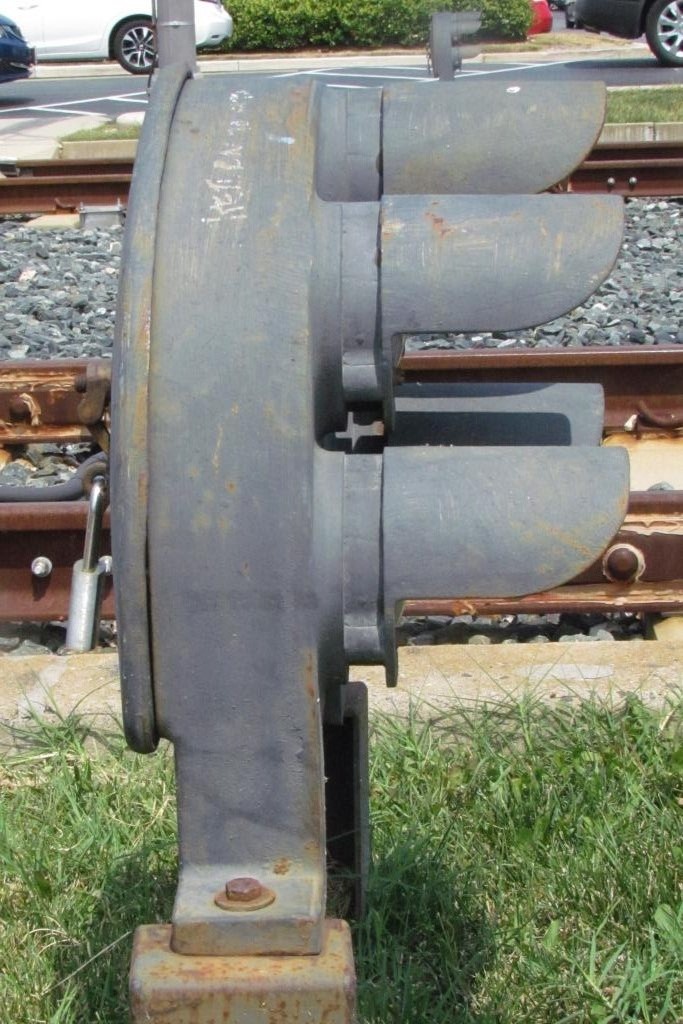
The other "small form" a Position Light signal can take is known as a Pedestal, or a PL-5. This type of signal places two dwarf signals in one housing, one atop the other. Through a discussion on the Yahoo Railway Signaling group, it is a medium speed signal, limiting speed to 40MPH, even though it can display clear block" (which on the main line with a high signal, would allow the train to go at the posted speed). On the north side of the Wilmington (DE) station, the Pennsy used pedestals on the overhead signal bridge, maybe because of clearance issues with a larger full size head.
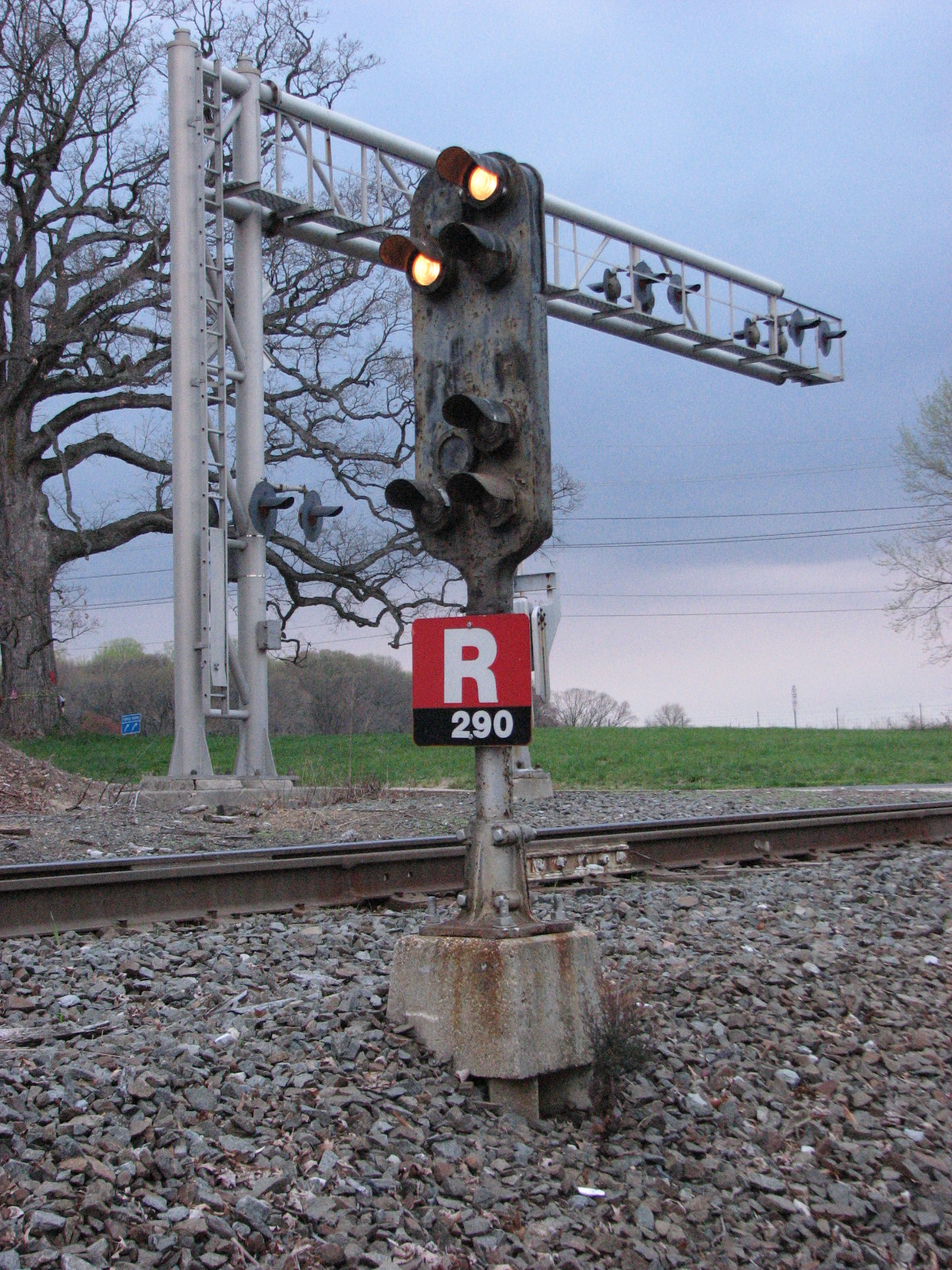
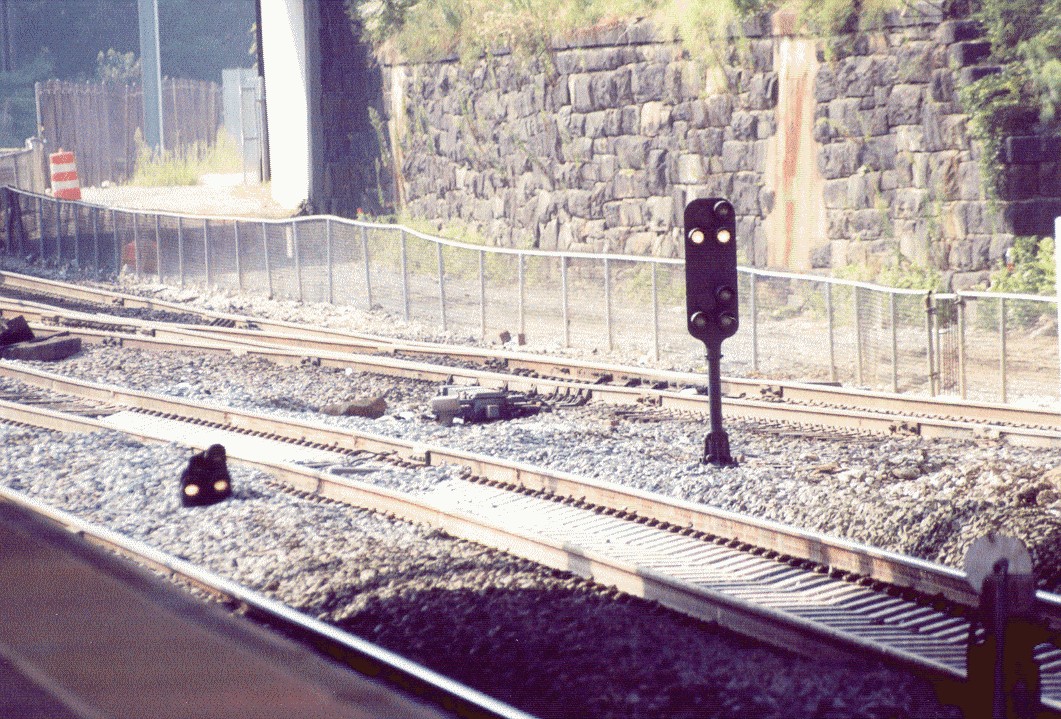
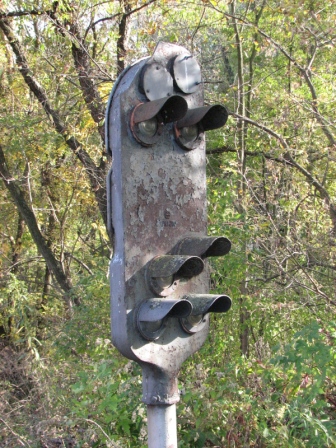
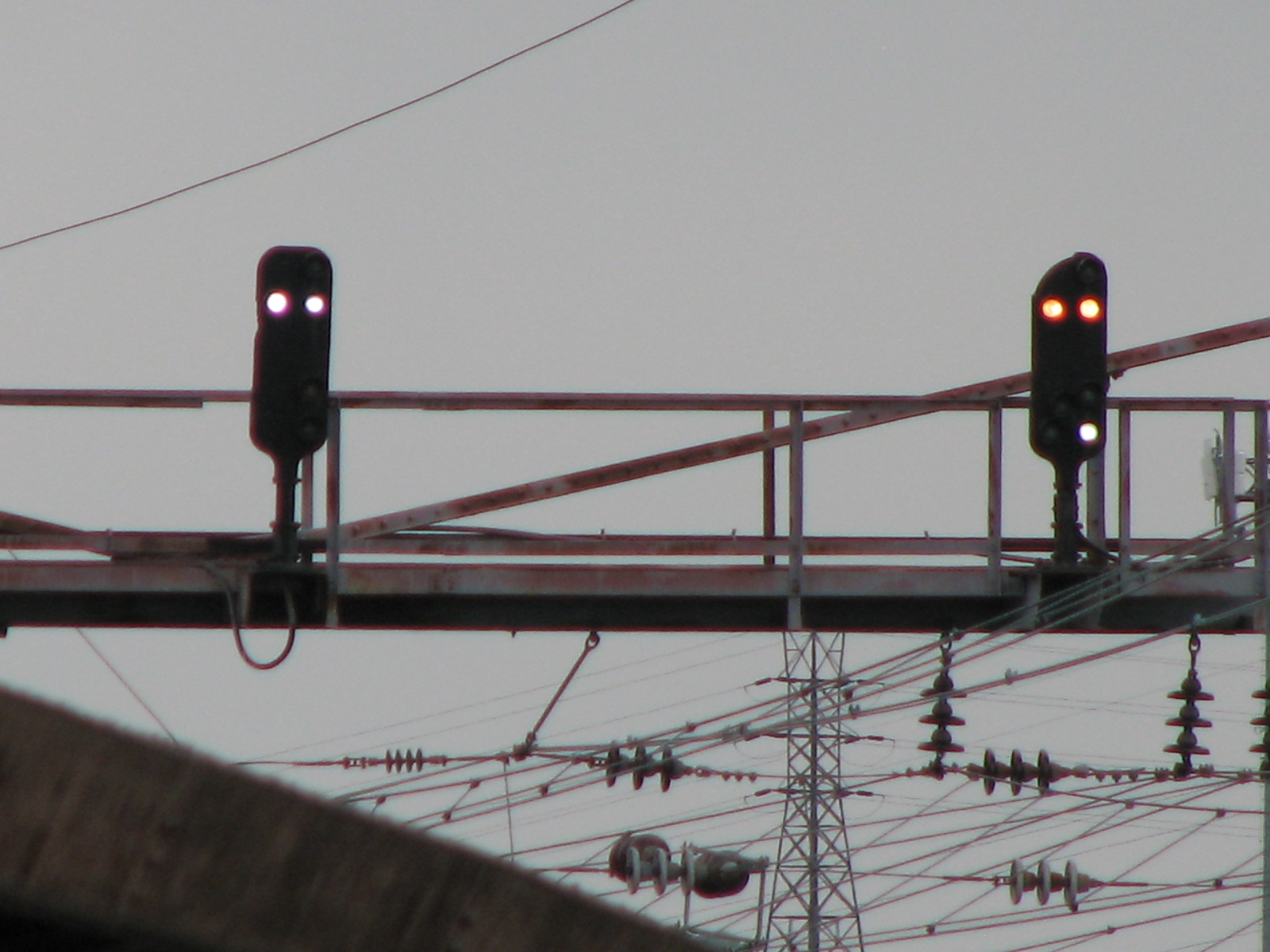
The left photo is a
pedestal signal in
Newark DE, on the approach to the NEC.
The second photo of a pedestal and dwarf is at the Baltimore Amtrak station from
approx 1972.
Third photo is an unused pedestal in Huntingdon PA, more info below.
Photo on the right is the only place I know of pedestals being used as a high
signal, north of the
Wilmington DE Amtrak station, LED's
are used in the left one.
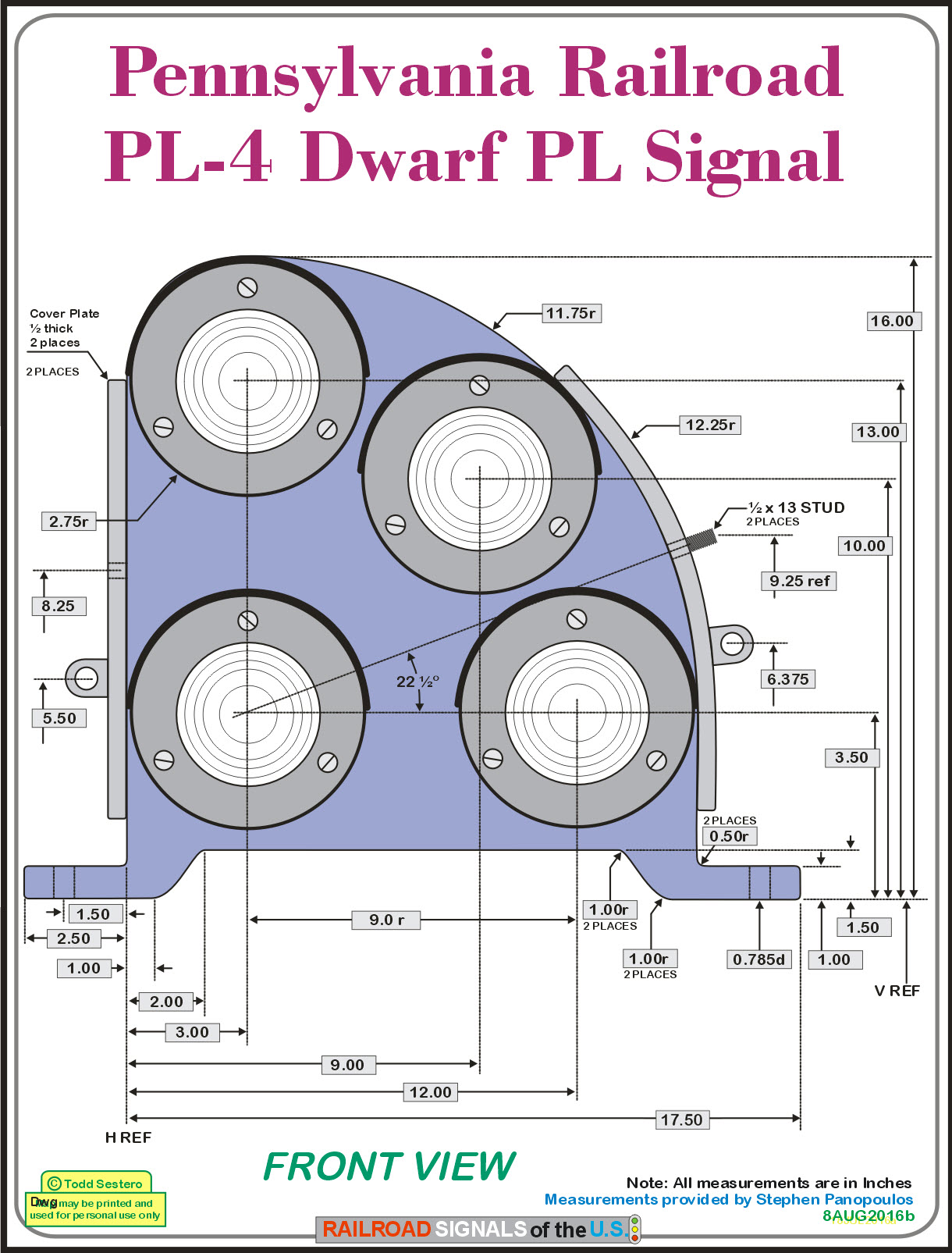
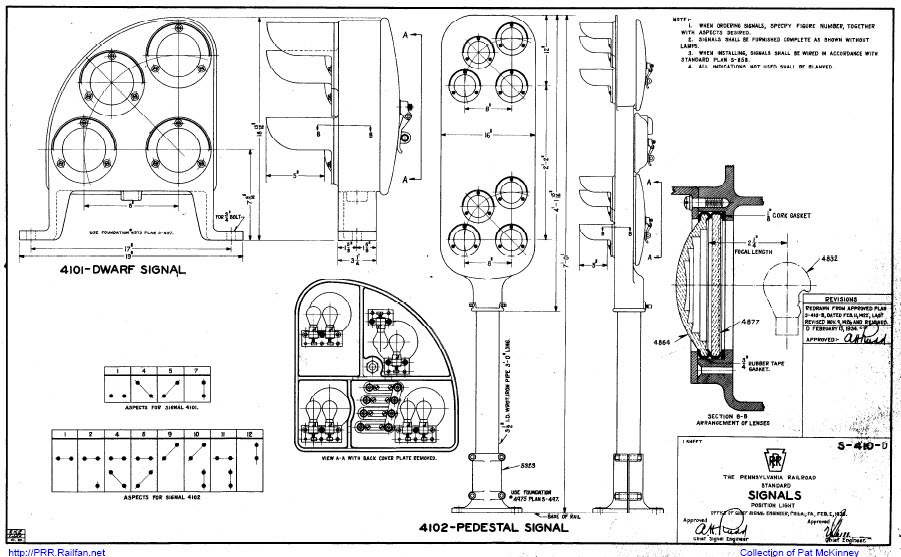 A drawing giving the dimensions for the pedestal and dwarf PL
signals.
A drawing giving the dimensions for the pedestal and dwarf PL
signals.
Pedestal signals can also be found with "red-eyes" as shown in the next section below. If you are used to the all white signals, they are most unique to see in person.
Red-Eye Signals
aka Red Snake-Eyes
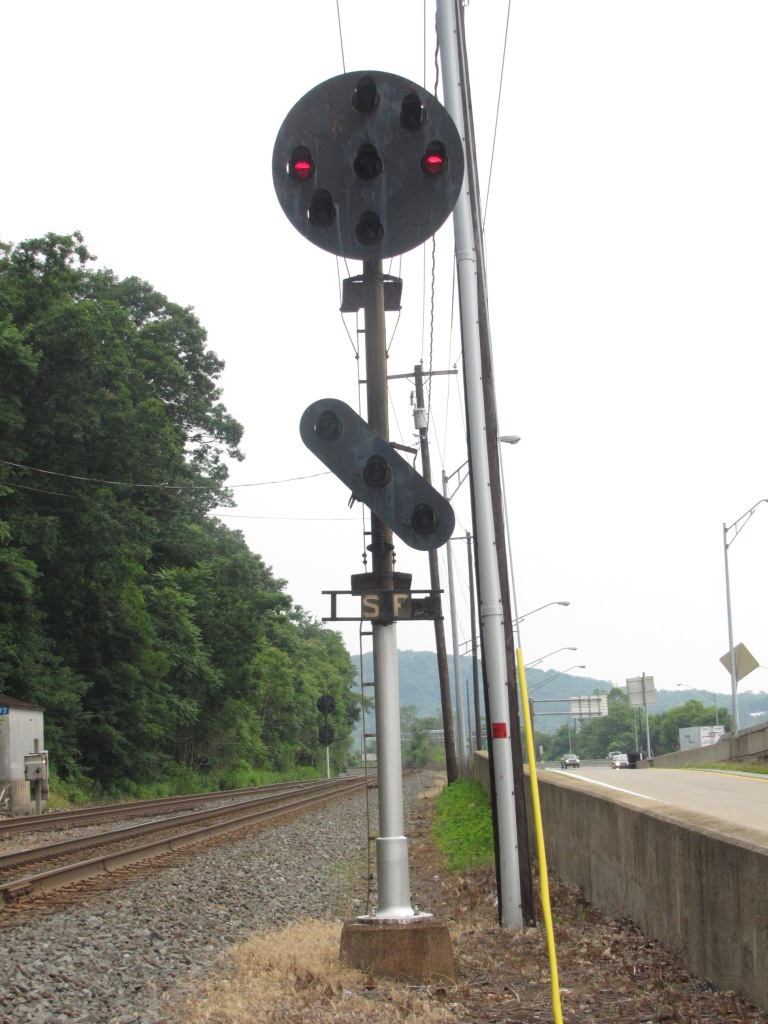
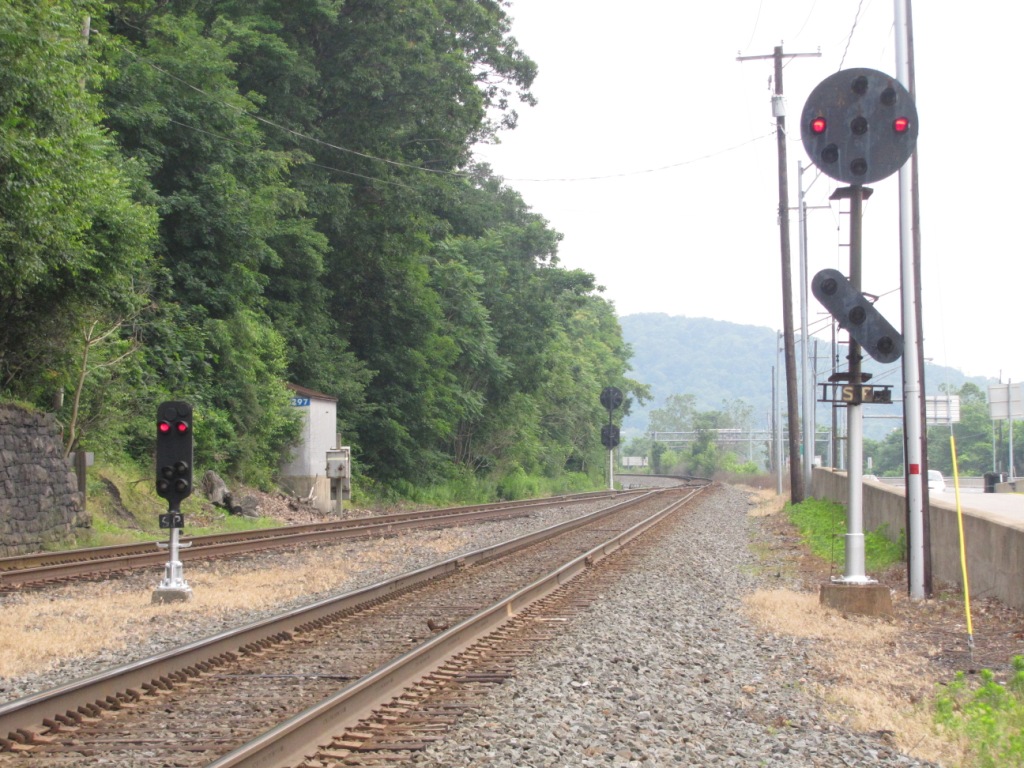
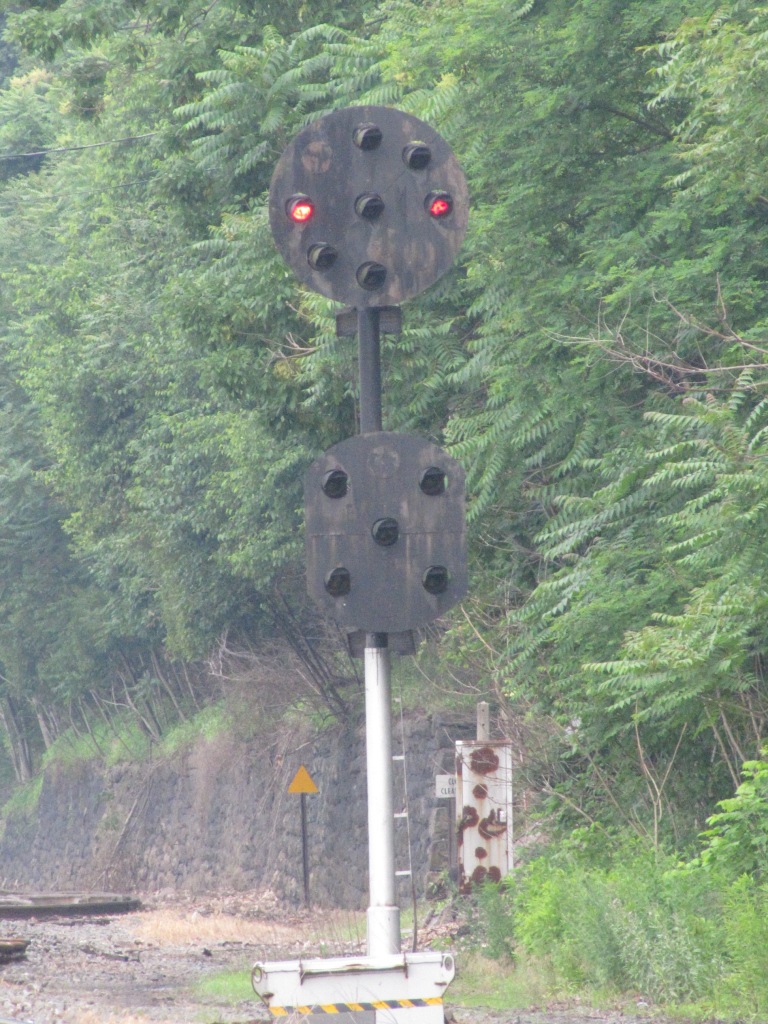
The Pennsy started changing some of their PL signals in the mid 50's. They replaced the two horizontal lenses with red lenses, keeping the center one yellow to use with the other aspects. The first application of these signals was apparently at Overbrook, "OB", in suburban Philadelphia, about three miles west of ZOO Interlocking in September of 1954. After a couple of years of testing, they were put into service west of Harrisburg. The speculation for their origination is because of the fog that was prevalent on the Buffalo line. This changed manifested itself in the high-signals as well as the pedestal signals. No dwarf signals were affected, as far as anyone knows.
We have had 2 or 3 discussions on both the Yahoo railway Signaling and Pennsy Signaling groups, of which one sourpuss complained that we've discussed them too often. Well, I was the latest instigator, but every time we do a discussion about them, we have new list members, and some new tidbit of info always comes to light in the discussion... so maybe in a few months I'll start another round of discussion :-) The info below is from these discussions and I would like to thank everyone for their contributions! (don't forget that some of what is presented are personal opinions as opposed to fact).....
When I asked about the red-eye installation timeframes, this is what I got:
1. Test installation at "Overbrook" - circa 1954-5.
2. Evidently adopted widely west of Harrisburg - circa 1956-7 and after.
Exact dates not certain. Installations were phased in over time.
3. Installed widely east of Hbg. - starting after PC merger - ditto
Pedestal-type signals. Possibly only new construction.
4. Amtrak NEC PCLs adopted circa 1980s (a Claytor-ism).
The only Dwarf Signals known to be PCL type were tested at "OB".
Hope this clarifies the timeframes.
They are in the 1956 rulebook. The test installation would have been in
Philadelphia Terminal Div./District ETT and GOs.
The "red snake eyes" were seen all the way to East St. Louis and Chicago.
I have many General Orders converting the original PL-type signals to the
Position-Color Light (proper terminology) format west of Indianapolis in the
late-1950s.
I would not say that there were never any ABS Signals that had them but I do not
recall ever seeing any that did. They were generally, if not exclusively, used
in signals that could display Stop. Thus, an APB Head-Block Signal could have
been an appropriate use for them but I am not aware that they were so used.
Three post from Lin B, Thanks!
The September 25, 1954 date must be the first date that field tests were
started, as I dug out an interlocking chart that states the red-eye high signals
at Overbrook were cut in with General Order No. 712 dated October 7, 1954.
Signals 4R, 8R, 10R, 12R, 12L, 14R, 14L, 16L, 18L, 018R, 018L, and 20R were so
equipped. Unfortunately, I don't believe I have this GO for further details.
The information on the backgrounds may come from an A.H. Rudd article in the
July 1921 issue of Railway Signal Engineer. There he indicates that a background
was only applied to the vertical row of lights in the lower arm since those
aspects are approached at speed (Approach Medium and Medium Clear, using their
current names). The diagonal and single marker slow speed aspects (Slow
Approach, Restricting, and Stop and Proceed, using their current names) did not
need a background since long range sighting was unnecessary. The reduced size of
the background and wind pressure area allowed the use of standard sized signal
masts (weight and wind were issues with the early four-light position signals on
masts).
With the introduction of Approach Slow in the late 1940's and Medium Approach in
1955 and 1956, there were lower arm aspects that would be approached at higher
speeds. I suspect this was the driving force behind full backgrounds for the
lower arm. I have no specific references, but it does seem that those full
backgrounds seemed to become much more common starting in the later 1950's.
Thanks Dave M.
This link:
http://mysite.du.edu/~jcalvert/railway/prr/prrsig.htm#pos includes this
quote:
Curiously, some position-light home interlocking signals were equipped after
1955 with two red lenses to show the Stop aspect, the pivot light being
extinguished. The first trial was at Overbrook on 25 September 1954.
While the author doesn't use footnotes, this entry in the bibliography may be
the source: 6 E. Waytel, The First Position Light Signals and Subsequent
Developments, The Keystone, Vol. XIV, No. 4, December 1981.
This site answers many questions about PRR signal history, and the author
attempts to uncover and correct mistakes in earlier accounts by going to primary
sources. However, due to the lack of footnotes tying all of the remarks to
sources, I am worried that some conclusions may be just his personal opinion.
For instance: Approach-medium and Medium-clear are used at main line crossovers
and junctions, where the turnouts can be used at higher speeds than the usual
15mph, in order to avoid slowing trains unnecessarily. There is a background
around the lower arm in this case, since it is viewed at speed. The lights used
to display the Slow-approach and Restricting aspects are not provided with a
background, since they are approached only at low speed. Is this based on
logic and reverse engineering, or does he have a PRR source for the statement?
Thanks Jim B.
3. Installed widely east of Harrisburg. - starting after PC merger - ditto
Pedestal-type signals. Possibly only new construction.
(a note on Lin's post above)
The only red eyes that I can remember in Lancaster County were over at Cola.
I sort of remember that the westbound home signal on the A&S had them, just
before Conrail replaced them, when they closed Cola in the mid 80s. The
Lancaster Branch never had them, even after Conrail single tracked it. I
do not know of any installed on the passenger main from Lancaster to Middletown.
All have been replaced/removed within the last two years by Amtrak. I do
not recall them at Roy either. I will have to check my pictures of Shocks,
but I do not think they had any either. Wago may have received them when
Cly was removed, but that was in the 80s too. So maybe further east then
Lancaster County...
Thanks C.O.S.
I didn't see any references to red-eye pedestals in the last round of Pennsy
timetables before the merger, nor did I see any in the first round of Penn
Central timetables issued in 1968. The first place I found them was in PC
Central Region Timetable No. 2 dated December 1, 1968, which shows Medium Clear,
Slow Approach, Restricting, Stop and Proceed, and Stop aspects and indicates
they were in use at East Fair, West Fair, East Muncy, West Muncy, Linden, West
Bud, and Pine on the Main Line-Harrisburg to Buffalo and North Neff, South Neff,
North Pan, South Pan, North Try, and South Try on the Chautauqua Branch. Later
General Orders added more locations, e.g. GO 205 that added East Keating, East
Farwell, East Baker, and West Baker to that list.
These aspects carried through various PC and Conrail timetables covering these lines until they were added into the 1982 CR rule book. At some point West Brown on the Pittsburgh Division (West Brownsville, PA) got one or more of these, but all other references I've found are to the Buffalo line and Chautauqua Branch.
All of this confirms my impression that these were rare away from the Buffalo line. Since the red lenses prevent "high speed" aspects such as Clear and Approach from being displayed, there really are only limited applications for them -- like the ends of CTC sidings. Also, pedestal signals are not really meant for high-speed tracks, so sighting a stop aspect at a distance shouldn't be much of an issue.
That last thought, however, leads to my theory that there was an operating reason behind adding the red lenses. The Buffalo line and the Chautauqua Branch had 30 MPH signaled sidings that had Medium Approach as the best entering aspect. Many of these sidings were long - over two miles - so a train could run down the siding at a good pace until approaching the pedestal signal at the end, where you'd have to be ready to stop per the Medium Approach aspect. If you were lined out of the siding, perhaps it would be easier to recognize a cleared exit signal from a distance if it were red-over-something white rather than all white, allowing you to maintain 30 MPH instead of having the brakes set. Just a thought...
As mentioned, the Marion Branch in Indiana has pedestal signals at the ends
of signaled sidings too - installed in the mid-1970's - but they don't have red
lenses even though they could without trouble. The high signals have red
lenses. I don't know what the original speed limit was on the sidings on that
line, but it's 10 MPH by timetable today (last I heard), and I just recently saw
a train enter the siding at Leesburg, IN on a Slow Approach high signal and exit
on a Medium Clear pedestal. If these sidings have always used Slow
Approach as an entering aspect, that may support my theory above because trains
would be approaching the signal at slow speed. On the other hand, it may
have been decided that the red lenses didn't provide enough of a benefit and
they weren't used in later installations.
Thanks Dave M., and thanks for all of the research you
did and for taking the time to type it all up for the post.
Someone also commented that red-eye signals can be seen as far west as Chicago,
but another person said that there are none on the Marion Branch.....
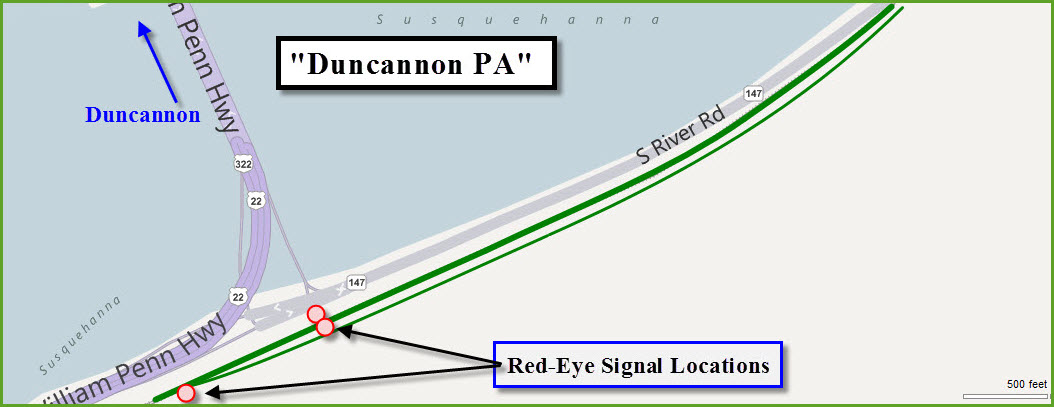
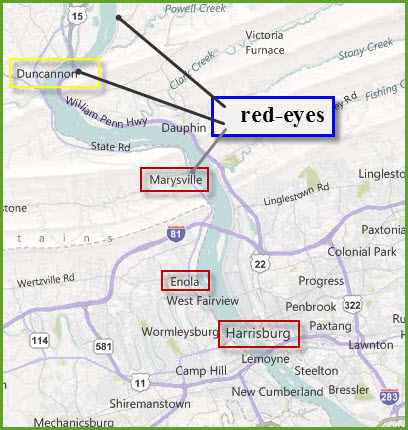
The pictures below show two high signals and a pedestal signal. The right photo is looking north, or WB on the eastern side of the Susquehanna River, across from Duncannon PA. This is the Buffalo line. The other three are the SB signals.

There are two "oddball" PL aspects that are made from the standard full size PL signal head: one is the TAKE SIDING signal
 , the other is the PHASE BREAK signal
 . The phase break signal today, if my
sources are correct, only exist in Philadelphia and Thorndale PA. One source also states that the phase break signal originated with SEPTA, but one picture I have of a phase break signal
(the last one below) is on the NEC in rural Maryland
around the Aberdeen or Havre de Grace area (supposedly gone now). The
signal below is north east of the 30th Street station on the ex Reading line,
1.8 miles away as the crow flies. The picture by Bob Vogel must have been
shot out of a rear facing window from a commuter train, for there are no platforms
along this stretch of tracks. The picture comes from
here.
. The phase break signal today, if my
sources are correct, only exist in Philadelphia and Thorndale PA. One source also states that the phase break signal originated with SEPTA, but one picture I have of a phase break signal
(the last one below) is on the NEC in rural Maryland
around the Aberdeen or Havre de Grace area (supposedly gone now). The
signal below is north east of the 30th Street station on the ex Reading line,
1.8 miles away as the crow flies. The picture by Bob Vogel must have been
shot out of a rear facing window from a commuter train, for there are no platforms
along this stretch of tracks. The picture comes from
here.
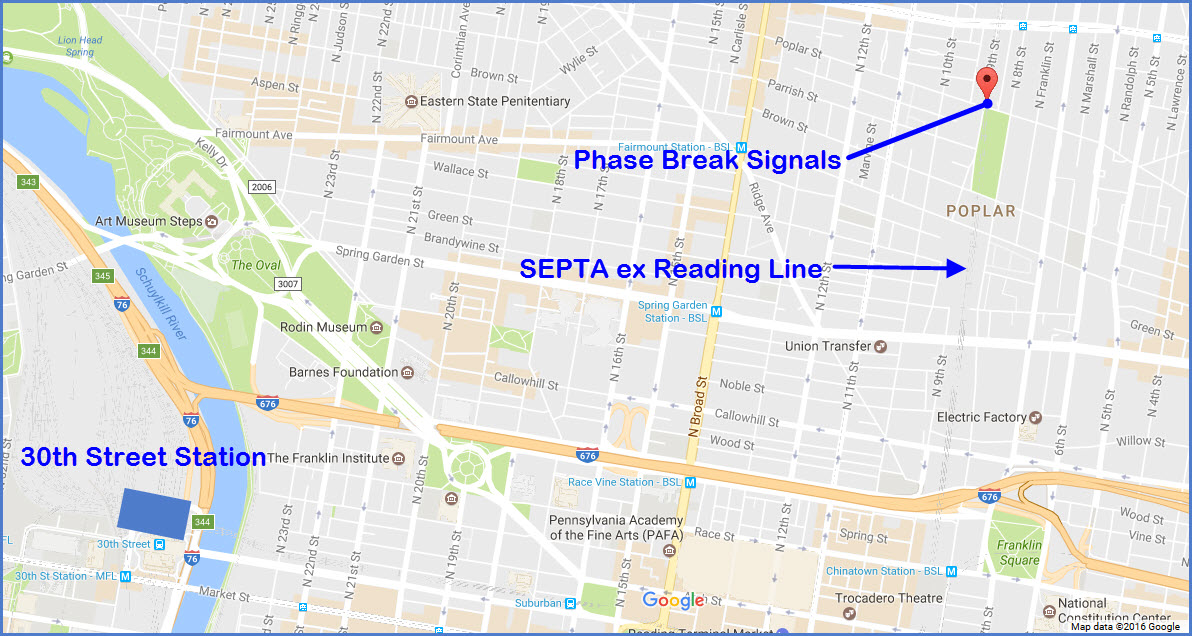
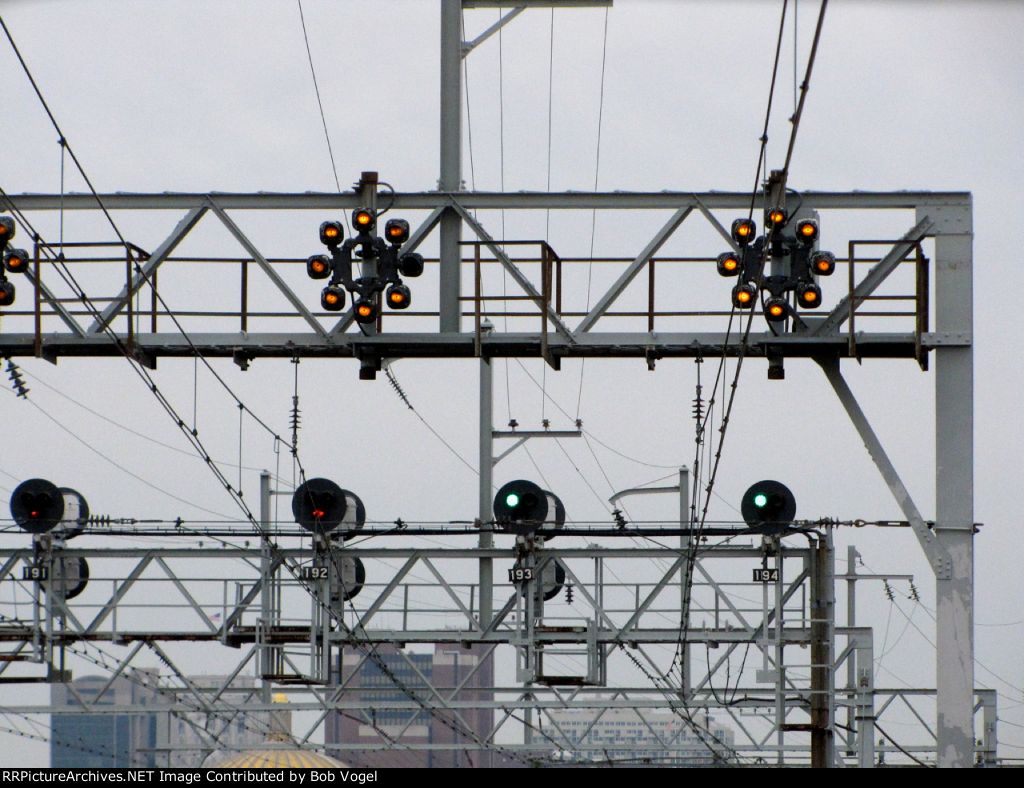
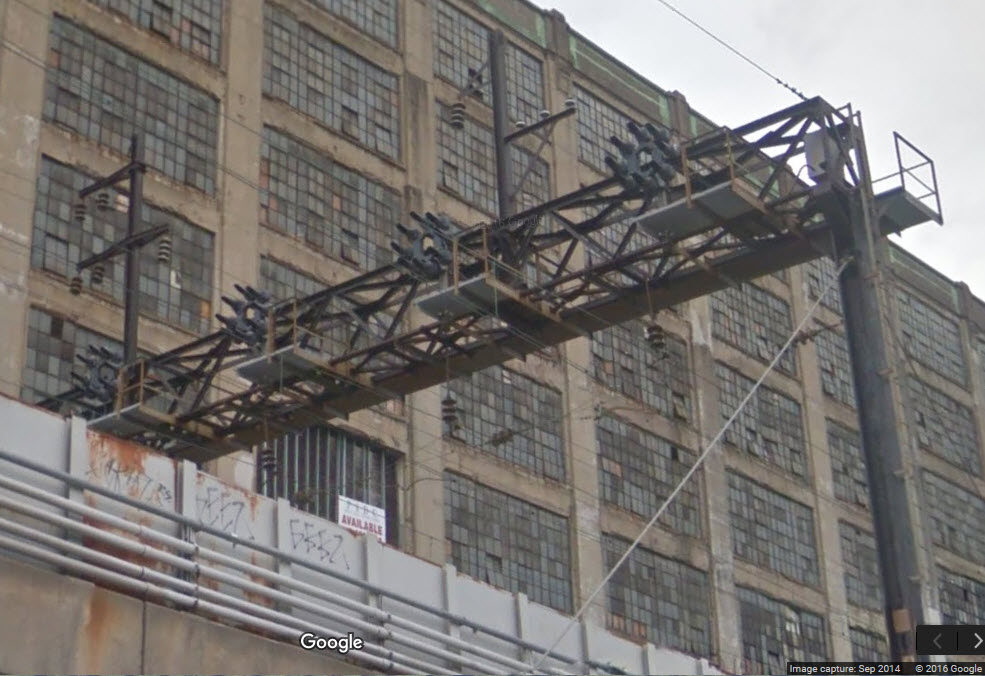
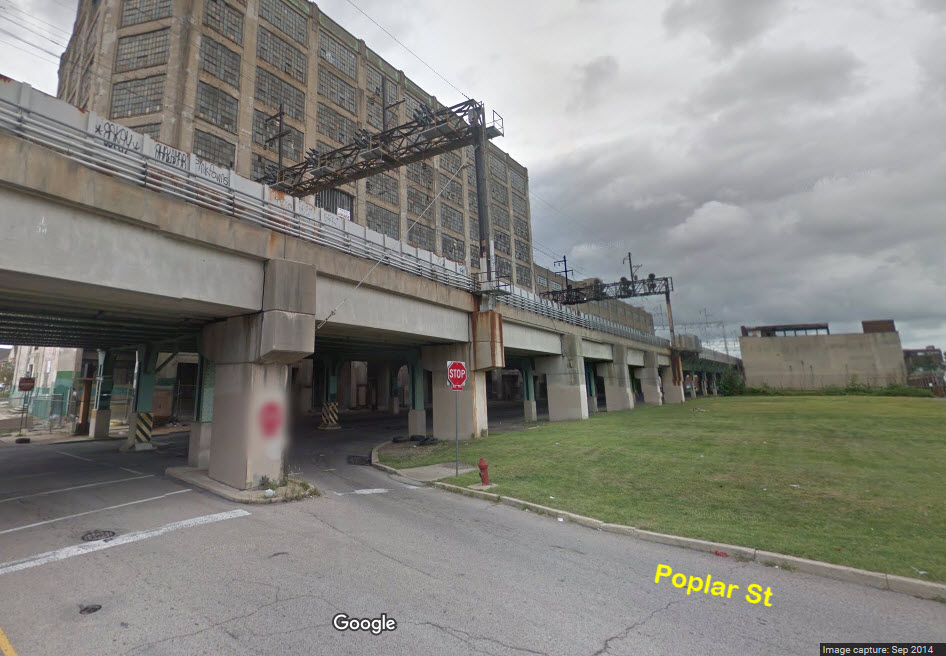
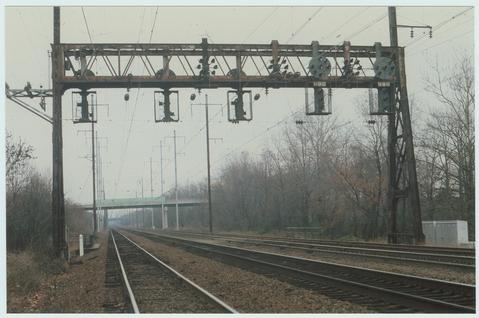 Photo by
George Pitz
Photo by
George Pitz
- Signal Pictures -
Many "pure" Pennsy PL
signals can be still found all over the place, but they are fast disappearing,
as the ones in Altoona did in 2012.
Here is a small
sampling of what is and what used to be.
Baltimore MD
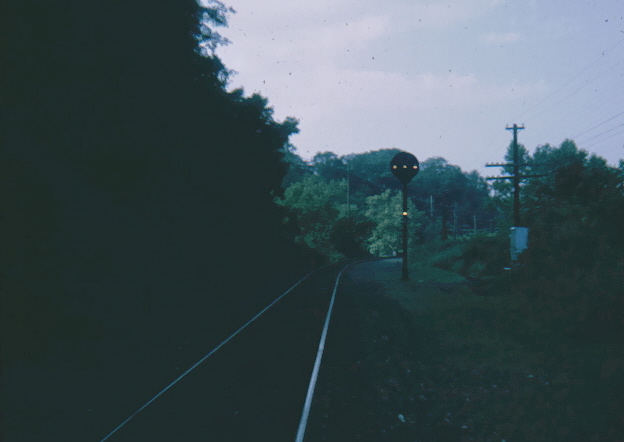
I believe this is the only picture I have of a signal on the Northern Central back in the 70's, probably around Northern Parkway, where the tracks paralleled the Jones Falls Expressway (I83).... the high voltage power line on the left gives the location away.
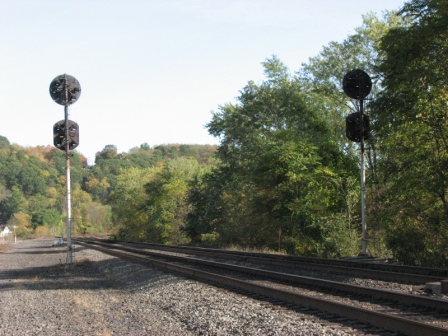
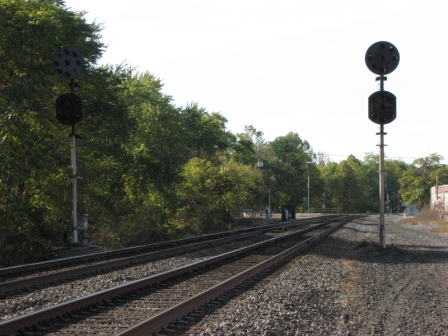
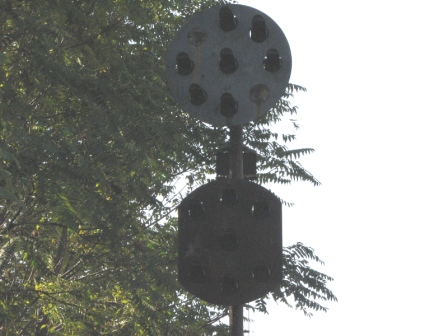
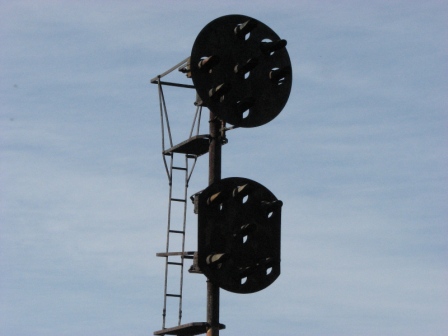
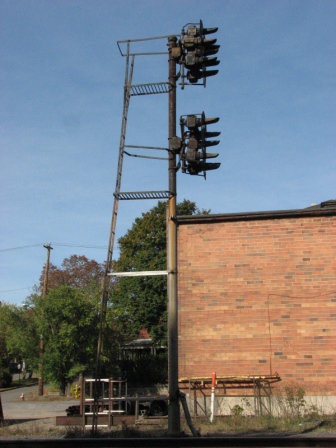
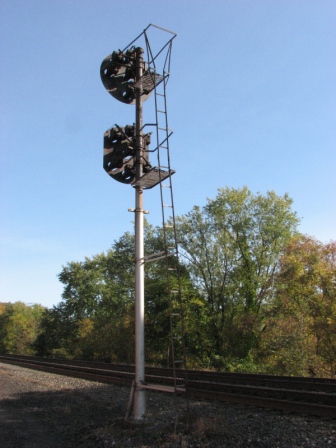
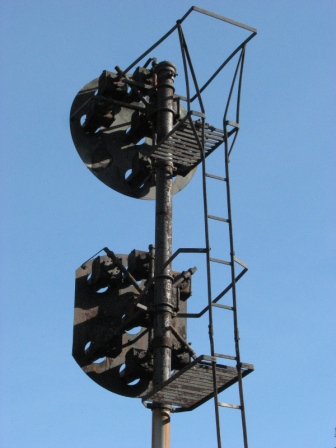
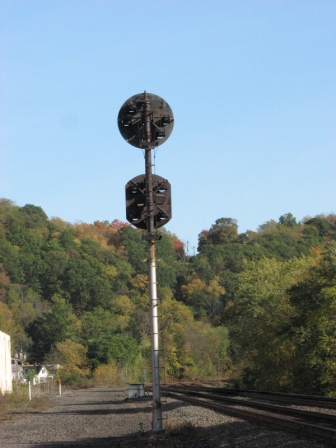

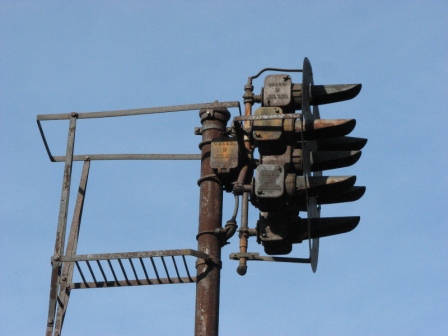
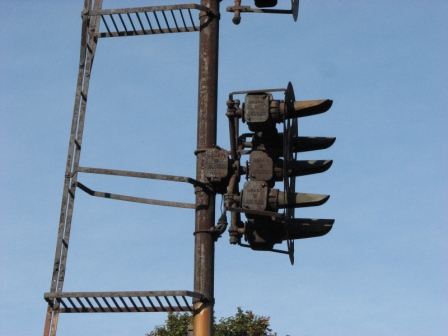
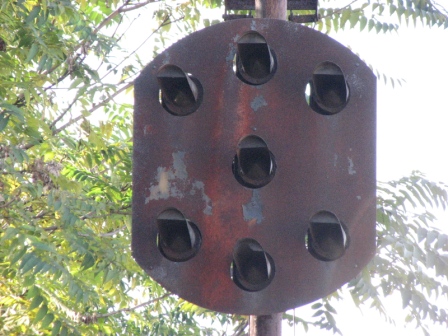
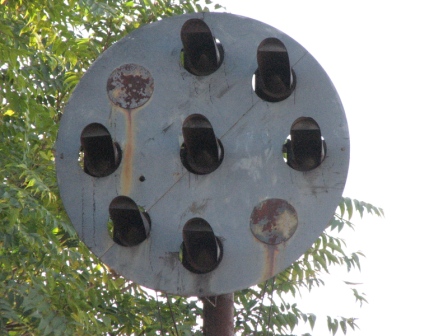
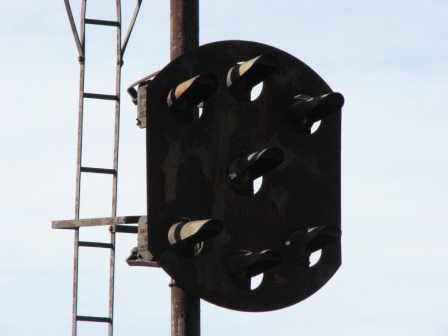
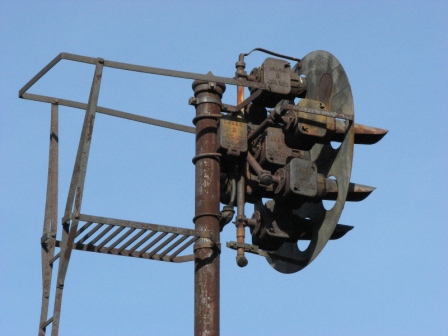
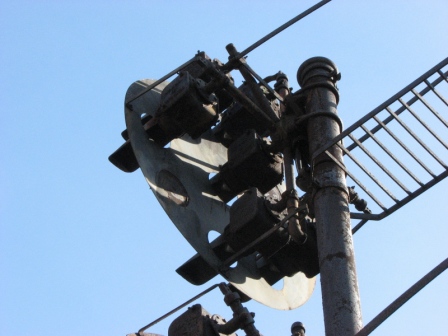
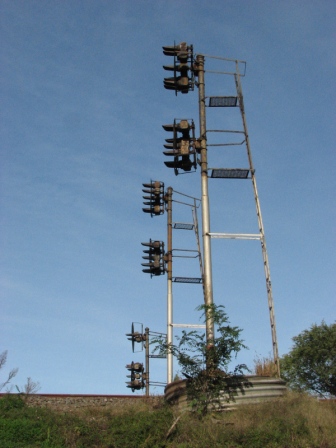
This first set of signals is located on
the east side of Huntingdon. Huntingdon is about 28 miles east of
Altoona via
us22, and about 15 miles west of Mt Union, the northern end of the
East Broad Top narrow
gauge steam railroad. Also in town is the (closed) HUNT tower. The
tower used to be open for visitors several years ago, but when there in 2008,
that was no longer the case... darn.
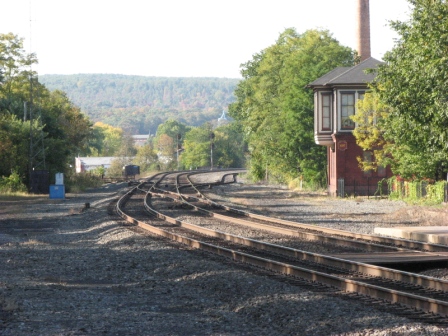
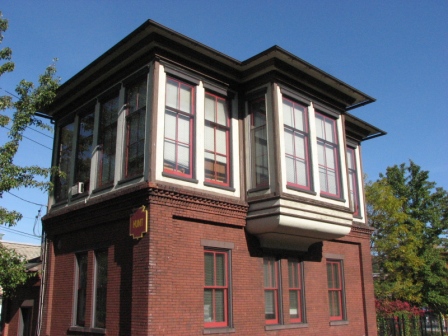

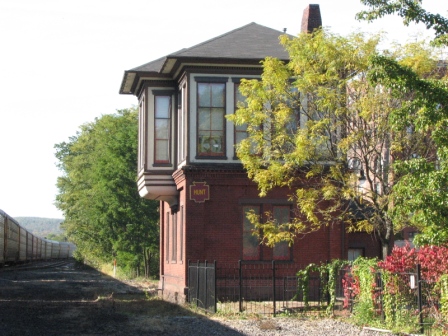
The signals, switches, and interlocking
in Huntingdon used to be controlled from here, HUNT tower.

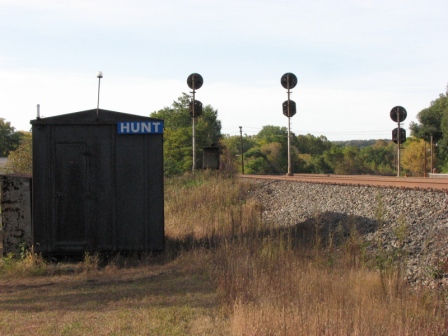
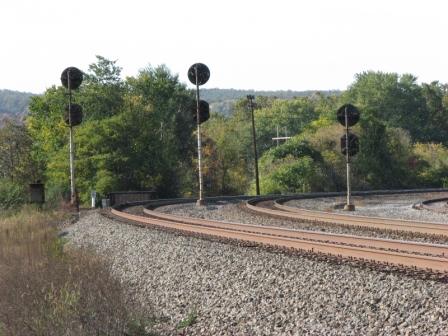
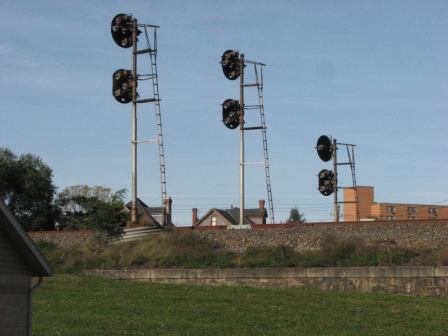

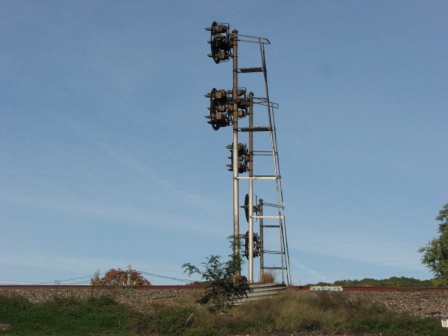
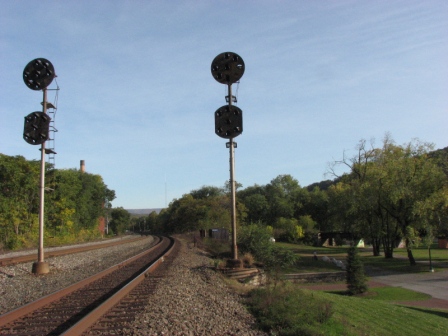
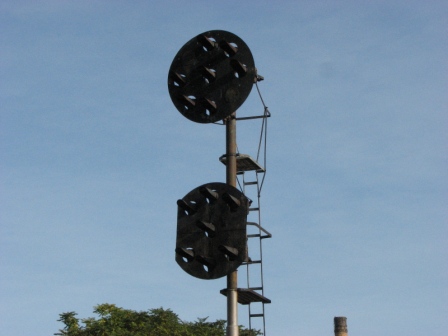

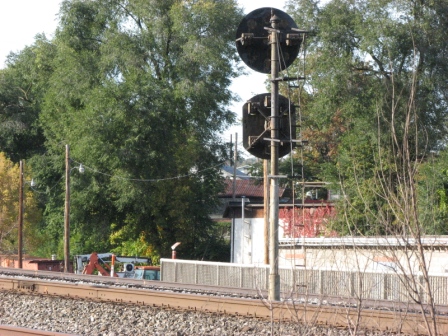
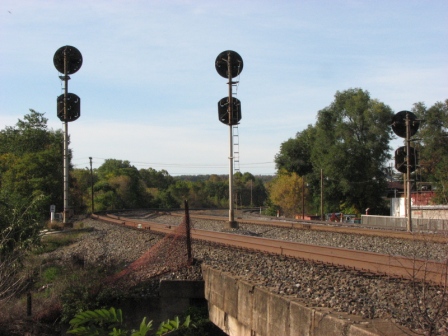
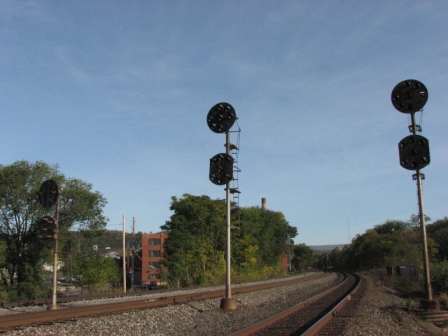
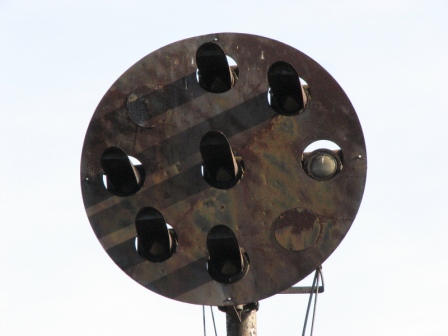
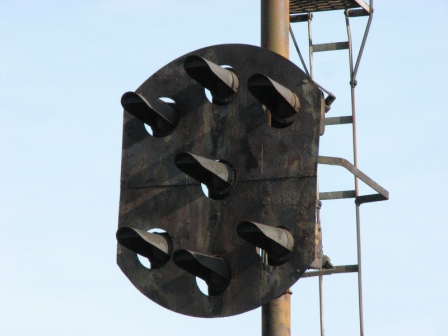
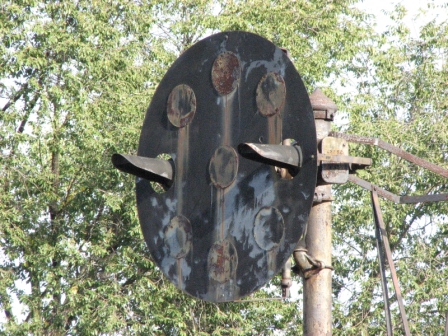
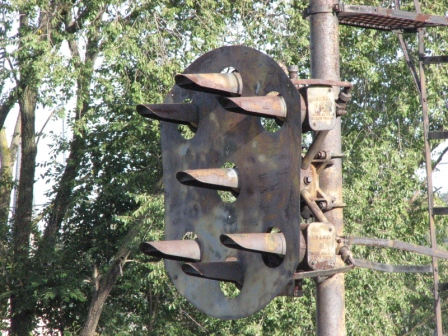

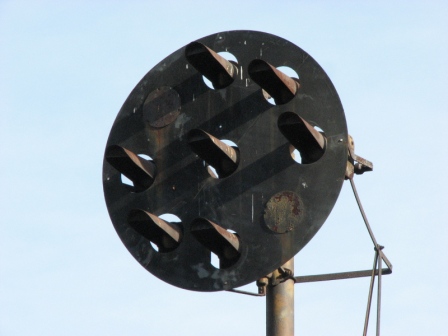
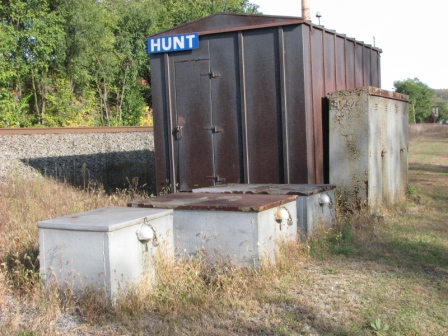

This second set of signals is located
on the west side of Huntingdon. Access to these signals is very easy
through the park, which also contains the H&BTM bridge shown above. On the
bottom row is a lone pedestal signal for controlling the ex Huntingdon and Broad
Top Mountain RR interchange, which hasn't been used since the late 90's.
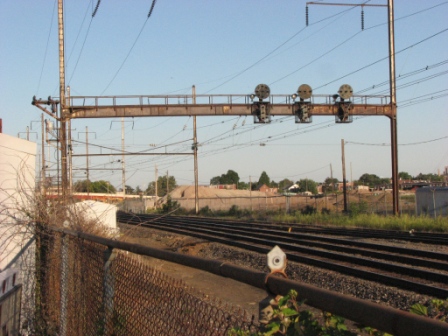
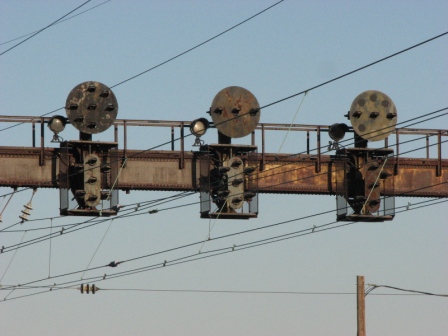


Located on the west side of the station in Lancaster is this signal bridge for EB trains. Lancaster is about 25 miles to the east of Harrisburg. If you're not from around these here parts, Lancaster is pronounced with the emphasis on the first syllable as "lang", and then a quick "ke-ster" to follow

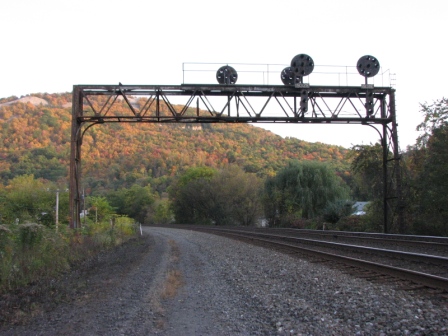
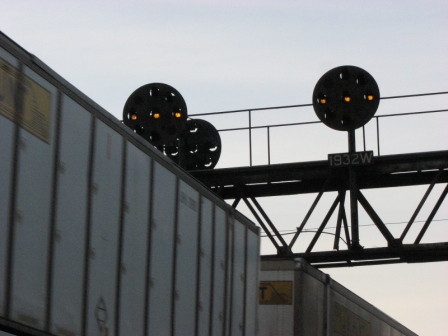
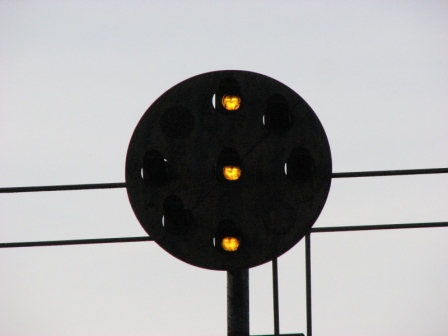
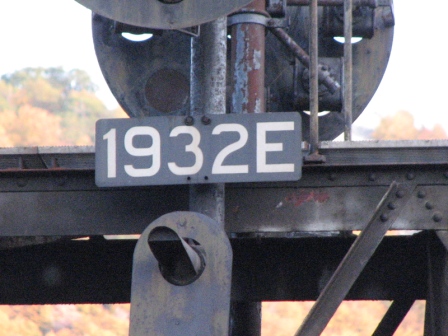
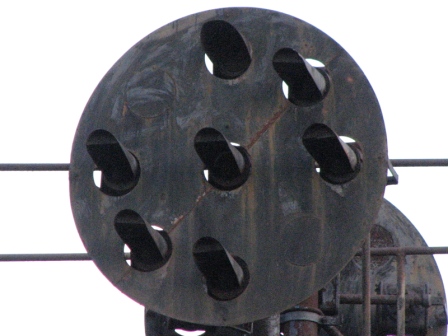
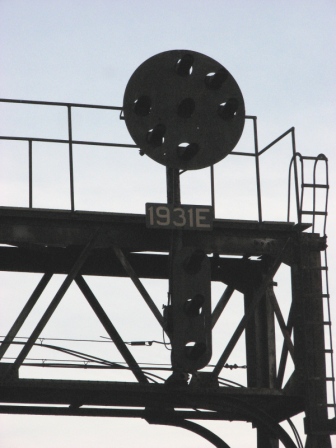
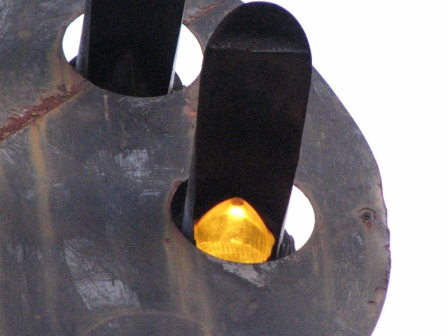
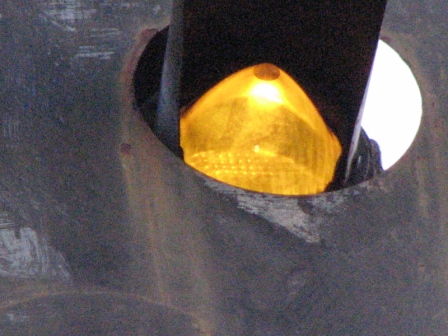
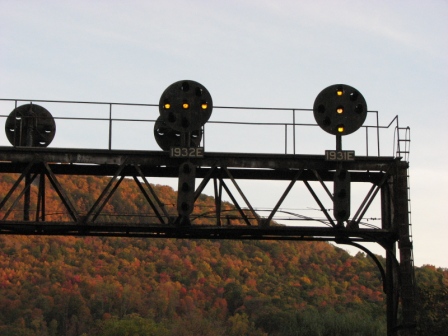
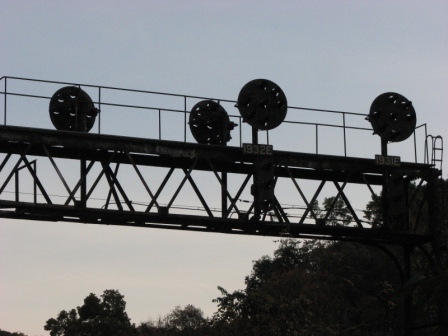
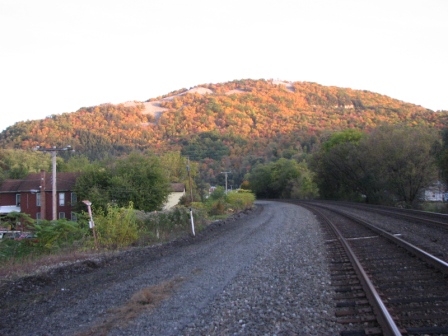

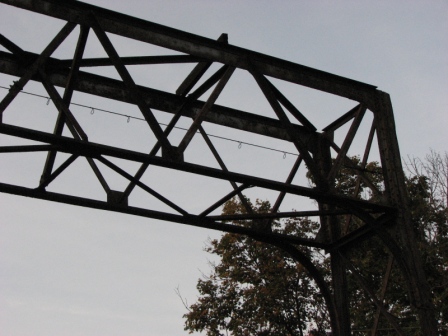

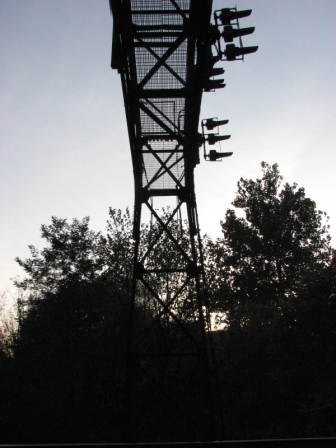
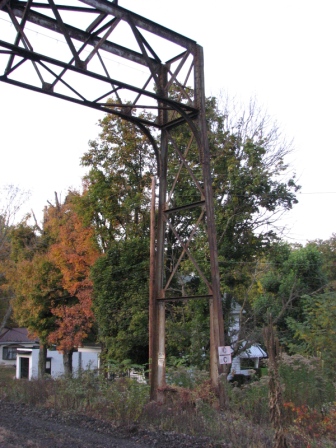
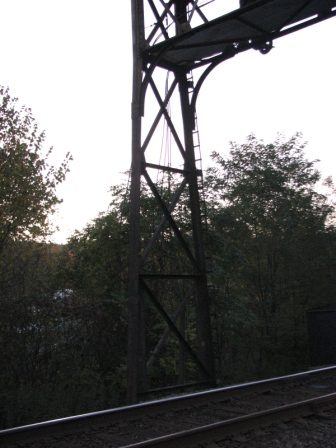

Mapleton is the next set of signals west of Mt Union, about two miles away. It is off US22, via PA655/Main St from the west, or PA2020/Oriskany St from the east, and then by taking Bridge St over the river, and a right onto Railroad St. Two of the photos show the conical lenses pretty well. The signals are approach lit.
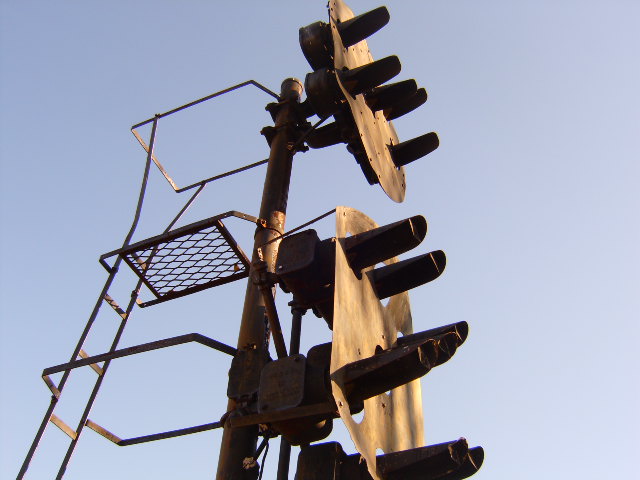
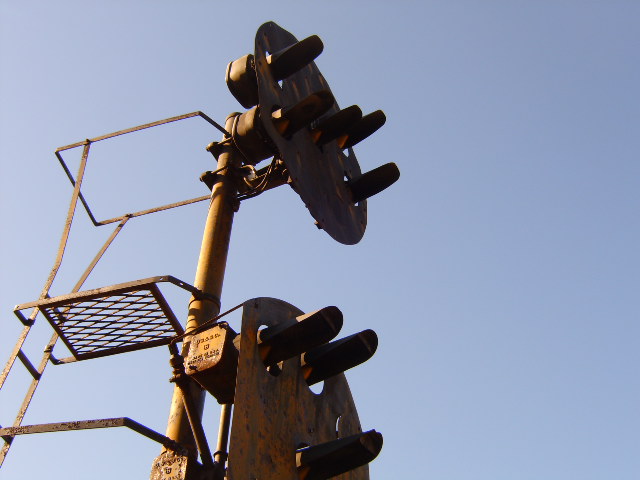
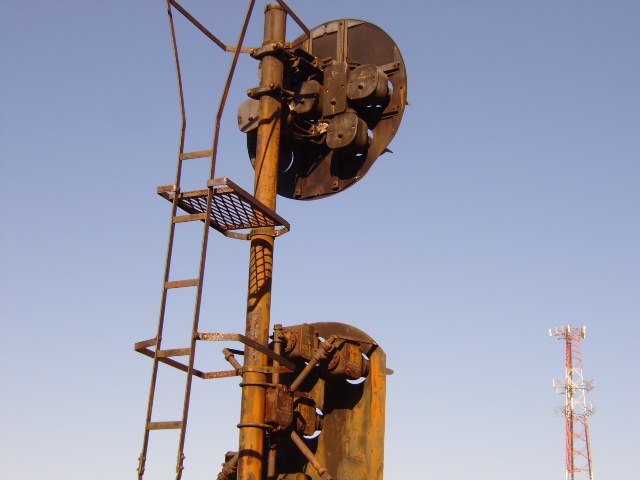

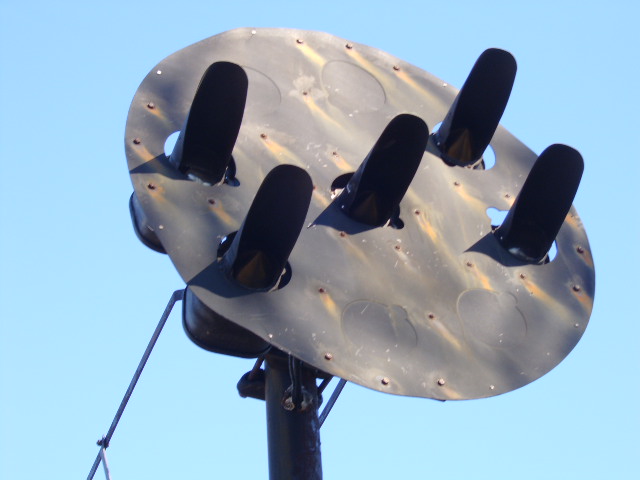
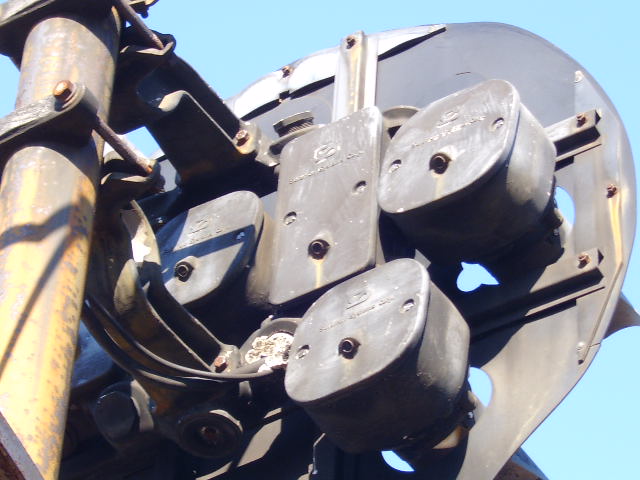
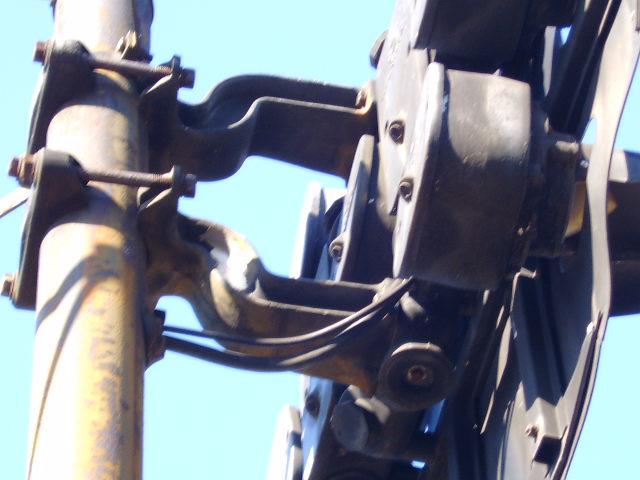
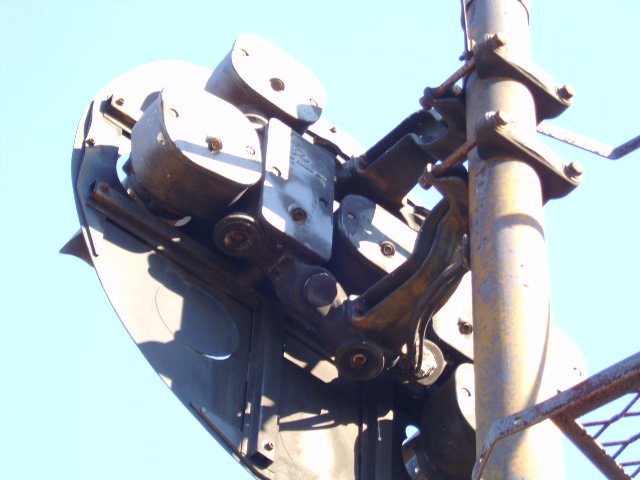
From Nicholas Longshore comes this set of photos at the Penn/Oakley/Ridge wye in Norwood OH, where one of the traditional US&S signal heads was replaced with one made by Safetran. It appears that almost everything is different except for the outer lens and hoods. The housings are of cast aluminum, compared to US&S's version which is cast iron. From the front of the signal, it would be almost impossible to tell the difference. Great detail shots Nick, Thanks!
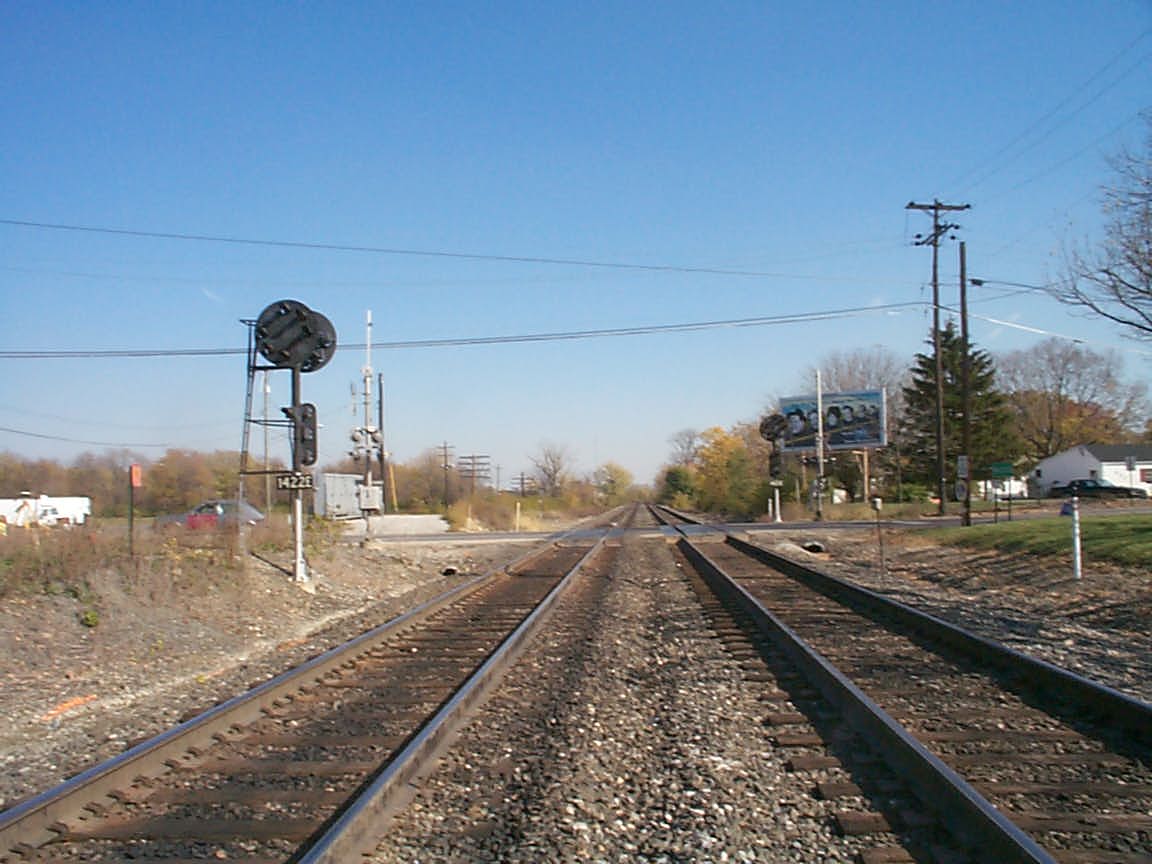
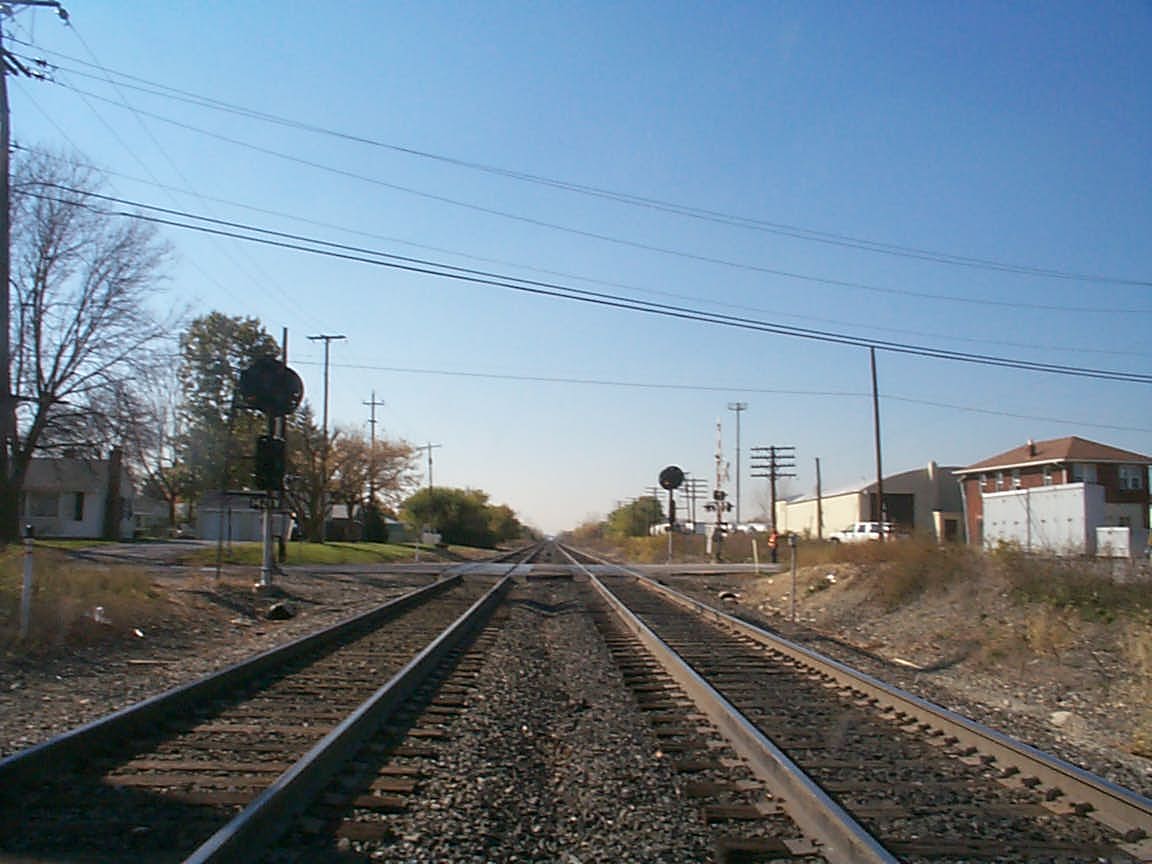
Here are a couple of
shots of a signal installation on the Norfolk Southern in Columbus OH at Hague
Ave. I love it when the signals are this close to the grade crossings, it
makes it so much easier to get photos. Notice the signals are set up for
signaling in both directions on both tracks. The top photo is looking
east.
For more info on this crossing:
http://gradecrossings.puco.ohio.gov/item.php?ID=2627&f1=FRANKLIN&f9=ALL&f11=hague
I'm sure if one cruised the records, there are probably oodles of these kinds of
photos around, I came across this one by accident looking for something else.
Signal Bridge in Halethorpe (Baltimore) MD
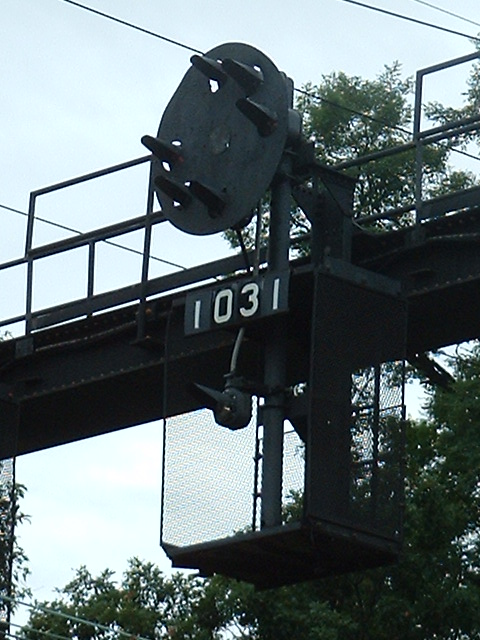

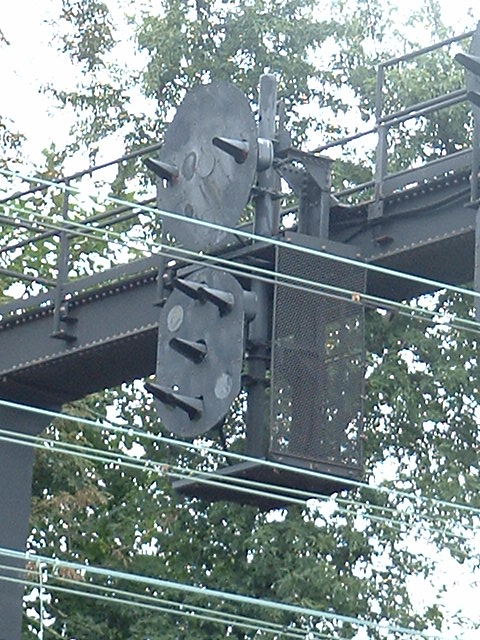
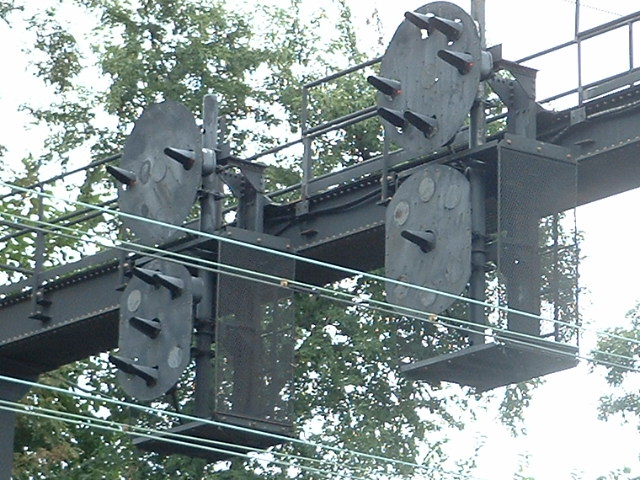
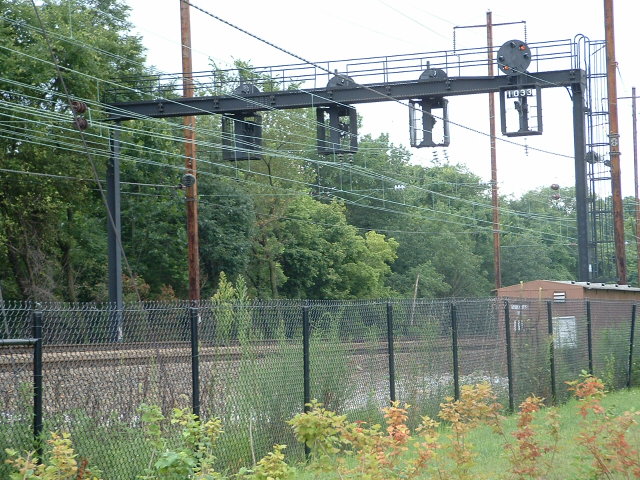
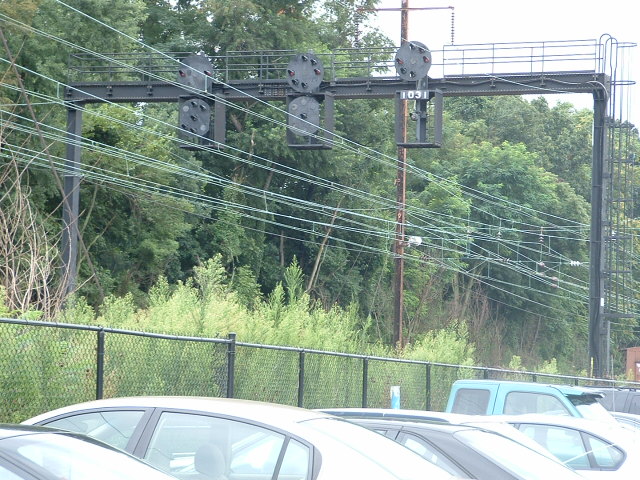
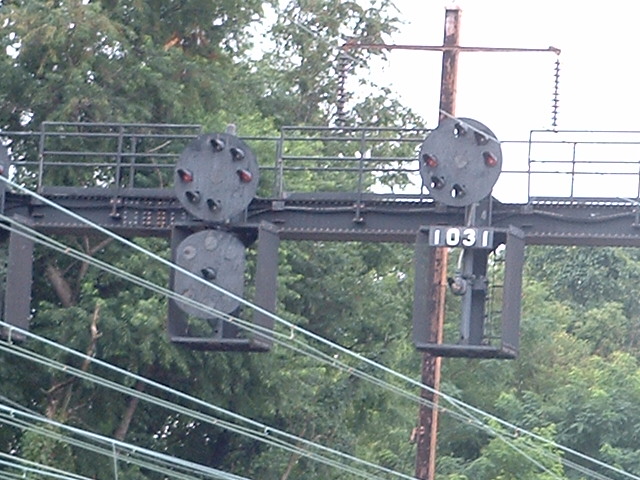
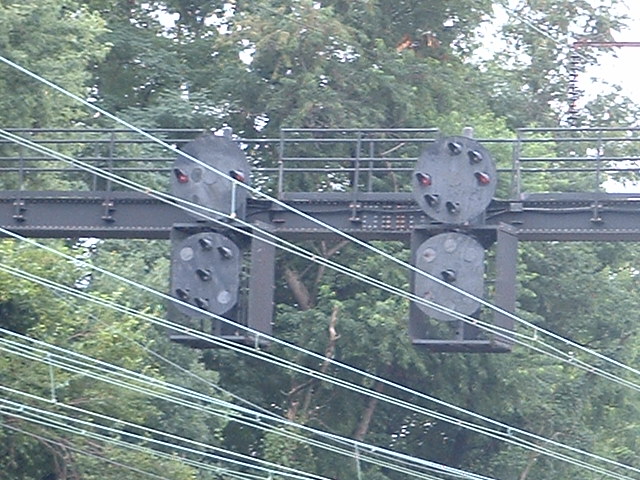
These signals are located in
Halethorpe MD, adjacent to the MARC commuter stop,
and demonstrate how Amtrak has modified the signals to colorize them.
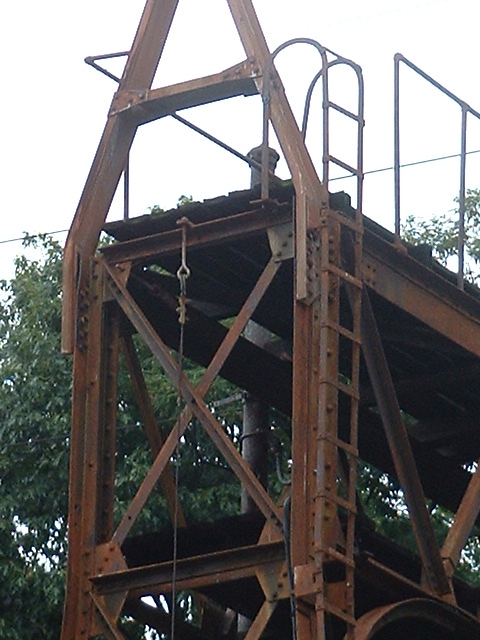
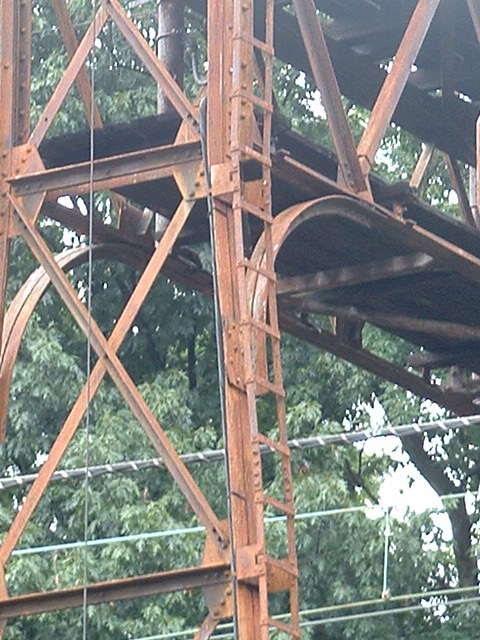
Former Signal Bridge in Halethorpe MD
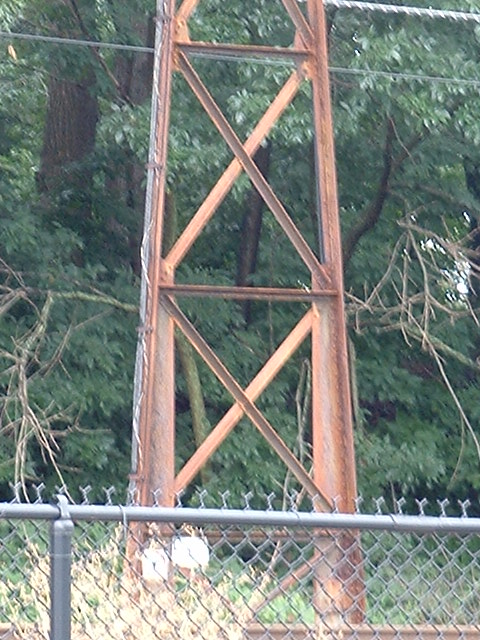
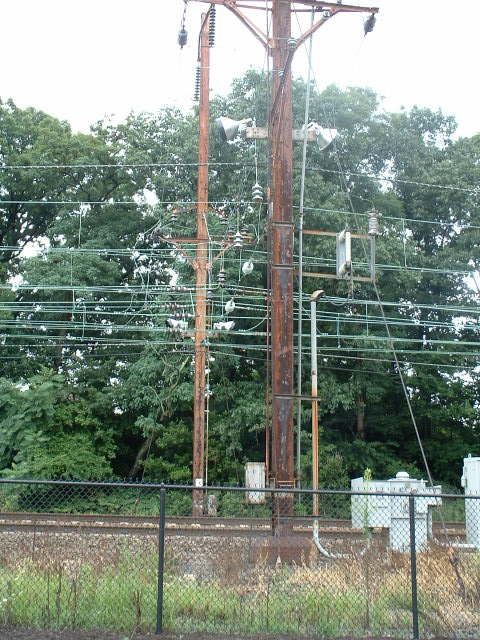
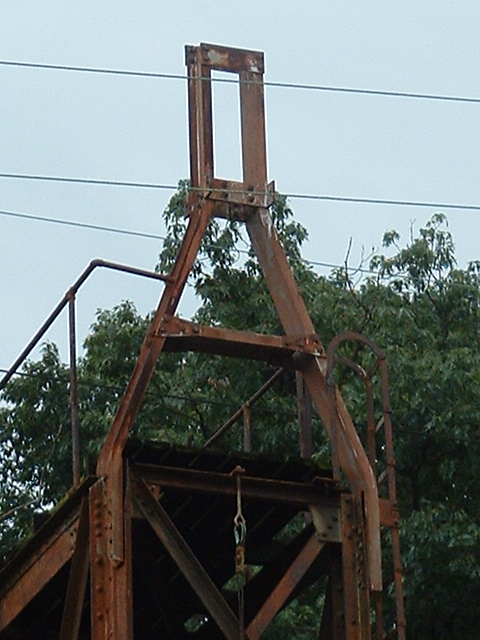
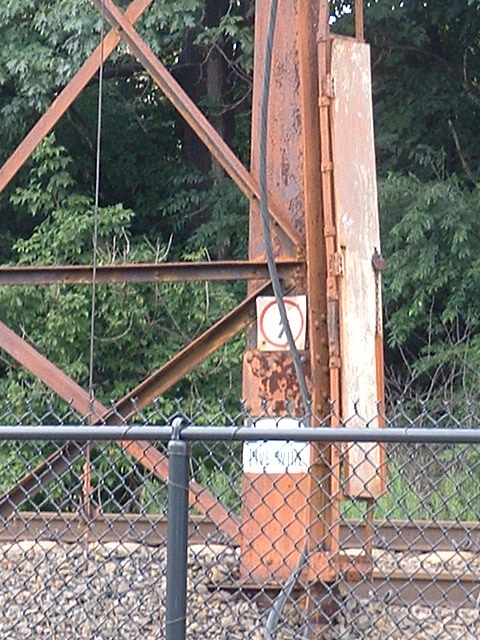
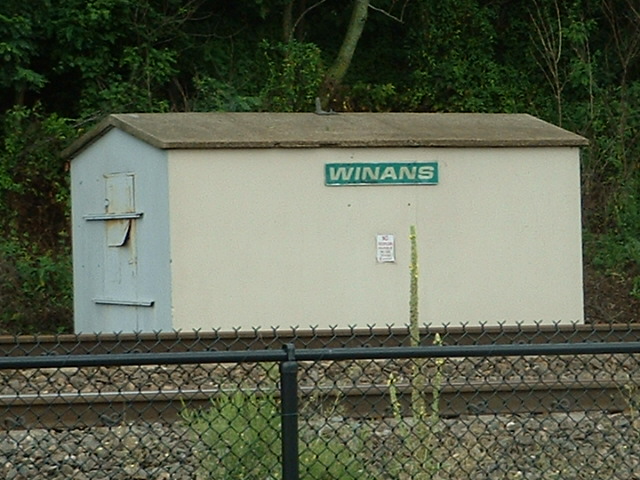
This unused signal bridge is also located in Halethorpe MD, also known as Winans.
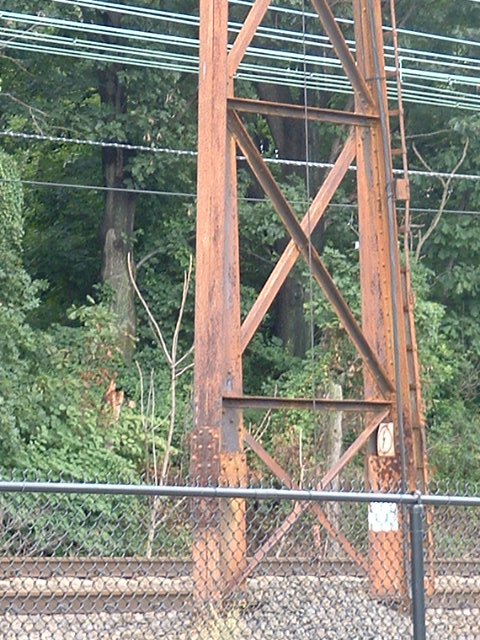







The following pages are out of a US&S catalog dated 3/43
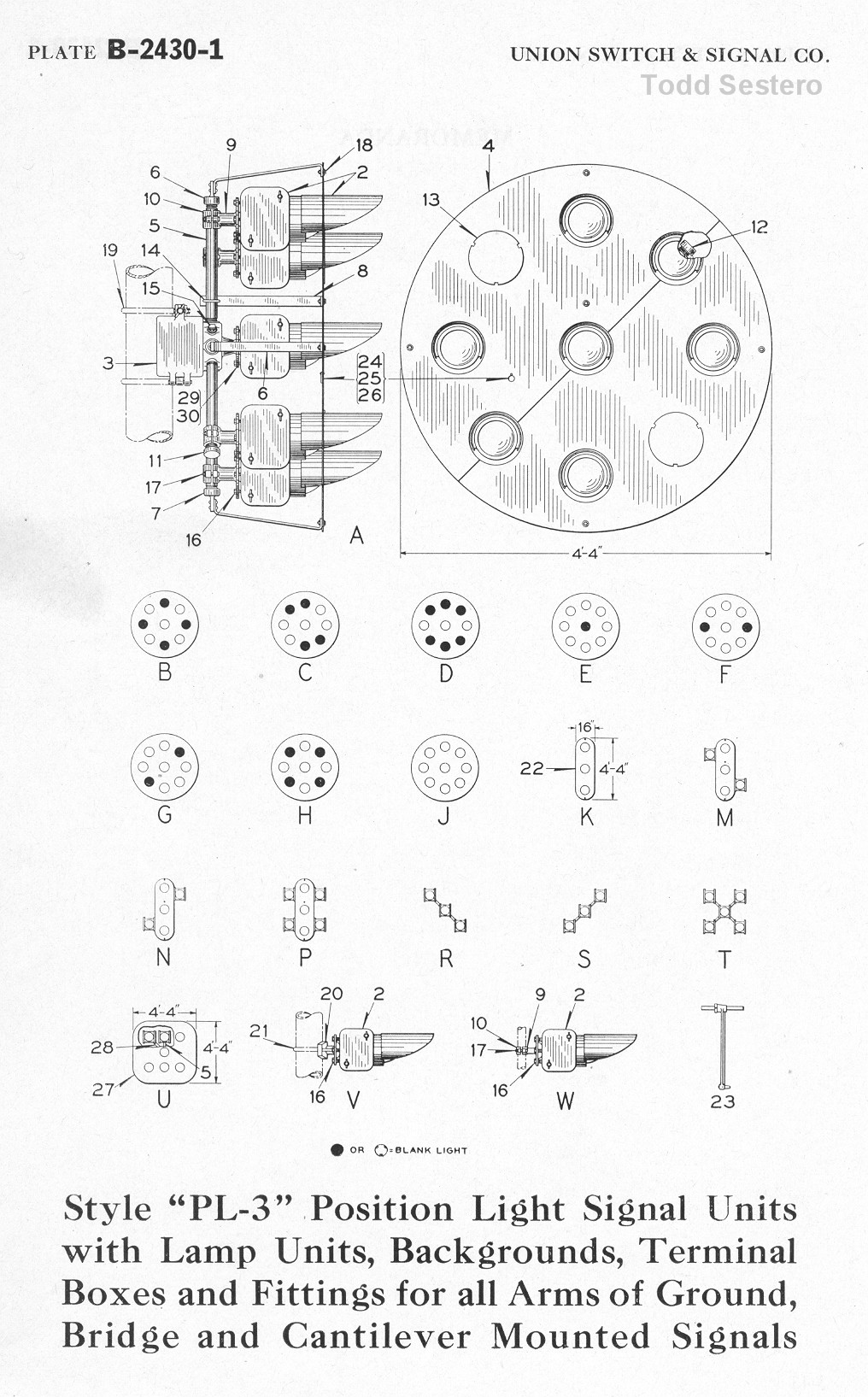

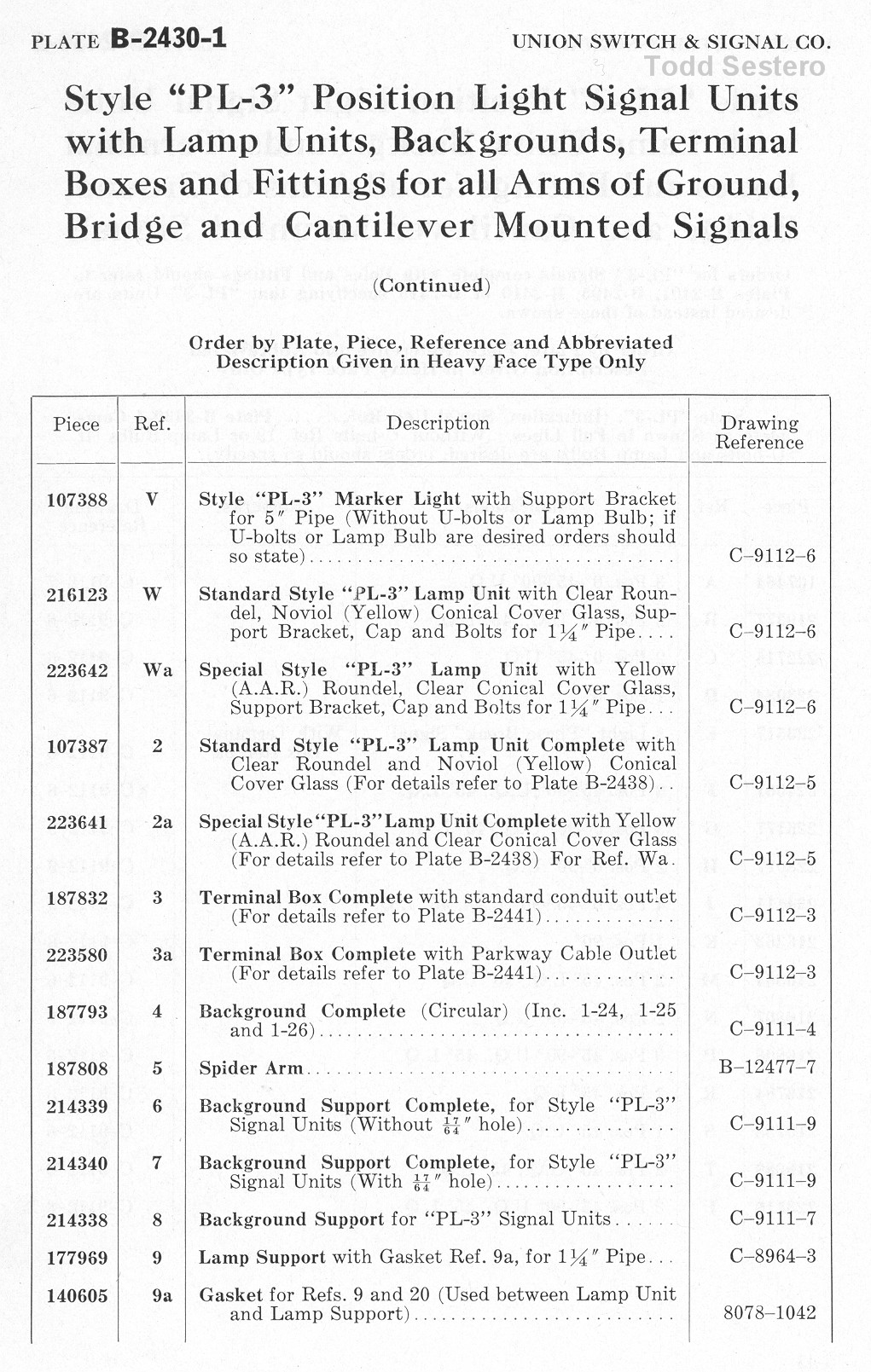
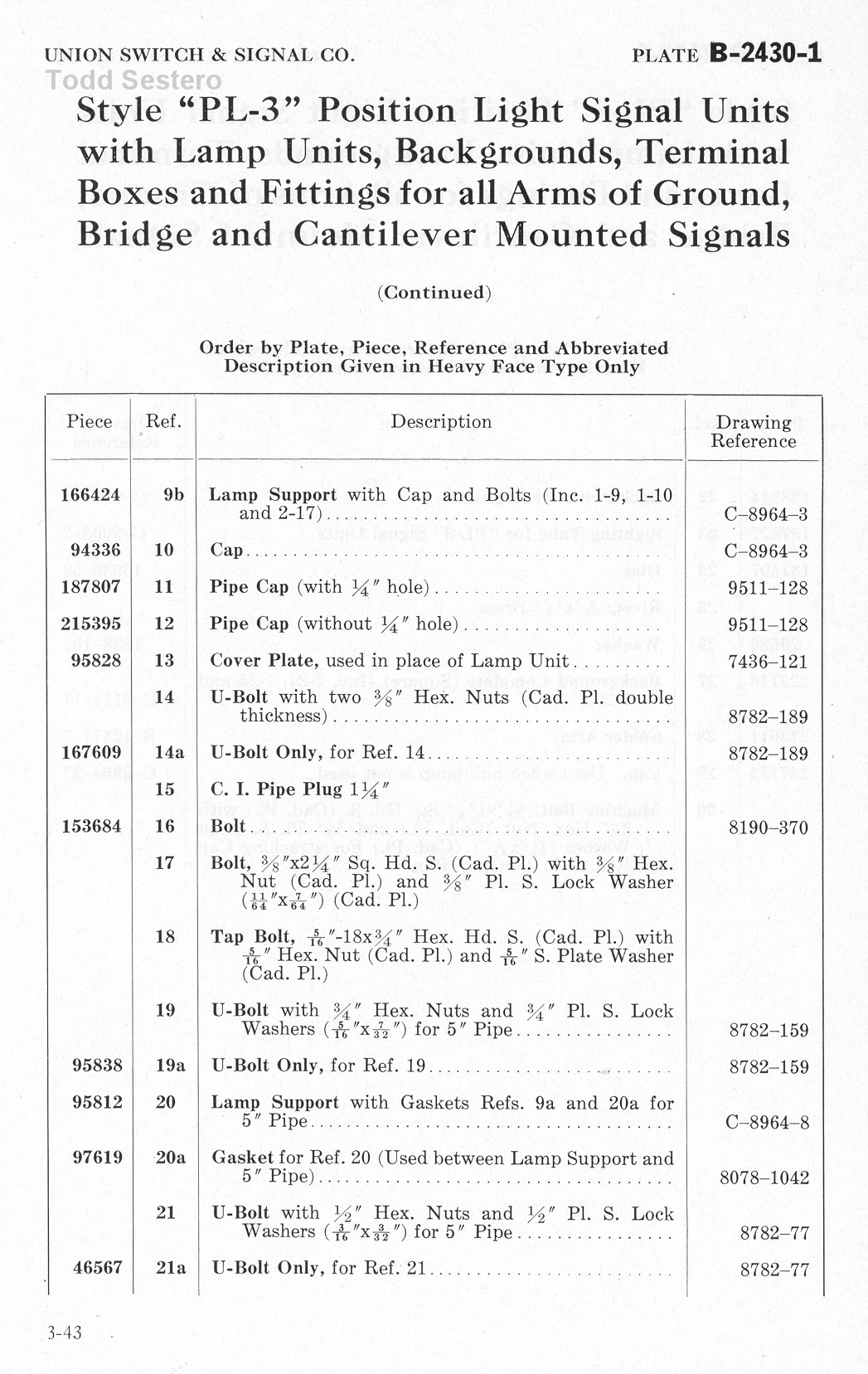
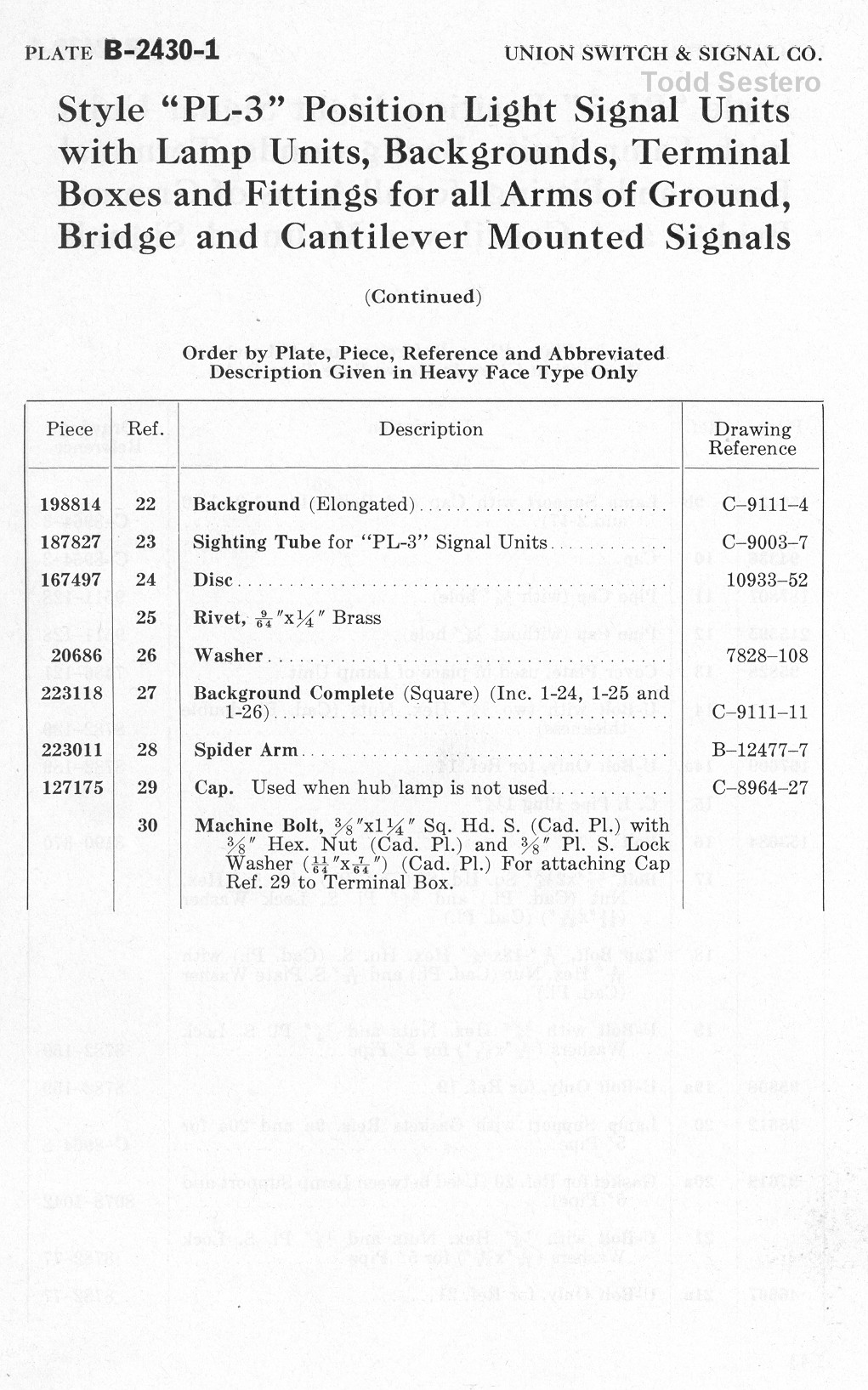
The Signal
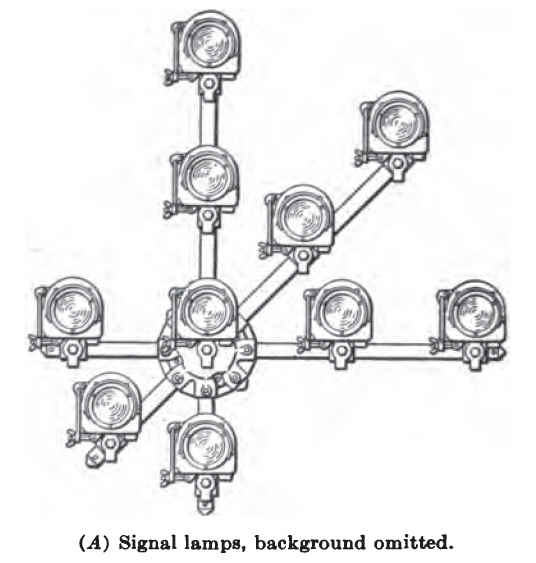
Note: Configuration "U" above shows the "Domino" signal head layout.
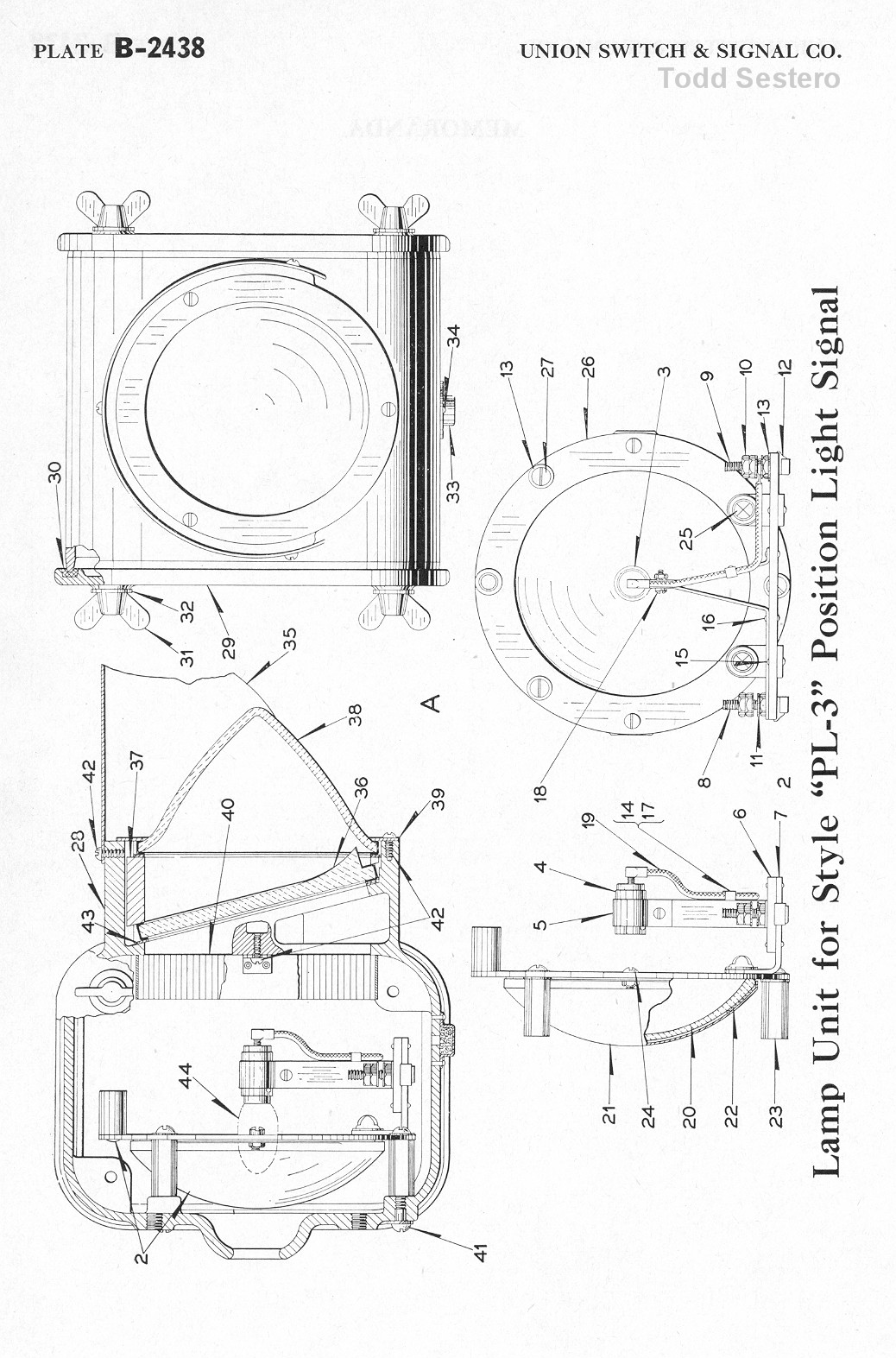
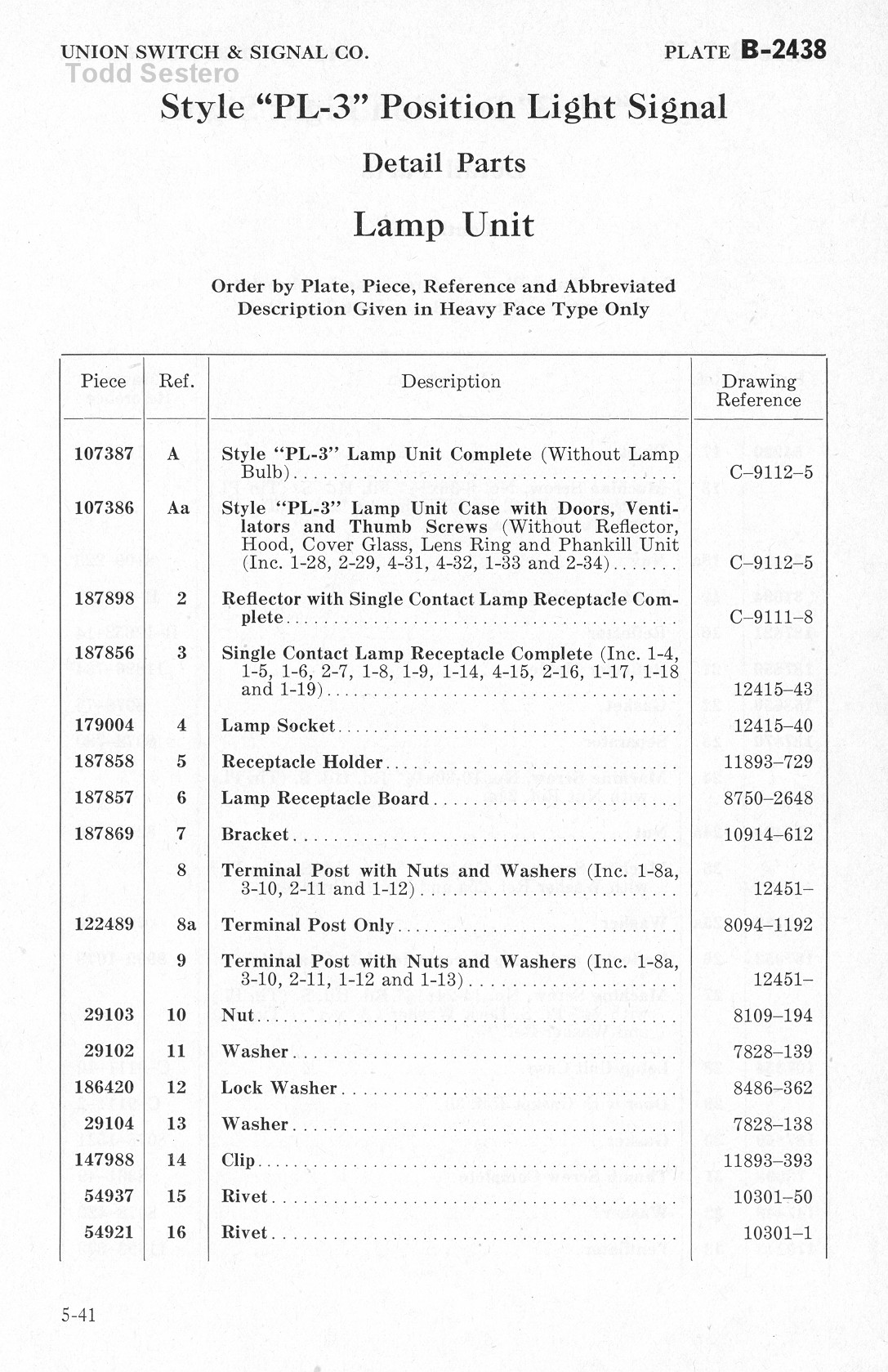
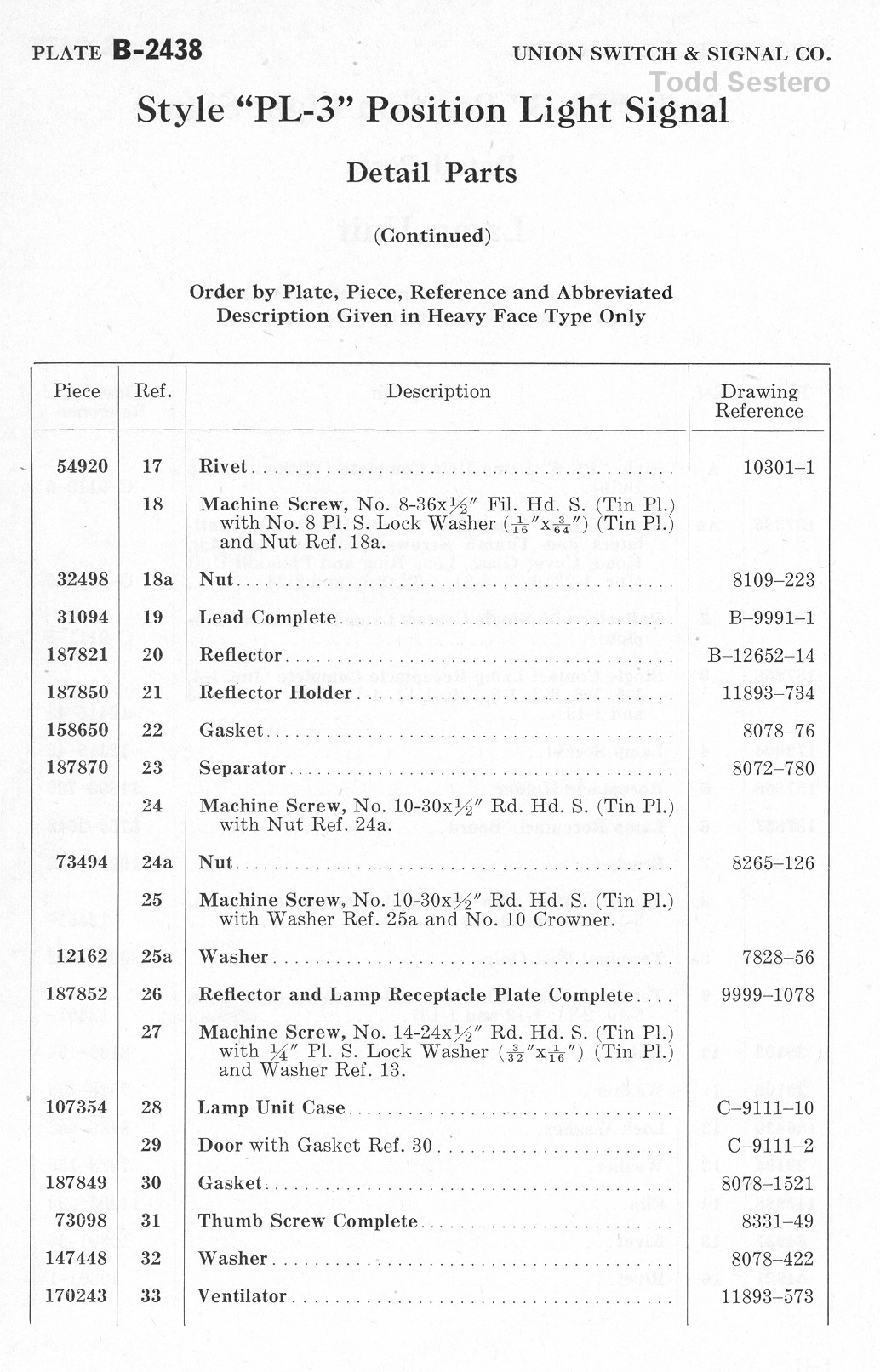

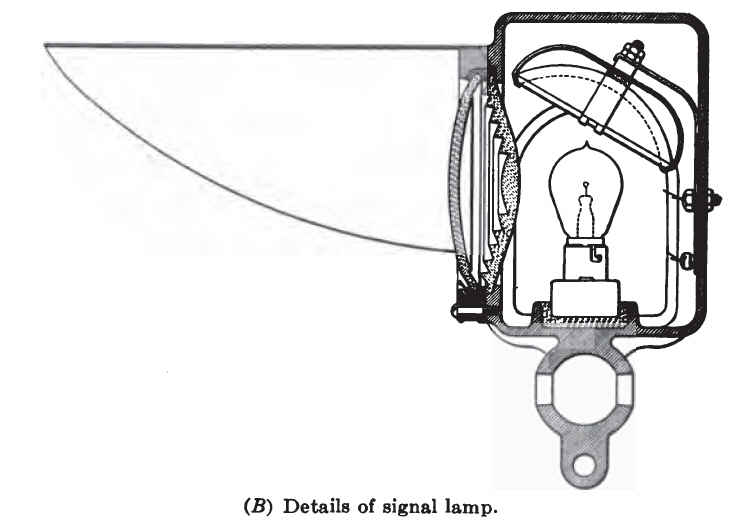
The Signal Head
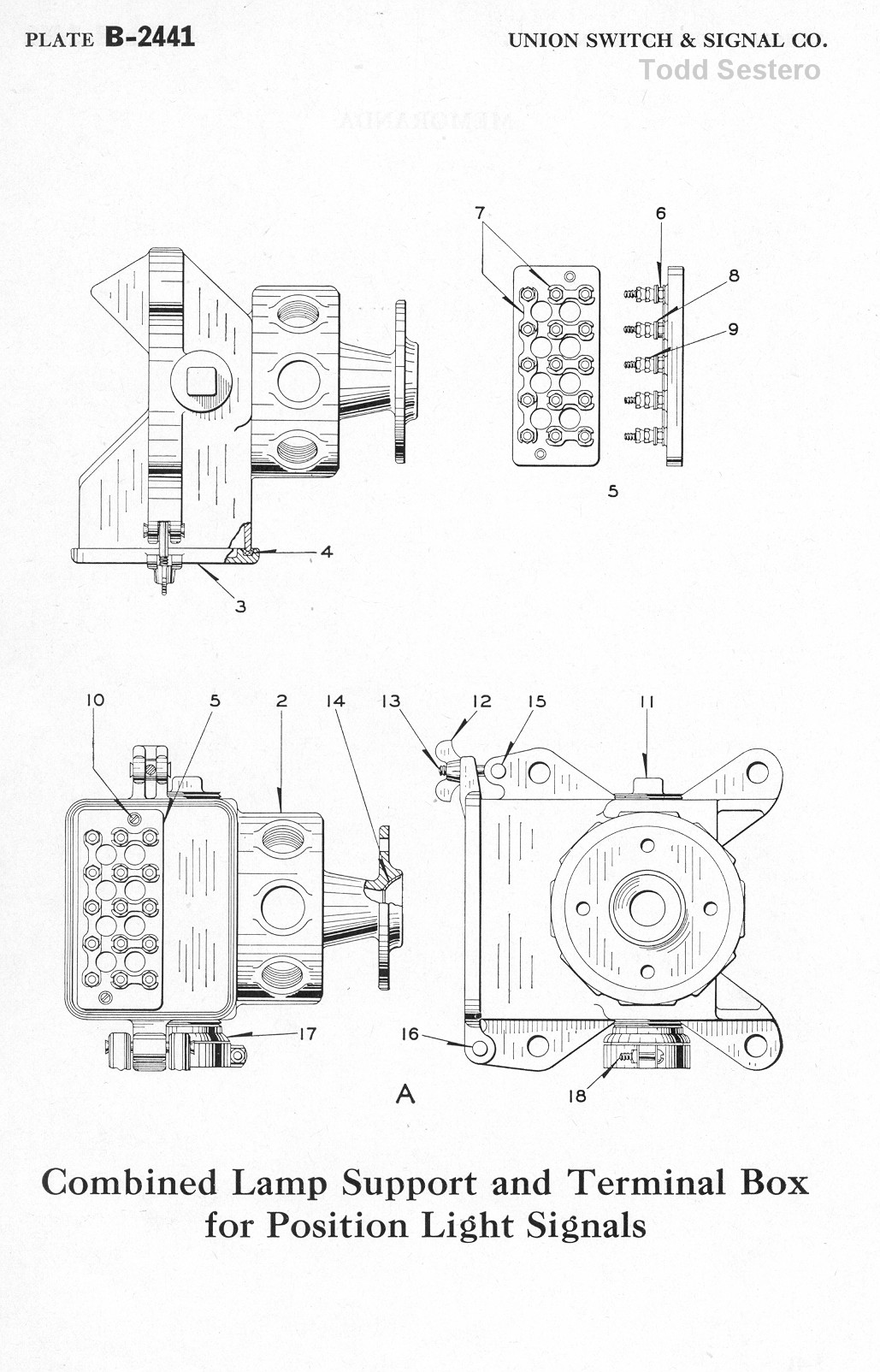
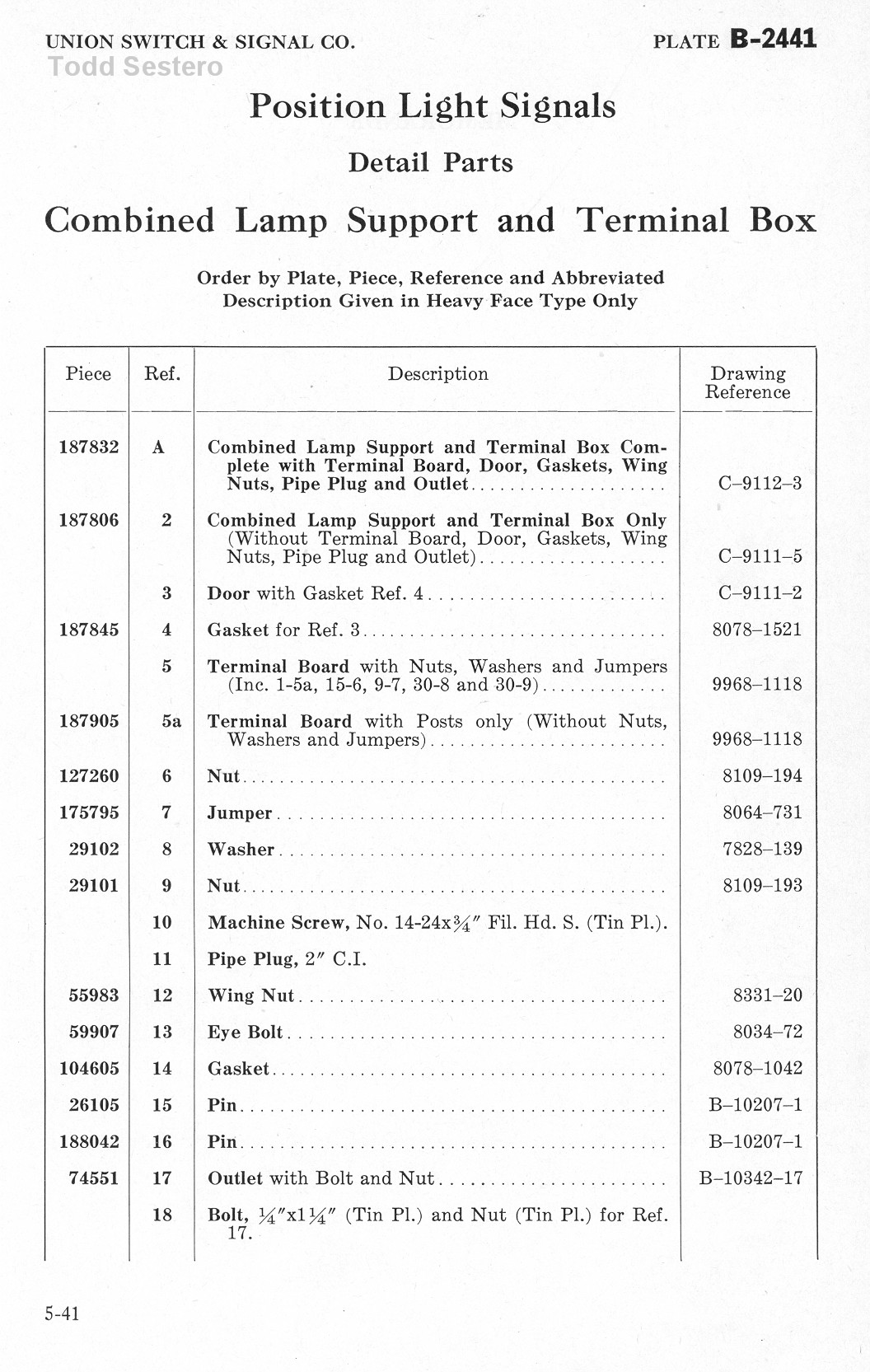
The Lamp Support and
Terminal Box, aka, the Spider
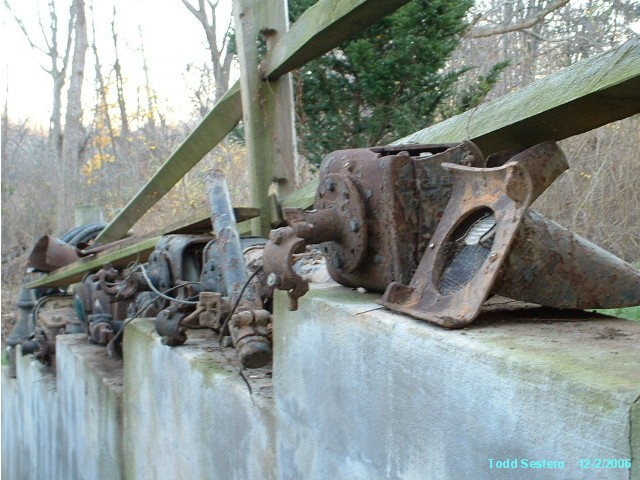
Sitting outside my
basement door waiting to be worked on.
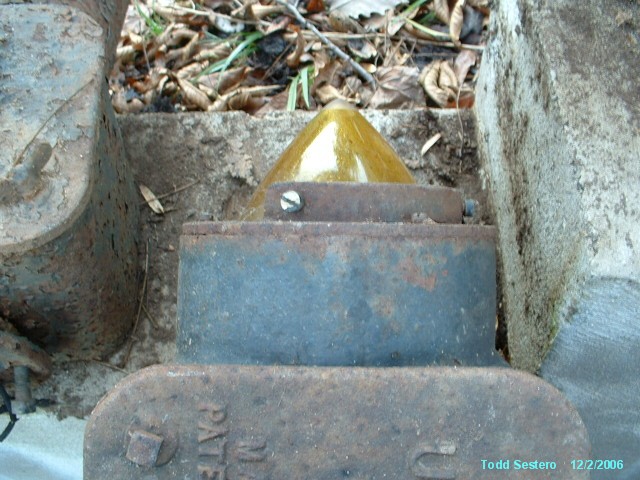
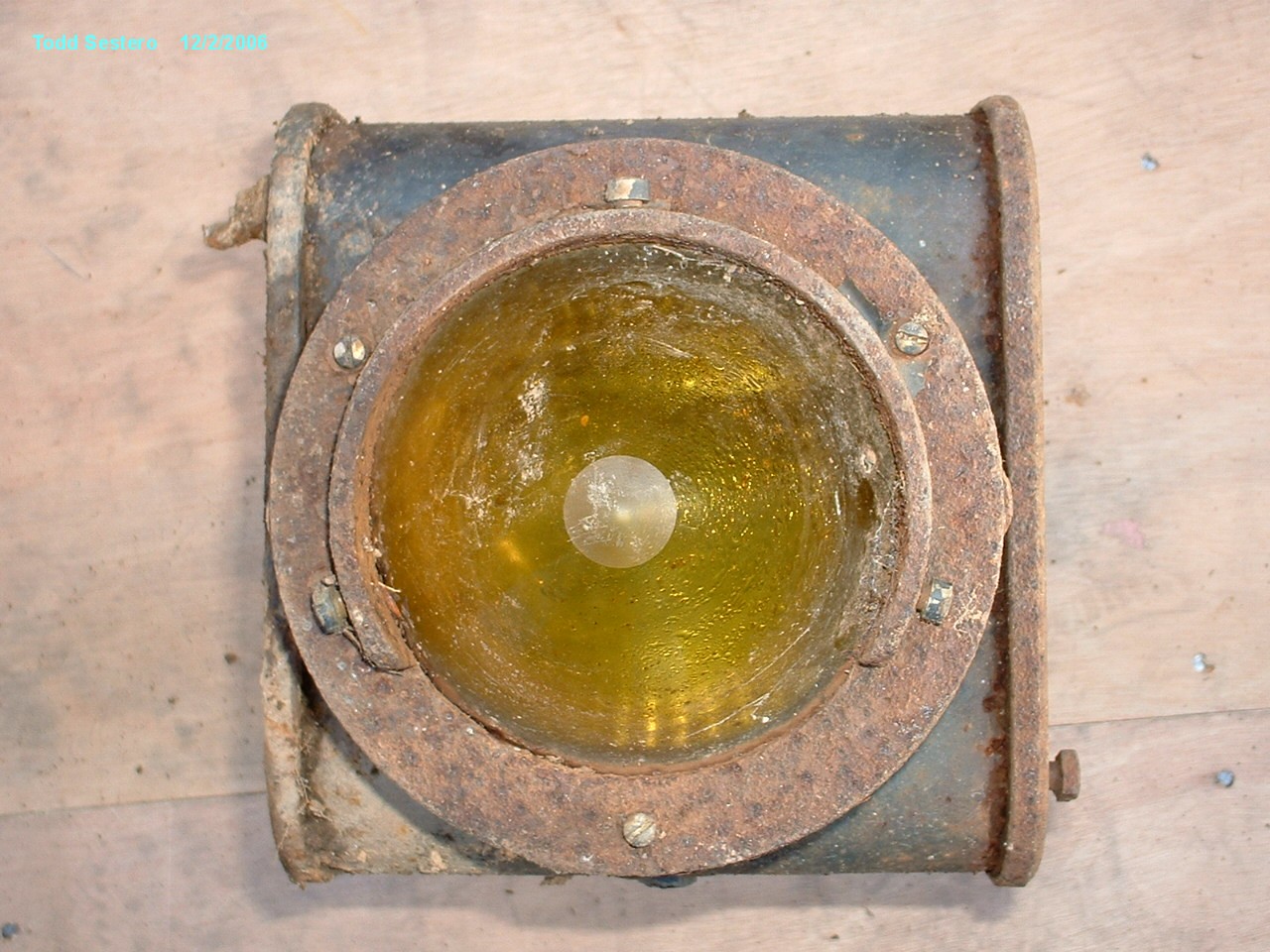
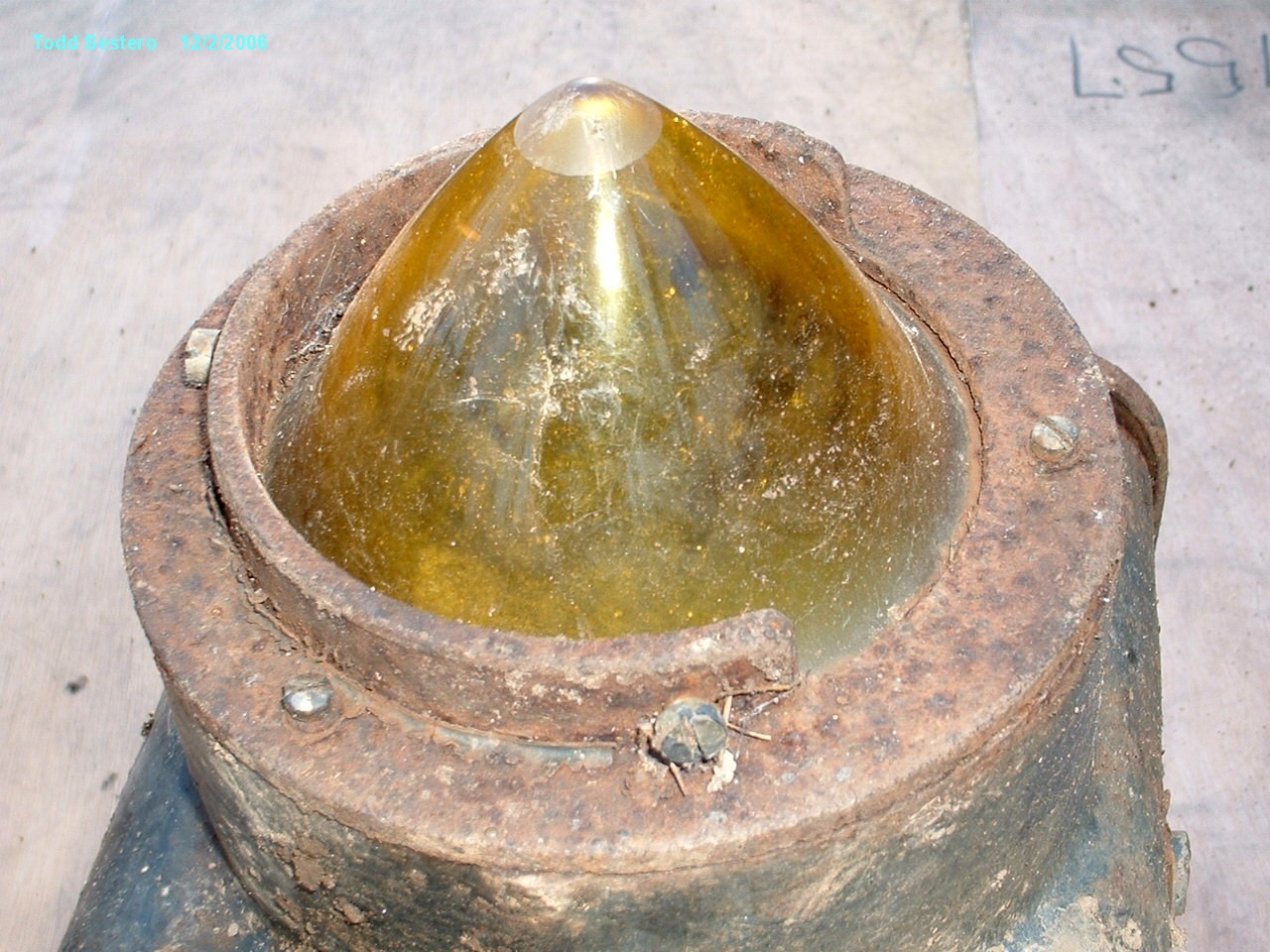
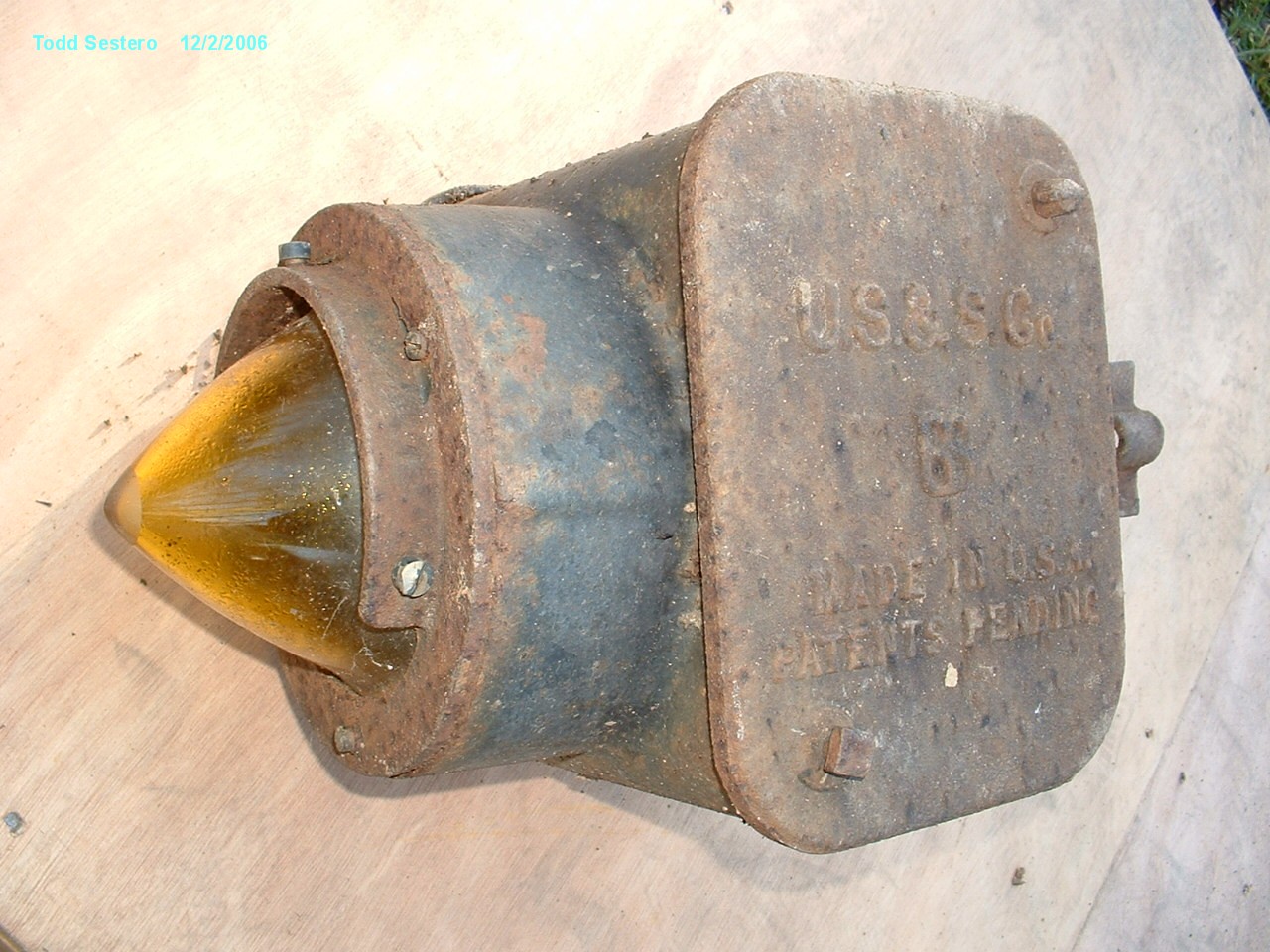
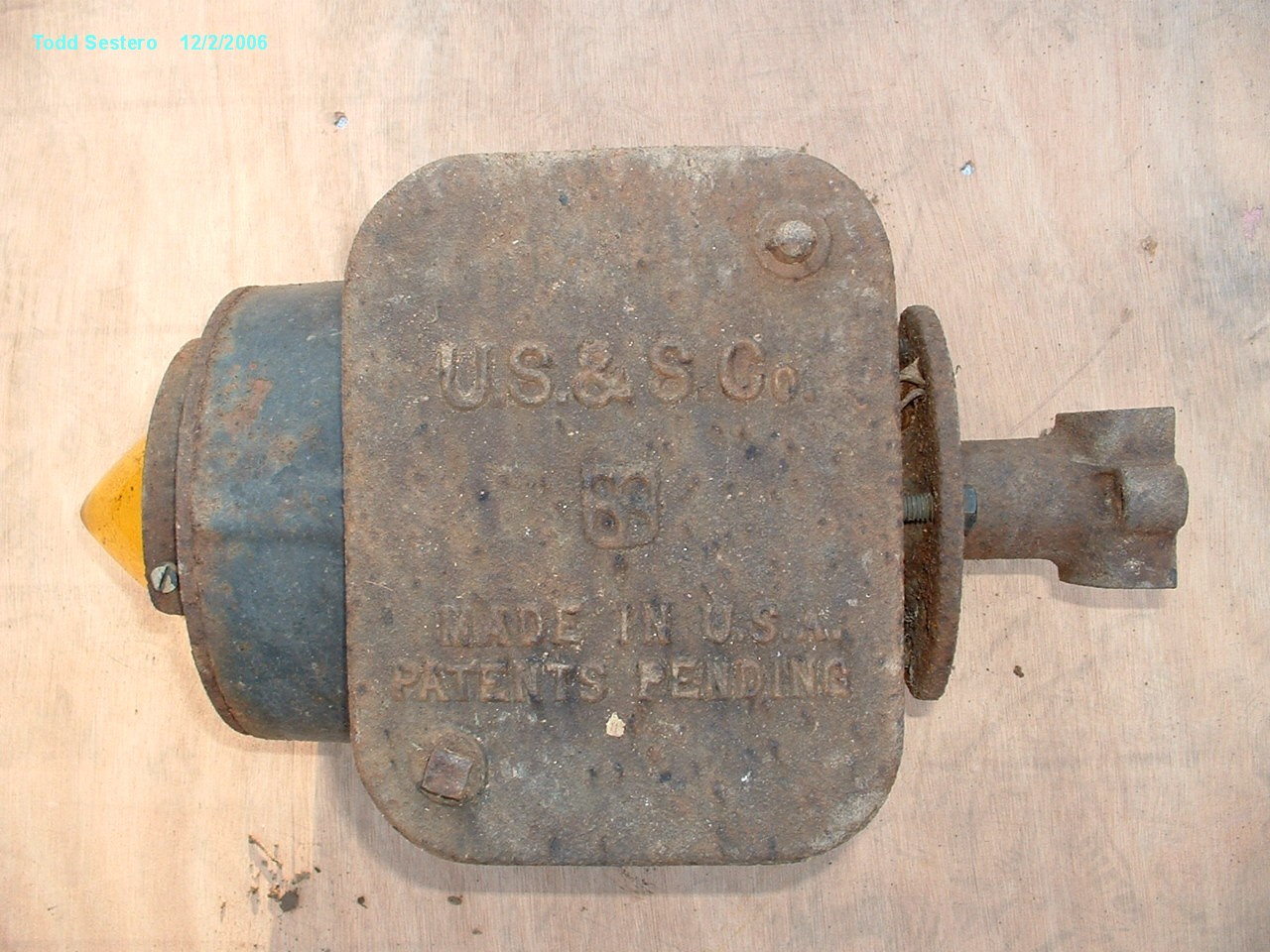
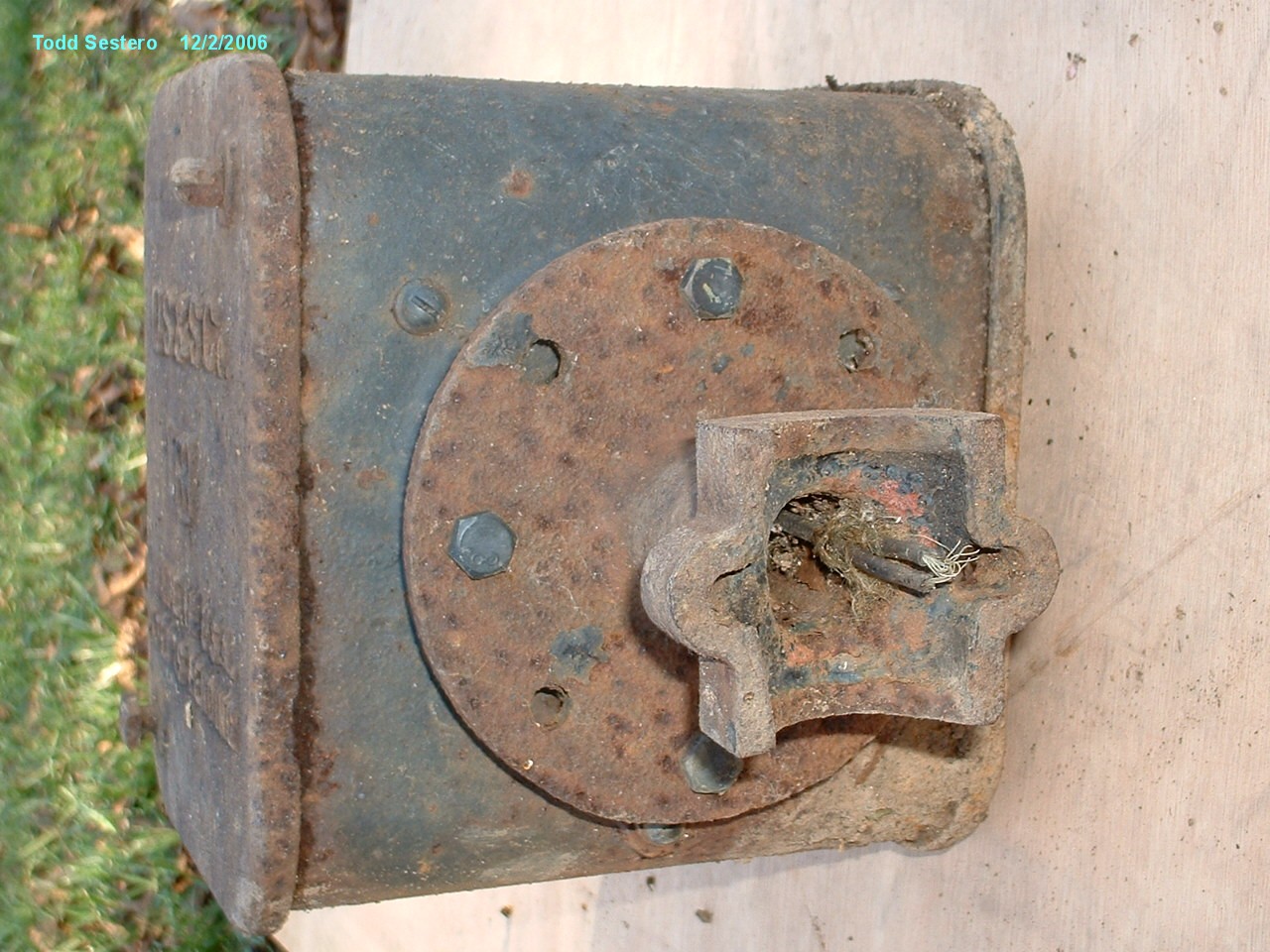
A
PRR PL-3 head.

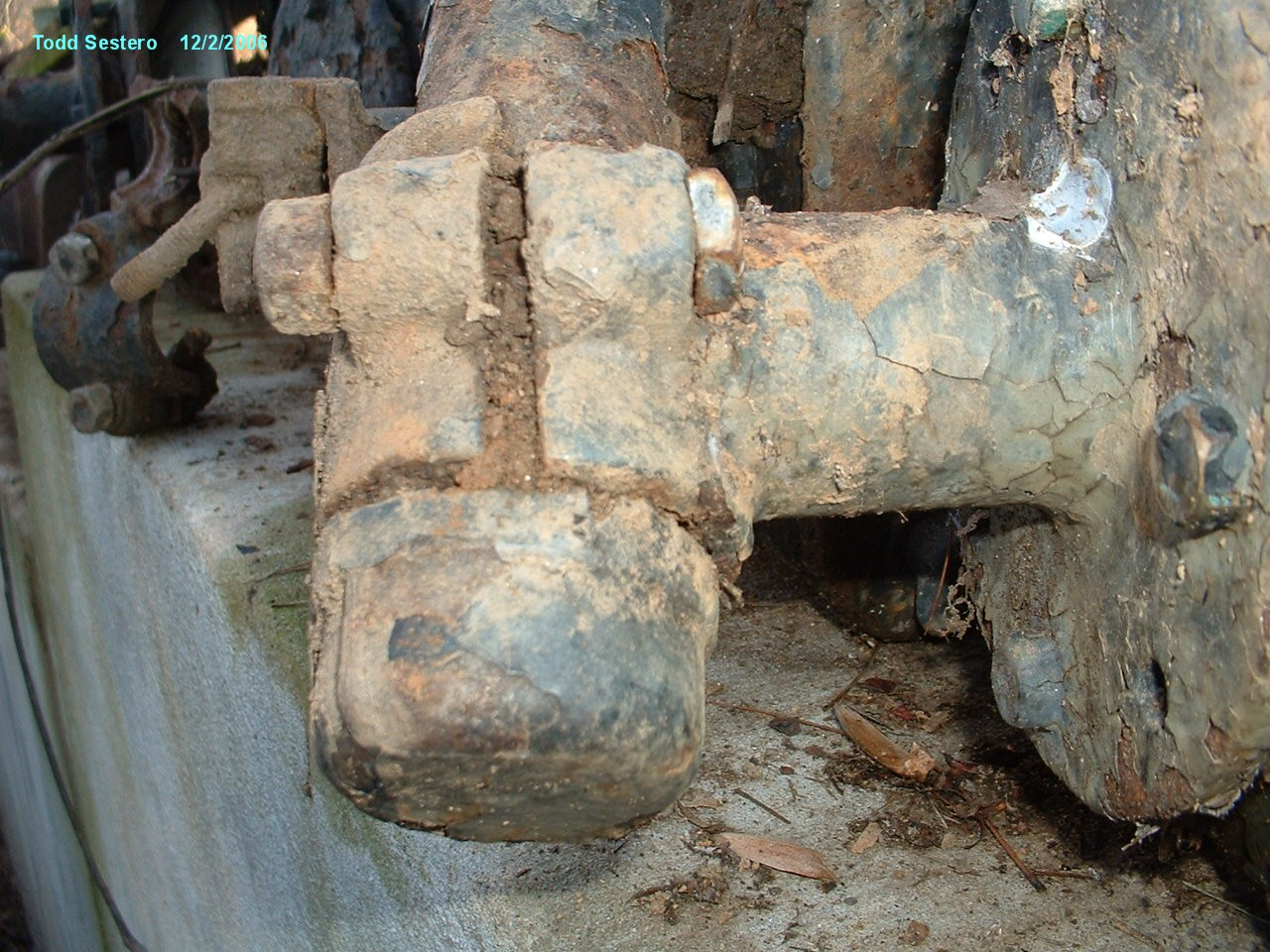
Mounting to the 1-1/4" pipe.
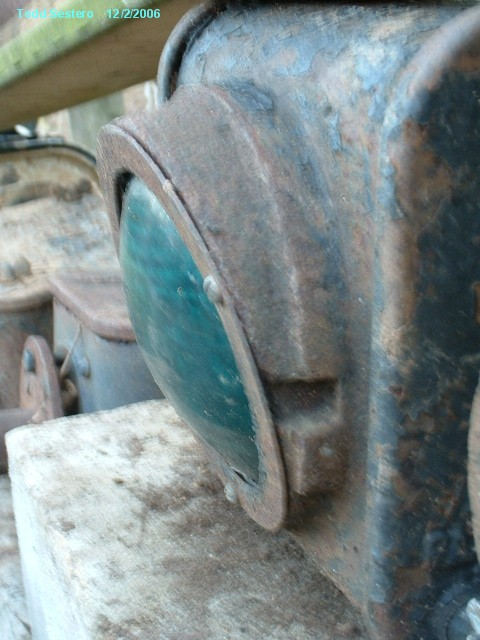
The N&W heads have the lens mounted at approx a 10 degree angle... these heads
are not in the catalog because they are earlier models.
- Other Pictures -
Pictures from a trip
Michael Watnosky and I took in April of 2008 to Wilmington DE are
here.
And pictures of the PL signals in Perryville MD are
here. (over 200 pix
on the page)
A link to pictures on
the Library of Congress website for a few PL related items:
B&P Tower in Baltimore before being moved, good shots of inside:
click here
ALTO Tower in Altoona PA:
click here
Union Tower in Baltimore:
click here
Disclaimers:
I love trains, and I love signals. I am not an expert. My webpages reflect what I find on the topic of the page. This is something I have fun with while trying to help others. My webpages are an attempt at putting everything I can find of the subject in one convenient place. There are plenty of other good websites to help me in this effort, and they are listed in my links section on my indexa page, or as needed on individual pages. Please do not write to me about something that may be incorrect, and then hound the heck out of me if I do not respond to you in the manner you would like. I operate on the "Golden Rule Principle", and if you are not familiar with it, please acquaint yourself with how to treat people by reading Mathew 7:12 (among others, the principle exists in almost every religion). If you contact me (like some do, hi Paul) and try to make it a "non-fun" thing and start with the name calling, your name will go into my spambox list! :-)
If this is a railfan page, every effort has been made to make sure that the information contained on this map and in this railfan guide is correct. Once in a while, an error may creep in, especially if restaurants or gas stations open, close, or change names. Most of my maps are a result of personal observation after visiting these locations. I have always felt that a picture is worth a thousand words", and I feel annotated maps such as the ones I work up do the same justice for the railfan over a simple text description of the area. Since the main focus of my website is railroad signals, the railfan guides are oriented towards the signal fan being able to locate them. Since most of us railheads don't have just trains as a hobby, I have also tried to point out where other interesting sites of the area are.... things like fire stations, neat bridges, or other significant historical or geographical feature. While some may feel they shouldn't be included, these other things tend to make MY trips a lot more interesting.... stuff like where the C&O Canal has a bridge going over a river (the Monocacy Aqueduct) between Point of Rocks and Gaithersburg MD, it's way cool to realize this bridge to support a water "road" over a river was built in the 1830's!!! Beware: If used as a source, ANYTHING from Wikipedia must be treated as being possibly being inaccurate, wrong, or not true.
My philosophy: Pictures and maps are worth a
thousand words, especially for railfanning. Text descriptions only
get you so far, especially if you get lost or disoriented. Take
along good maps.... a GPS is OK to get somewhere, but maps are still
better if you get lost! I belong to AAA, which allows you to get
local maps for free when you visit the local branches. ADC puts
out a nice series of county maps for the Washington DC area, but their
state maps do not have the railroads on them. If you can find em,
I like the National Geographic map book of the U.S..... good, clear, and
concise graphics, and they do a really good job of showing you where
tourist type attractions are, although they too lack the railroads.
Other notes about specific areas will show up on that page if known.
Pictures and additional information is always needed if anyone feels
inclined to take 'em, send 'em, and share 'em, or if you have
something to add or correct.... credit is always given! BE NICE!!! Contact info
is here
Beware: If used as a source, ANYTHING from Wikipedia must be treated as being possibly being inaccurate, wrong, or not true.
RAILFAN GUIDES HOME
RAILROAD SIGNALS HOME
NEW 12/2/2006
Last modified:
01-Apr-2019