 NEXT Chapter
►
NEXT Chapter
►RAILROAD SIGNALS of the U.S.
PRIMER ON
AMERICAN RAILROAD SIGNALS
Signals Common in the United States Today
◄
PREVIOUS Chapter
NEXT Chapter
►
RAILFAN GUIDES HOME
RAILROAD SIGNALS HOME
CHAP 1 -
Introduction
CHAP 2 -
Signals Common in the United States Today
CHAP 3
-
Glossary of Signal Terminology
CHAP 4
-
Reading And Interpreting
Railroad Signals 1
CHAP 5
-
Reading And Interpreting
Railroad Signals 2
Prior to 1900, signal styles were a lot more individualistic, and could vary widely from railroad to railroad. More and more today, the American signal scene is finding color light signals, where there was once a wide array of styles to feast on. You could still find semaphores everywhere into the 70’s, now they are rare. The B&O CPL’s and Pennsylvania PL’s were plentiful east of Chicago, however, their numbers today are rapidly dwindling. There was even a lone ball type signal that made it into the 1990’s in New Hampshire. Operating wig-wag crossing signals can still be found, and to even a lesser extent, rotating banner signals (although I am not aware that any of them still have the stop sign in place). You could even find smashboards and tilting targets being used into the 90’s. The same goes for switch lanterns - they used to be common place, but try to find one these days - they have almost all been replaced with reflectorized stands.
According to Alstom, signaling on American railroads was introduced as early as 1857, but extensive installations were not made until 1900 when railroad management realized the benefit signaling could provide to expedite traffic movement.
As already stated, the general trend of late has been towards the use of color light signals. One notable exception is the Northeast Corridor between Washington D.C. and New York City, where Amtrak has kept the Pennsy PL’s, but colorized them. This is probably for the same reason that the Pennsy developed the PL’s in the first place – limited room to mount signals so they could be seen between the mess of overhead wires and support structures. The Norfolk Southern, in former N&W territory, has also been slow in replacing their CPL’s.
Many of the older signals were complicated mechanical mechanisms or assemblies such as semaphores, B&O CPL’s and Pennsy PL’s. Semaphores taken down during the 40’s, 50’s and 60’s were replaced by searchlight signals or color light signals, and many of those searchlight signals are today being replaced with color light signals. Why replace when the old signals work fine? My guess would be high maintenance cost, although rusting equipment and hardware could be another. And if you are going to replace something, (logic dictates) you might as well do it with something new. Although rare, a fully loaded B&O CPL uses 14 bulbs, in as many individual housings, in contrast to three stacked color light heads (housings) using a total of eight or nine bulbs in the three heads. It’s a matter of simple economics in an industry where they can tell you how much it costs to blow the horn at a grade crossing. Railroads, like any other profit making business, try to contain costs (especially on overhead items such as signals), otherwise, steam engines would still be common place.
Learning the difference between the styles is not difficult, but trying to figure out if a searchlight is a GRS or US&S head, is a little more difficult. Hopefully, this primer will answer some of the questions you may have. To differentiate the signals I am talking about here, from other signals on the railroad, we often refer to these as wayside signals.
The majority of
signals in the United States today are of the following types:
Semaphores
Searchlights
Colorlights (includes
"Tri-lights")
Position light (PL)
Color position light (CPL) and
Position Color light (PCL)
(semaphores just barely make it onto this list)
The major
manufacturer of American signals are:
GRS (General Railroad Signal – now Alstom)
Safetran
US&S (Union Switch & Signal)
Harmon (GE)
Western Cullen Hayes
WRRS (Western Railroad Signal).
Semaphore signals were once the mainstay of American railroading, but are becoming increasingly rare. http://www.semaphores.com does a pretty good job of keeping you up to date of where the last survivors are.
Semaphores used a combination of two technologies to convey information to the engineer. During the day, a board approximately three feet long was put into different positions by some sort of actuating mechanism, be it "armstrong" (purely hand operated mechanical), pneumatic, or electrical, or a combination of those technologies.
During the night, the same part of the signal that the board mounted to, the spectacle, contained anywhere from one to four colored lenses, which would rotate in front of a stationary light source. …..Semaphores, we all love them, but due to their mechanical complexity, they gave way to simpler devices such as the searchlight signal or color light signal.
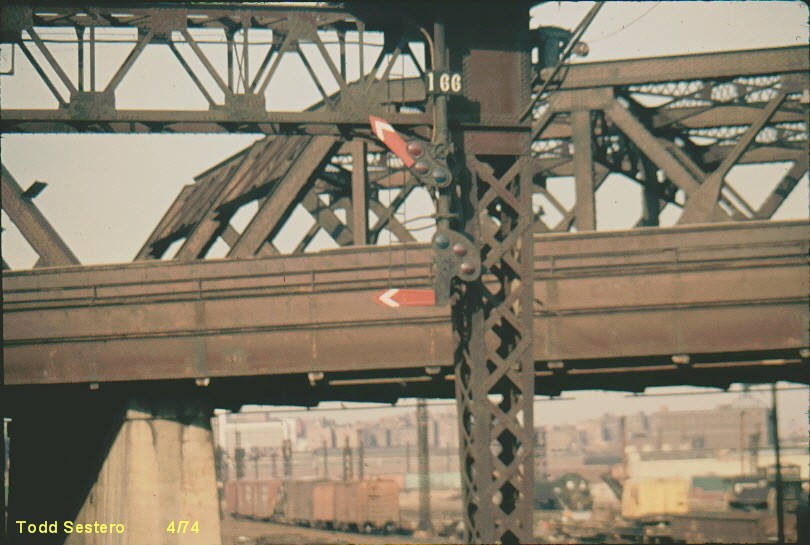
Semaphore signals on the New Haven, in the Bronx, judging from the apartment buildings in the background.
Searchlight signals are a form of colorlight signal where all of its aspects radiate from one set of lenses. Placed inside the housing, is a miniature semaphore like mechanism which places a small, roughly 1 inch diameter colored filter in the light path in order to change the displayed color. The filters are placed on a small vane which is similar to the spectacle used with semaphore signals.
Searchlight signals were used by many railroads, with the big exceptions being the Pennsy and the B&O. The current mainstays of this type are the Alstom (GRS) SA-1 and SA-5, and the US&S H-2 and H-5 (6).
Searchlight signals today are facing the same demise as most other signal types, being phased out in favor of the color light signal because they are simpler to maintain.
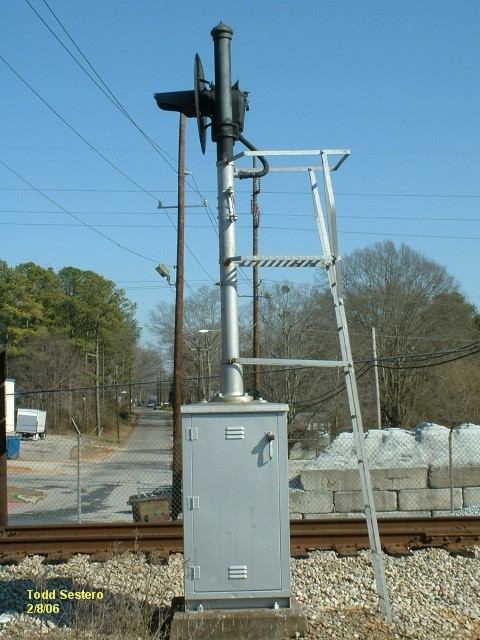
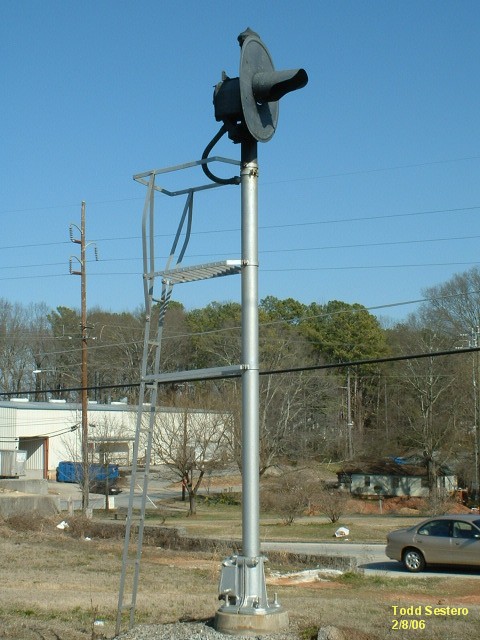
A couple of classic
searchlight signal installations at the same location in suburban Atlanta, these
are of the US&S variety. The easiest way to tell is by the hoods.
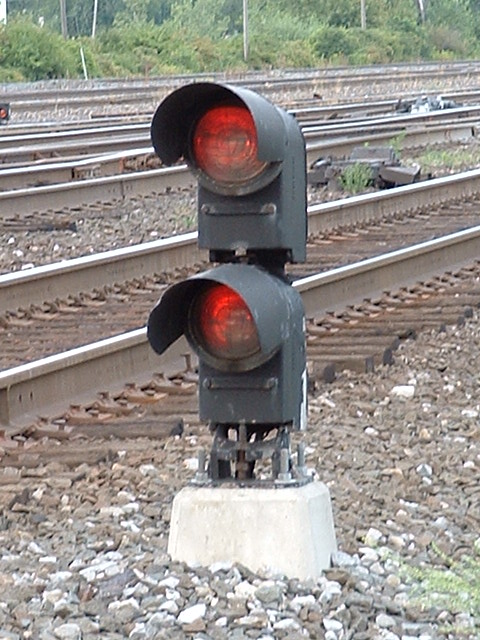
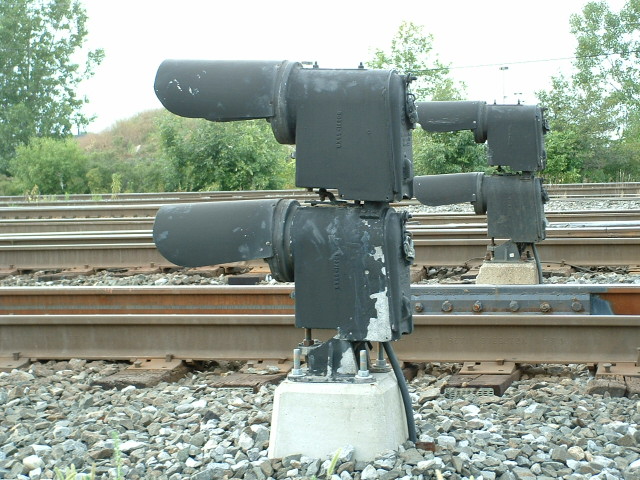
A couple of dwarf
searchlight signals in Buffalo NY, on the former New York Central (now CSX).
These are GRS units, the giveaway being the hoods - notice the difference in
their shape from the US&S hoods above.
This type of signal is quickly becoming the most prevalent type in the United States today. They are simple in design, being nothing more than a housing with a separate chamber, lens, and light bulb for each aspect to be displayed. Railroads like them because they are simple to maintain - no moving parts.
Older models were a single housing with a separate compartment for each bulb. Many newer designs are taking the modular approach, and can be customized with any number of aspects on one head. Another trend is towards the use of aluminum and plastic, where steel was once the only choice (FYI - you can’t find a traffic light made today that isn’t plastic).
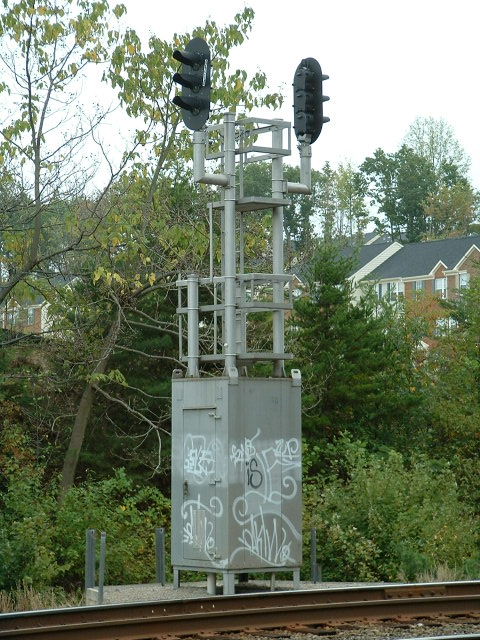
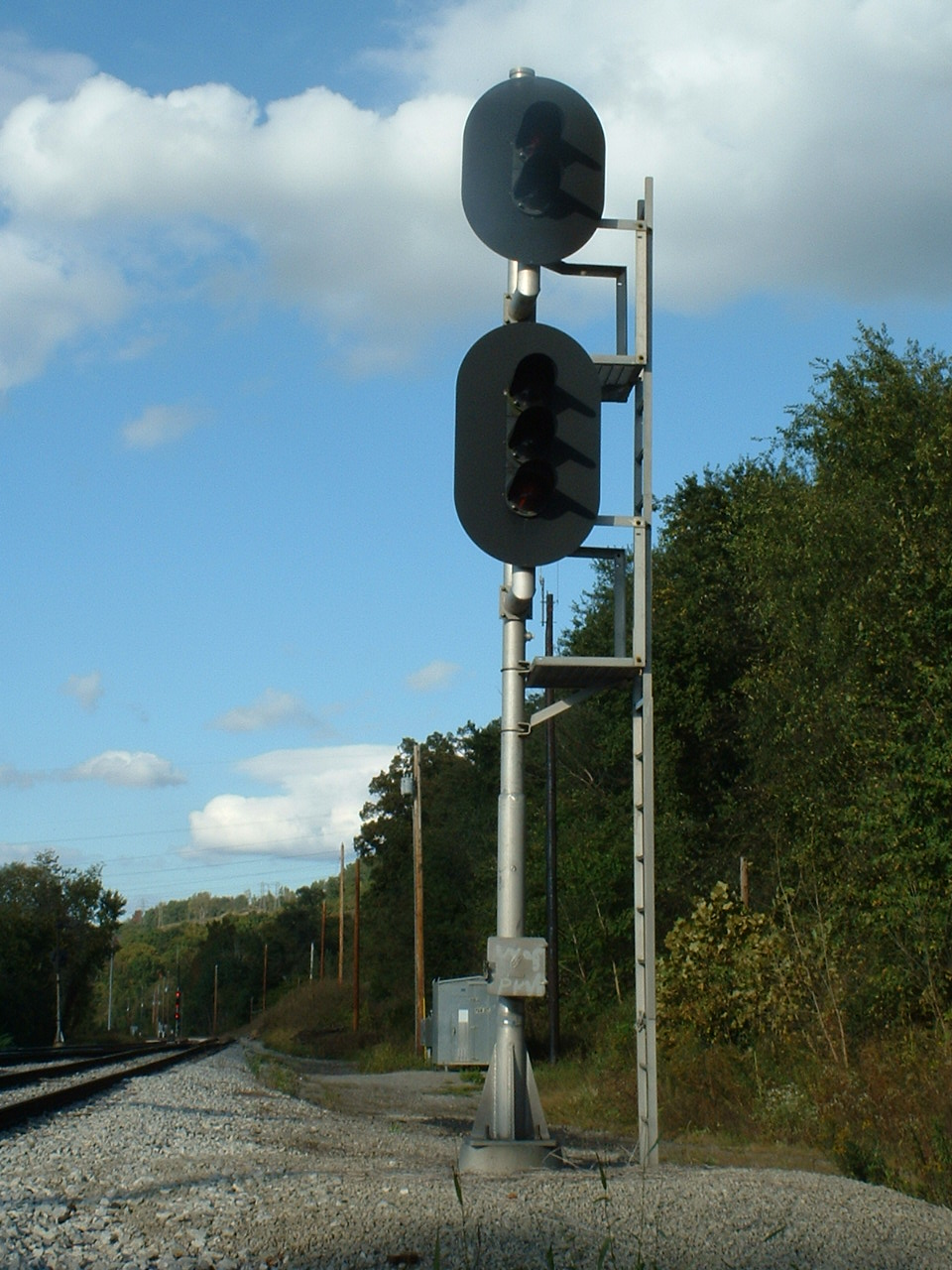
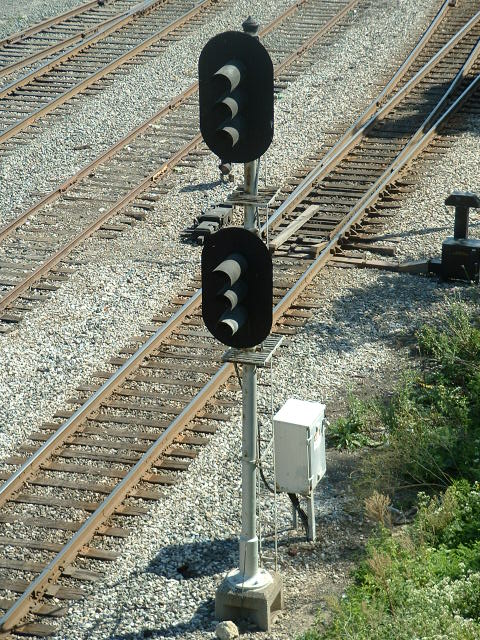
Three color light
signal installations -- On the left is a newer installation on CSX's RF&P
division in Lorton VA, just south of the Amtrak Autotrain terminal.......
In the middle is a CSX two head color light signal in New Castle PA,
replacing a CPL on this former B&O line..... On the right is a two head signal
on the NS in Cleveland OH.
Let me first say that professional signal maintainers do not use this term, hence the use of quotes around the term. Quite simply, these lights are color light signals. Maintainers usually refer to them by the model, such as TR-2 (US&S) or type G (GRS). As already seen above, a standard color light signal puts the three lenses in a straight row, whether vertical or horizontal. This style of signal places the lenses in a triangular pattern, giving the signal a maximum of three aspects per head.
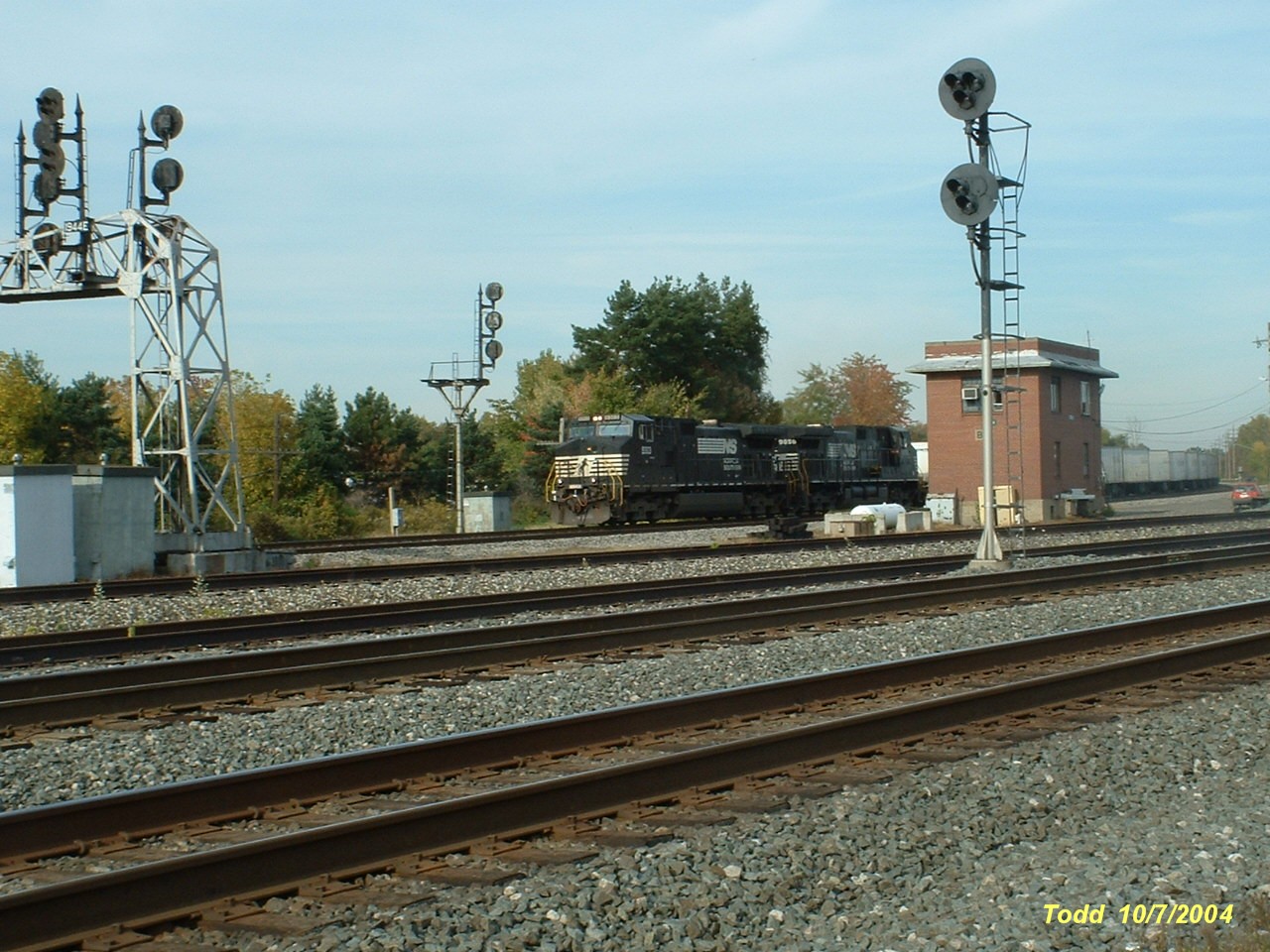
"Tri-light" signals in
Berea OH, slightly to the west of Cleveland. Both CSX and Norfolk Southern
use tri-lights at this location, which is kind of unusual. NS has, so far,
kept the old support structures for their signals, making for interesting signal
shots compared to the dull and boring aluminum structures common in
installations today. The CSX tracks are on this side of the tower.
This is great railfan spot where the NS and CSX come together for some good
action, and is a favorite spot with the locals.
Position Light Signals were developed by the Pennsylvania Railroad. They were developed to overcome what was seen as an inherit disadvantage of the semaphore, visibility.
PL signals were used by the Pennsylvania Railroad and associated railroads, such as the Long Island RR and the Norfolk and Western.
The Pennsy also came up with two associated signals, the PL dwarf signal and the Pedestal signal. The dwarf can only display four aspects, all low speed signals. The Pedestal signal can display almost everything except for the circle and “X”.
During the 60’s, the N&W “colorized” their PL’s, so they look similar to the B&O CPL’s from a distance.
The Norfolk Southern, since it's acquisition of 60% of Conrail's trackage, has been busy replacing the PL’s with color light signals. They have also been replacing many of the N&W's version of the PL, the CPL, with color light signals. Several factors contribute to these signals being replaced: Age and the now held philosophy that the aspects are sometimes confusing from a distance which may lead to the engineer misinterpreting the indication.
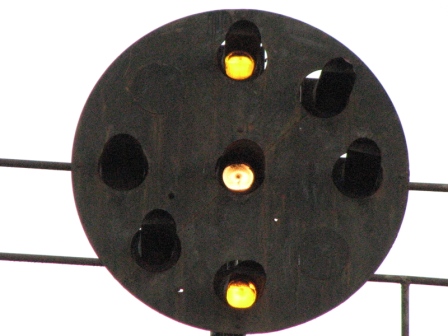
This PL signal is located in Mapleton PA on
signal bridge 1932.
Color Position Light, or Position Color Light? With the next two categories of Position Light signals, there exists some confusion in the industry as to what to call the colorized version of the Pennsy Position Light signals. The B&O CPL’s have always been called CPL’s. However, the signals used today on Amtrak signals on the corridor between DC and NYC (as well as the signals on the Norfolk and Southern in former N&W territory (directly below), are adapted Position Light signals. Amtrak maintainers call theirs Position Color Light signals. Another term that is applicable is Colorized Position Light signal.
The effectiveness battle between position type signals such as the Pennsy PL's and the B&O CPL's continues till today, although it is a moot point since they are all being replaced in favor of color light signals. The Pennsy went with all yellow signals because they said the signals could be seen through most forms of inclement weather better than anything else. The main difficulty with an all yellow signal is viewing it from a distance and not being able to discern the aspect it is displaying, and therefore, making the engineer wait until he was closer to the signal in order to see what it was telling him. Many people consider the B&O CPL the better choice, even with the odd form of marker lights used to modify the meaning of the aspect displayed on the main head. From a distance tho, you could readily tell the difference between the colors on the B&O 's lights.
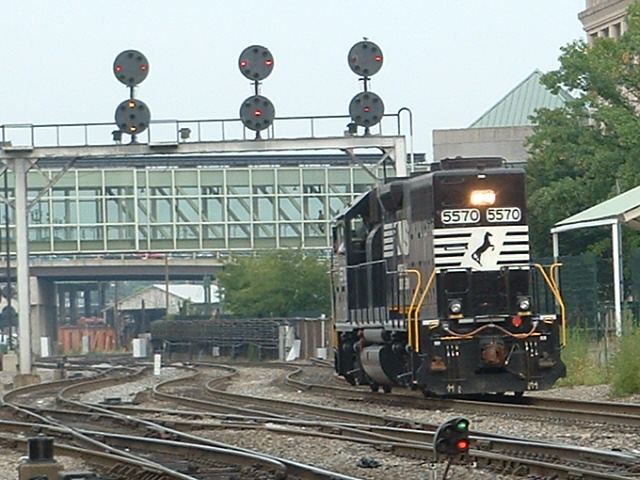
This photo, taken in
downtown Roanoke VA, illustrates the N&W's adaptation of the Pennsy PL signals
into colorized versions, including the dwarf version. The N&W kept the
center light in the lower head, so it could be used to display their stop
aspect. The nice thing about these signals, is that even with a bulb out,
as with the right most signal, you still have two red lamps lit. Notice
the dwarf's have also been colorized.
CPL signals were developed by the B&O Railroad. They went off in a slightly different direction from the Pennsy, but they still wanted to visually duplicate the semaphore action of using position to relay information to the engineer.
Keep in mind that these efforts were in the "good-ole-days" when the railroads had real engineering departments that actually designed and made things. So they decided on using a series of colored lamp pairs for each aspect, arranged in the same horizontal to vertical fashion that semaphores used.
Interestingly enough, B&O CPL’s were chosen to be used on the joint trackage into Washington DC Union Station. The dwarf version , if so fitted, could display ALL of the aspects of its full size brother, and they are the only dwarfs that can claim this.
The B&O Railroad museum in Baltimore, and the Brunswick RR museum, are the only places I have seen a “full” dwarf. Over the past few years, CSX has stepped up its efforts to replace the CPL’s :-(. SIRT announced in 2005 that it would be replacing its remaining CPL’s, but has not to date. Get pictures of them while you can!
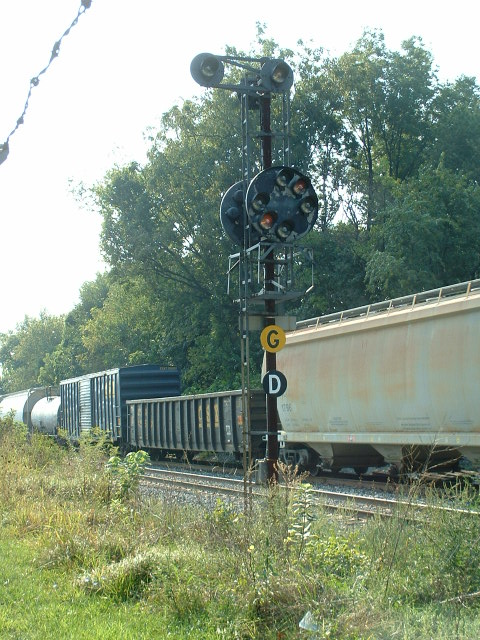
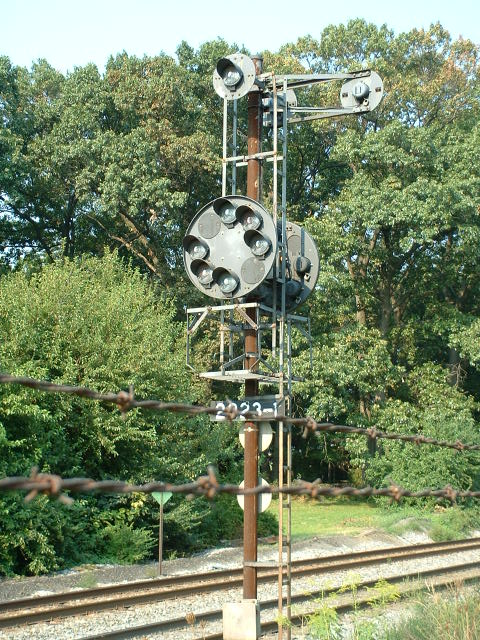
Both sides of the same
CPL location at the Gaithersburg fairgrounds in suburban Washington DC.
Both tracks are signaled thru here for bi-directional operation.
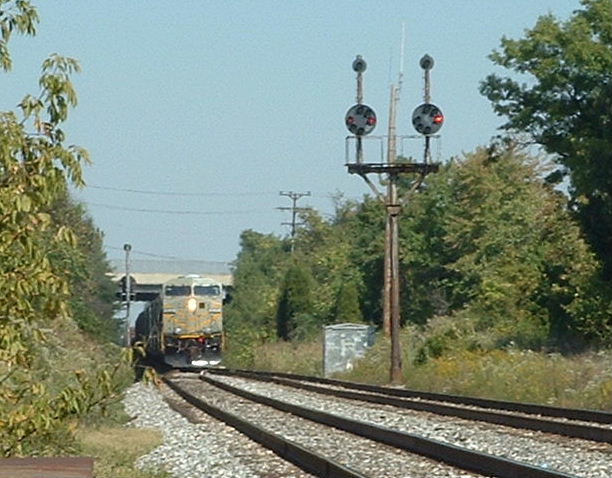
These eastbound CPL signals are for northbound traffic at ROSSVILLE in the Rosedale section of Baltimore County, NE of Baltimore. On the other side of these signals, the track goes to a single line for it's trip up to Wilmington DE. According to the B&O map, they are absolute signals at this location, as well as the one for facing traffic adjacent to the train.
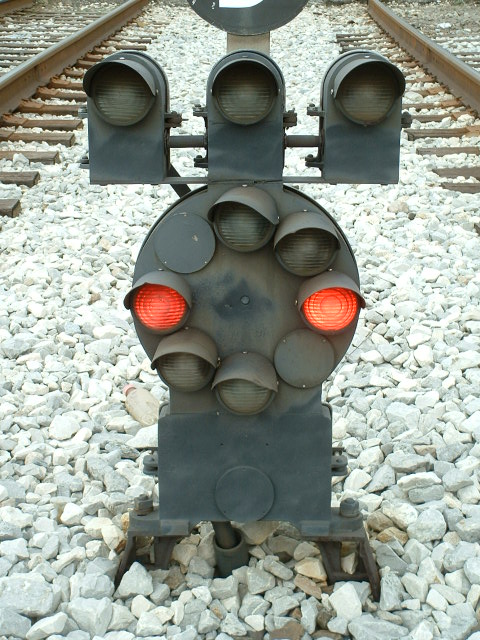
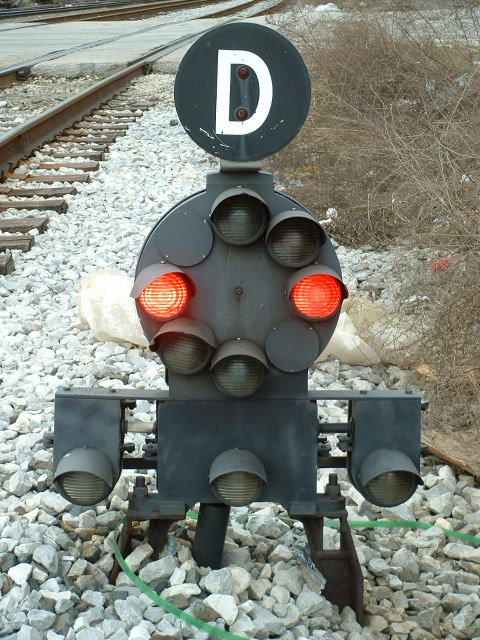
A couple of dwarf CPL signals at Bailey's wye in Baltimore MD, just south of Camden Station.
PCL signals are an adaptation of the Pennsy PL signals, where they have been "colorized". So far, Amtrak has been content with keeping them around, altho they have been experimenting with LED's south of the Susquehanna River bridge. To accomplish the change from PL to PCL, they had to eliminate the center head. They had to do this, because the Pennsy PL signal only displays one color, yellow. So what to do with the center lamp when displaying the red or green aspects? I guess, since the N&W colorized their PL's, we could call them PCL's to, but there is no general agreement on whether they should be called CPL's or PCL's, although most do call them CPL's.
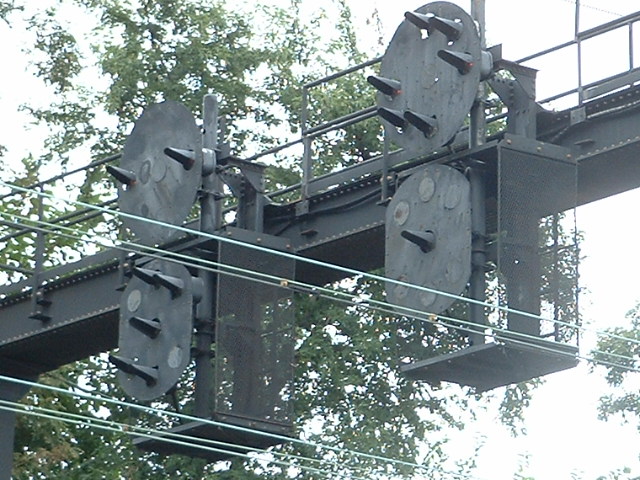
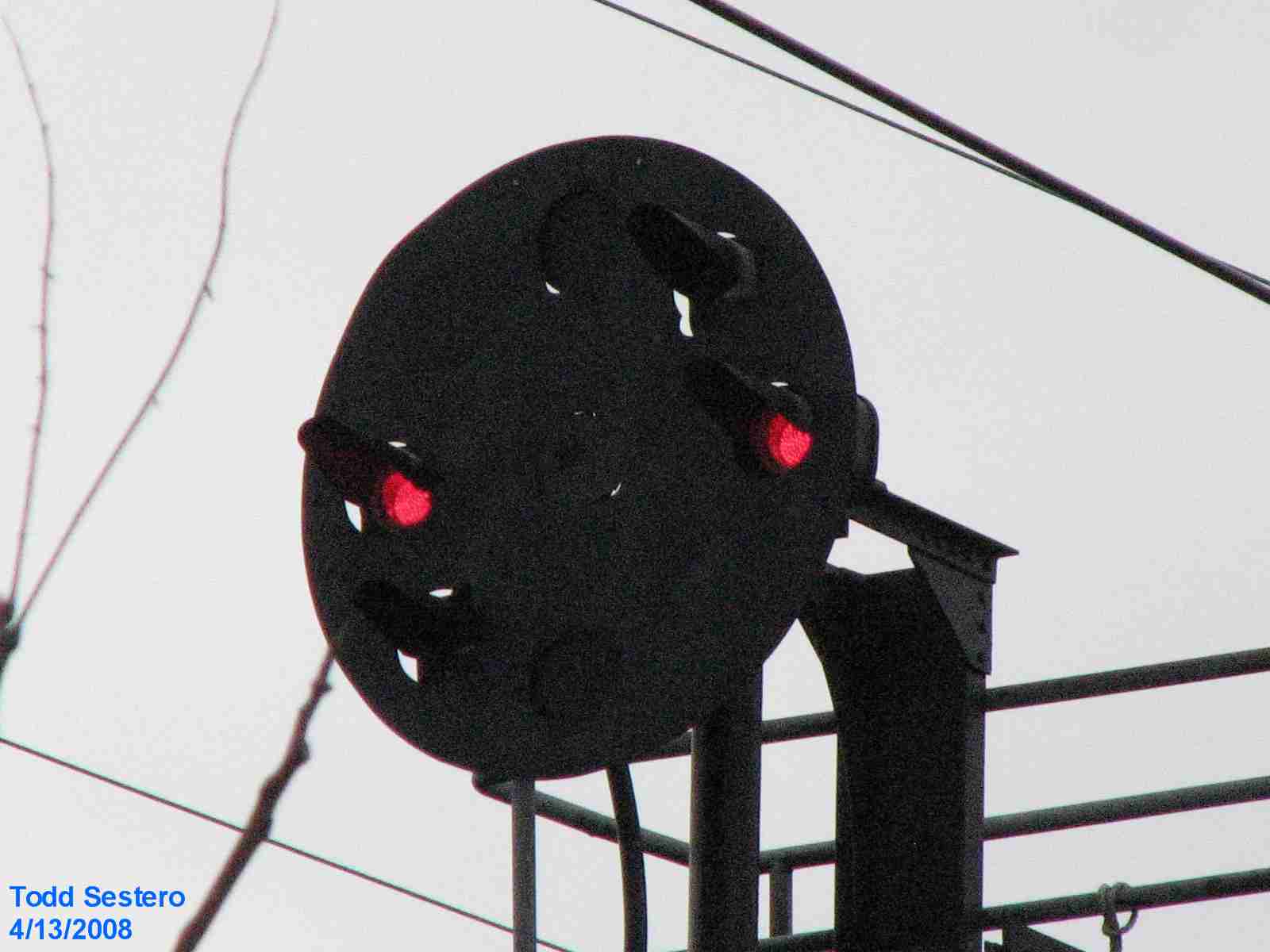
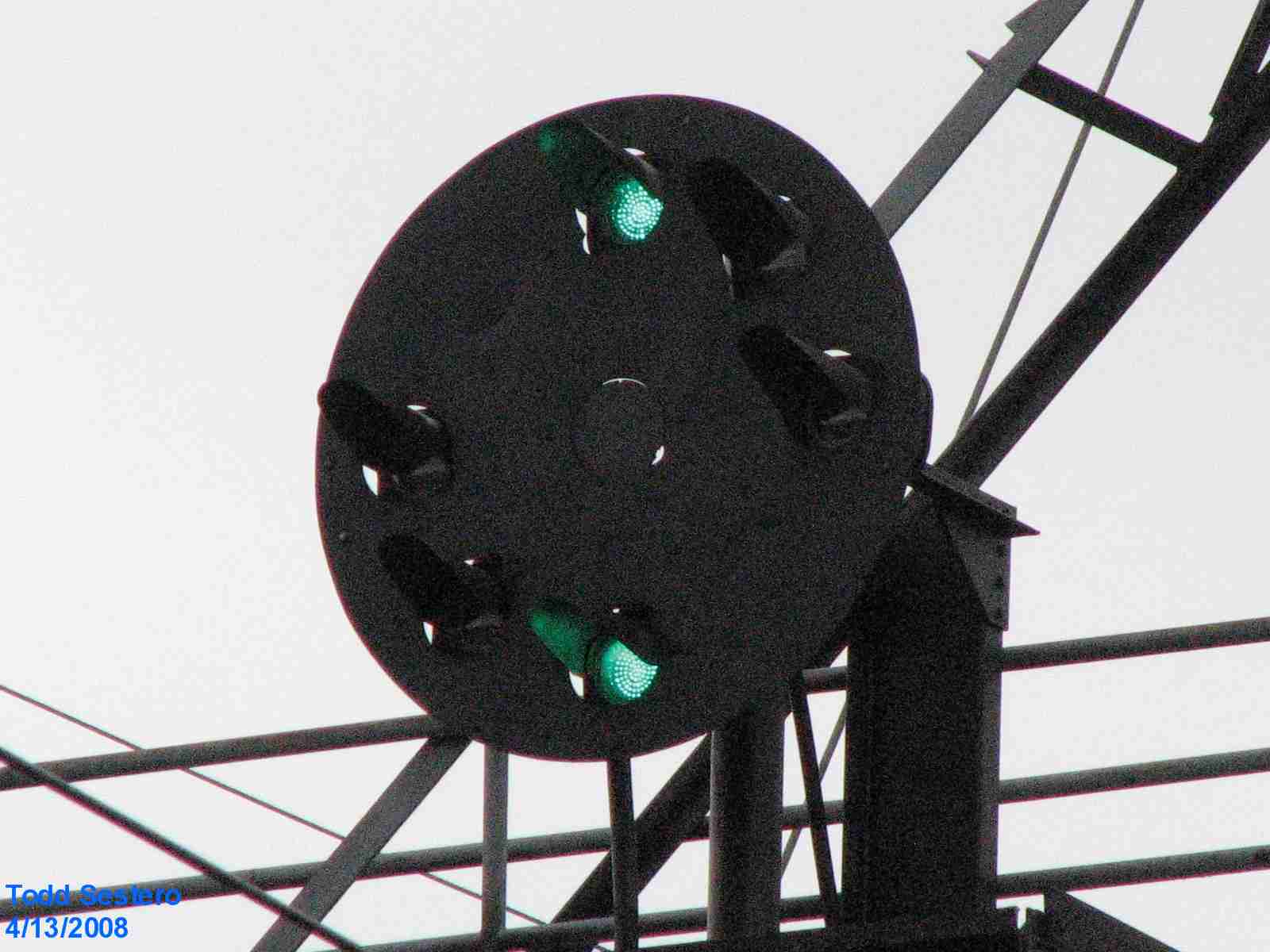
Amtrak PCL's at the
south end of the Halethorpe MARC station (SW suburban Baltimore), and a pair in
Wilmington with LED's.
◄
PREVIOUS Chapter
NEXT Chapter
►
REFERENCES:
1 SA-1 reference
2 H-5 reference
3 https://railroadsignals.us/cobo2d.jpg - Scan of C&O/B&O rulebook from 1969
4 http://www.nycsubway.org/index.html, the link to the signal section is: http://www.nycsubway.org/tech/signals/.
5 https://railroadsignals.us/nycentral.htm - New York Central rulebook from 1937.
6 https://railroadsignals.us/co1.htm - C&O/B&O rulebook from 1969.
NEW 05/07/2007
Last Modified:
08/26/2013
